Situation Summary
Iran faces a critical inflection point following the announcement of a tentative U.S.–Iran peace framework to end the ongoing war, reopen the Strait of Hormuz, and halt the U.S. naval blockade (signed as of 17 June 2026). While the agreement represents a major de-escalation at the macro level, security officials have publicly warned that spoiler elements—both internal and within proxy networks—are actively seeking to undermine the deal, creating a near-term risk environment characterized by unpredictable violence and sabotage. Kinetic operations against Iranian military infrastructure (missile sites) continued as of 16–17 June, and Iran's military command has issued explicit threats of "more severe response than before" if attacks resume, signaling that the conflict remains technically unresolved at the operational level despite political momentum toward settlement.
Key Developments
- Undisclosed missile-infrastructure sites, Iran (16–17 June): Continued airstrikes on Iranian military targets, including missile facilities, per NDTV war updates. Locations remain unspecified by open sources; damage assessments pending.
- Strait of Hormuz / southern maritime approaches (16–17 June): Iran has begun operational steps to cease efforts to cut off traffic, ahead of formal agreement implementation, reducing immediate shipping-interdiction risk but indicating rapid security-posture changes in the southern region.
- Khatam al-Anbiya Central Headquarters statement (16–17 June, Thursday): Iran's joint military command issued a public threat that any resumed U.S. attack would trigger a "more severe response than before," coupled with warnings that future conflict would be "more widespread and extensive." This signals elevated escalation risk if ceasefire negotiations falter.
- Nationwide (17 June): U.S. and Iran formally signed a tentative peace framework. Details on implementation and verification mechanisms to be released within 24–48 hours. Security conditions tied to Iran's behavior and U.S. military repositioning in the region remain under negotiation.
- Internal sabotage/spoiler risk (16–17 June, nationwide): Unnamed Iranian security officials warned that elements hostile to the peace deal are still active and seeking to trigger renewed conflict. No specific locations disclosed; threat assessed as distributed across Iran and proxy networks.
Highest-Risk Areas
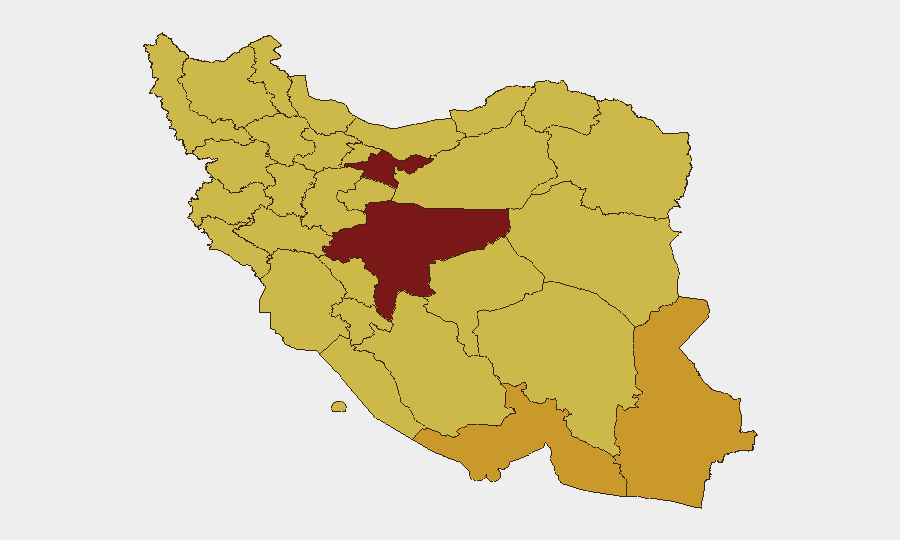
Tehran Province (risk 100) and Isfahan Province (risk 93.2) remain the primary drivers of national risk, likely reflecting capital-city political tension, military-command presence, and industrial/infrastructure concentration. The southern maritime region—Hormozgan Province (71.2)—faces elevated risk tied to Strait of Hormuz operational changes and ongoing naval posturing, while Sistan and Baluchestan (71.8) maintains high risk due to border instability and militant activity. Together, these zones account for the majority of tracked event signals; risk in all other provinces remains elevated (70+) and distributed, suggesting nationwide vulnerability to sabotage or cascading incidents if the ceasefire framework destabilizes.
How GeoBit Would Assist
Security teams protecting personnel or assets in Iran should deploy AOI Monitoring & Early Warning on Tehran, Isfahan, Hormozgan, and border provinces to detect emerging protest, military movement, or militant activity within hours of occurrence. Intel Sweep and multi-language OSINT fusion (X, Telegram, state media, and regional news feeds) provide real-time tracking of spoiler narratives and threat-actor communications that could signal sabotage attempts. Conflict & Military tracking combined with satellite & imagery analysis would enable continuous assessment of airfield, missile-storage, and command-center activity to anticipate resumption of kinetic operations if ceasefire talks collapse.
7-Day Outlook
Over the next 7 days, the formal details of the U.S.–Iran agreement will likely be released, creating a critical window in which spoiler groups may attempt dramatic attacks to derail the deal. Risk of renewed airstrikes remains material if verification or compliance mechanisms are disputed. Security posture within Iran will remain elevated and fluid, with potential for sudden localized unrest, infrastructure sabotage, or proxy-network escalation if hard-line factions move to prevent normalization.
Highest-Risk Areas — Ranked
| # | State / Region | Risk |
|---|---|---|
| 1 | Tehran Province | 100 |
| 2 | Isfahan Province | 93.2 |
| 3 | Sistan and Baluchestan Province | 71.8 |
| 4 | Hormozgan Province | 71.2 |
| 5 | Razavi Khorasan | 70.9 |
| 6 | Kermanshah Province | 70.6 |
| 7 | Fars Province | 70.5 |
| 8 | Yazd Province | 70.2 |
| 9 | Kerman Province | 70.2 |
| 10 | East Azerbaijan Province | 70.1 |
| 11 | Kurdistan Province | 70.1 |
| 12 | Alborz Province | 70.1 |
Sources
Previous Daily Briefs
A new Iran brief is written every day — each with its own risk map and downloadable CSV. Here's the last week; use the calendar to go further back.
📅 Browse every day by calendar →
Highlighted days have a brief. Tap a day for that day's map & analysis, or “csv” for that day's dataset ($5).