Situation Summary
Mexico remains at moderate global threat rank (#33, composite score 59) with 748 tracked security events. The past 48 hours have seen a sharp spike in street violence, transport disruptions tied to labor action, and large-scale protests at World Cup venues, creating a fragmented but elevated operational environment. San Luis Potosí dominates the sub-national risk profile at 32.9, but incidents in Mexico City, State of Mexico, and northern border states signal distributed criminal and protest activity rather than centralized instability. The security environment is volatile but currently contained to specific sectors and localities.
Key Developments
- Mexico City, Tepito market (Cuauhtémoc), June 25–26 — Fatal shooting in street market killed at least two people, including a ~60-year-old female vendor at a taco stand; heavy police response and ongoing investigation. Suggests organized criminal activity in high-foot-traffic commercial zones.
- Tlalnepantla, State of Mexico, June 25 — Gunfire erupted on a passenger vehicle, killing two; local media describe it as a balacera with state-level investigation ongoing. Indicates transit-corridor vulnerability to armed groups.
- Cabo San Lucas, Baja California Sur, night of June 24 (reported June 25–26) — Vehicle deliberately plowed into crowd celebrating Mexico's World Cup victory; at least 17 injured, one critical. Motive under clarification; raises questions around crowd-control capacity at tourism hotspots.
- Mexico City Centro Histórico, June 25–26 — Demonstrators blocked Eje Central and Tacuba, causing traffic disruption; authorities advised alternate routing. Part of sustained protest activity linked to World Cup opening events.
- Mexico City & surrounding highways, June 24–25 — Transport-sector "megabloqueo" on five major highway corridors (México–Querétaro, México–Pachuca, México–Puebla, México–Cuernavaca) caused significant disruption; most blockades lifted by late June 25 following negotiations, but residual police deployments and delays persisted. Labor action remains unpredictable flashpoint.
- Mexico City Stadium vicinity, June 24–25 — Large protests by relatives of missing persons, women's collectives, and teachers' unions coincided with World Cup opening; clashes between protesters and riot police reported around stadium. Reflects structural grievances exploiting high-profile events.
- México–Pachuca highway, June 23–24 — Shootout involving "montachoques" (collision-scam criminal groups) with vehicle chase and gunfire; ongoing police presence and investigation. Short-term risk to north-bound commuter and commercial traffic.
Highest-Risk Areas
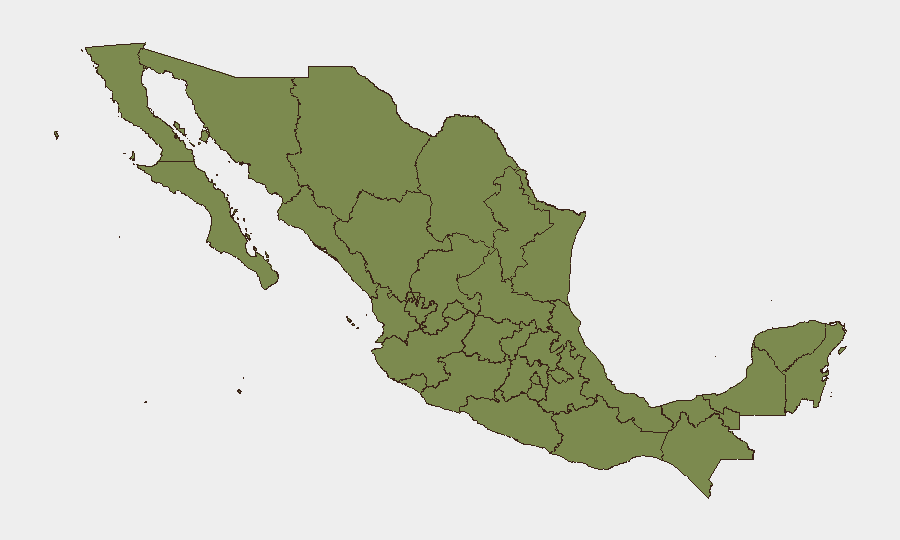
San Luis Potosí's composite risk score of 32.9 is a severe outlier and remains the country's dominant threat hotspot; underlying drivers are not fully detailed in current signals, but warrant urgent investigation. State of Mexico (8.8), Chihuahua (7.4), and northern border states (Sonora, Sinaloa) cluster in the 7.0–7.4 range, reflecting cross-border criminal networks, contraband transit, and spillover from cartel activity. Mexico City (4.9) ranks lower but shows sustained street violence and protest activity; its size and role as the capital amplify operational and reputational impact. Guerrero, Campeche, and Tabasco (6.7–6.9) indicate Central America–linked trafficking and localized instability.
How GeoBit Would Assist
Security teams operating in Mexico should deploy AOI (Area-of-Interest) Monitoring & Early Warning on San Luis Potosí, key highway corridors (especially México–Pachuca and México–Querétaro), and high-density commercial zones in Mexico City to receive real-time alerts on violence, protests, and blockades. Routing & Network Analysis capabilities enable duty-of-care teams to identify safe alternative travel paths around active labor actions and criminal hotspots and update them dynamically as incidents unfold. Multi-language OSINT, sentiment, and temporal analysis on labor unions, protest collectives, and social media will provide 3–7 day warning of planned transport blockades and World Cup-related demonstrations.
7-Day Outlook
Street violence in Mexico City and State of Mexico is likely to persist at current levels through late June absent major police operations. Labor-sector road blockades, though negotiated down on June 25, remain a recurring threat through the World Cup hosting period (ending July 2026) and should be monitored for escalation if negotiations break down. San Luis Potosí's exceptionally high risk score warrants urgent intelligence refresh to determine whether it reflects a recent criminal power shift, disappearances cluster, or data anomaly.
Highest-Risk Areas — Ranked
| # | State / Region | Risk |
|---|---|---|
| 1 | San Luis Potosí | 32.9 |
| 2 | State of Mexico | 8.8 |
| 3 | Chihuahua | 7.4 |
| 4 | Sonora | 7 |
| 5 | Sinaloa | 7 |
| 6 | Guerrero | 6.9 |
| 7 | Campeche | 6.7 |
| 8 | Tabasco | 6.3 |
| 9 | Chiapas | 5.2 |
| 10 | Mexico City | 4.9 |
| 11 | Morelos | 4.8 |
| 12 | Tlaxcala | 4.8 |
Sources
Previous Daily Briefs
A new Mexico brief is written every day — each with its own risk map and downloadable CSV. Here's the last week; use the calendar to go further back.
📅 Browse every day by calendar →
Highlighted days have a brief. Tap a day for that day's map & analysis, or “csv” for that day's dataset ($5).