Situation Summary
Mongolia remains a low to moderate risk environment with no major security incidents, civil unrest, or infrastructure disruptions reported in the last 24–48 hours. Overall conditions are stable, and routine precautions remain sufficient for most corporate operations and personnel. Government and international travel advisories continue normal guidance without country-wide warnings or elevated alerts.
Key Developments
No verifiable security, conflict, civil unrest, or significant infrastructure incidents have been reported in Mongolia within the last 24–48 hours according to open-source news, social media monitoring, and risk-advisory platforms. Routine political and administrative activity continues across the country, but no discrete events meet the threshold for inclusion in this brief's current incident window.
Organizations should note that absence of reported incidents does not eliminate residual risk—particularly in border and remote regions—and situational awareness remains necessary.
Highest-Risk Areas
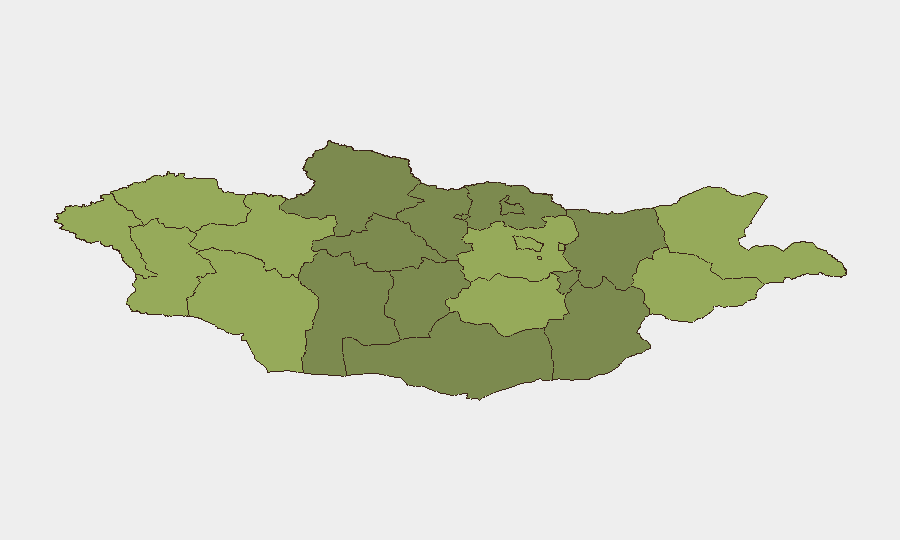
Border and remote regions drive Mongolia's sub-national risk profile. Dornod (eastern border region, risk 58), Sükhbaatar (southeast, risk 55), and Uvs (northwest, risk 52) rank highest, reflecting historical vulnerabilities to smuggling, transnational crime, and limited state presence. Khovd and Bayan-Ölgii (western regions, risks 50 and 48) show similar pressure from cross-border activity and distance from central authority.
Ulaanbaatar (risk 45) and central aimags (Töv, Dundgovi, Darkhan-Uul) carry moderate risk driven primarily by petty crime, traffic safety, and localized labor or political tensions rather than organized instability. Western and northern border zones warrant elevated caution; central and southern regions present lower immediate risk.
How GeoBit Would Assist
Intel Sweep and multi-language OSINT fusion enable continuous monitoring of Mongolian news, social media, and regional feeds to detect emerging incidents or unrest before they escalate. AOI Monitoring & Early Warning can maintain persistent watch over highest-risk aimags (Dornod, Sükhbaatar, Uvs) and corporate facilities, with automated alerting on new security developments. Network & Actor Analysis combined with sentiment & temporal analysis identifies emerging tensions or mobilization signals in real time. Routing & Network Analysis supports contingency planning for personnel and supply-chain security in border-adjacent operations. For organizations with regional offices or personnel in remote areas, satellite imagery analysis and border & disputed-territory search provide situational ground truth beyond local reporting delays.
7-Day Outlook
Near-term conditions are expected to remain stable with no anticipated major political, security, or infrastructure disruptions in the next week. Seasonal factors (August summer weather, routine economic activity) favor stable conditions. Organizations should maintain standard protocols and periodic intelligence refreshes, particularly those with cross-border or remote-aimag operations, and monitor local advisories and GeoBit alerts for any shift in the baseline risk picture.
Highest-Risk Areas — Ranked
| # | State / Region | Risk |
|---|---|---|
| 1 | Dornod | 58 |
| 2 | Sükhbaatar | 55 |
| 3 | Uvs | 52 |
| 4 | Khovd | 50 |
| 5 | Bayan-Ölgii | 48 |
| 6 | Govi-Altai | 46 |
| 7 | Ulaanbaatar | 45 |
| 8 | Zavkhan | 44 |
| 9 | Töv | 42 |
| 10 | Dundgovi | 40 |
| 11 | Darkhan-Uul | 38 |
| 12 | Ömnögovi | 37 |
Sources
Previous Daily Briefs
A new Mongolia brief is written every day — each with its own risk map and downloadable CSV. Here's the last week; use the calendar to go further back.
📅 Browse every day by calendar →
Highlighted days have a brief. Tap a day for that day's map & analysis, or “csv” for that day's dataset ($5).
Atlas — our AI intelligence desk — emails them this snapshot personally. Nothing else, no list.