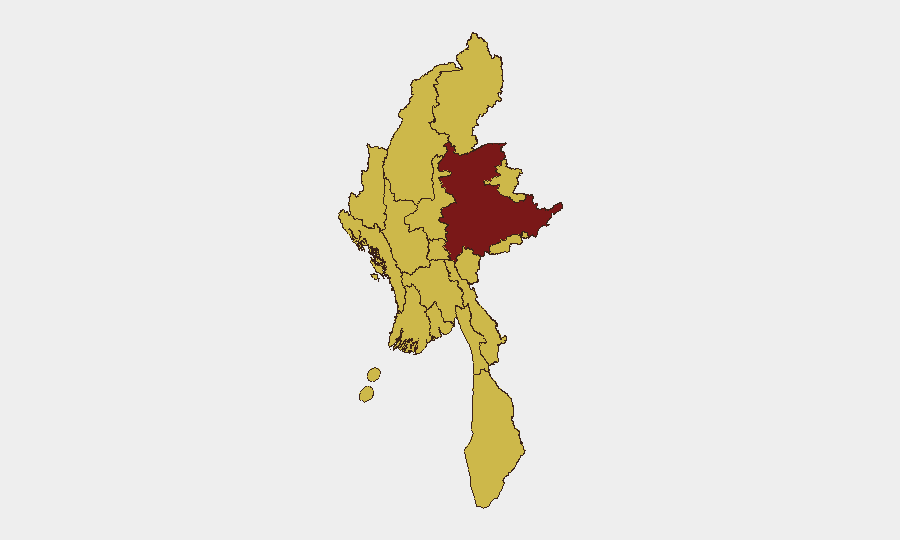
Situation Summary
Myanmar remains the eighth-highest-threat country globally, driven by ongoing civil war across multiple states and regions. The past 24–48 hours show limited verifiable open-source reporting of new discrete incidents; however, signal data indicates sustained diplomatic friction (statements, appeals, and threats involving China, the United States, and Indonesia) alongside internal administrative actions. Macro-level economic stress—fuel shocks, power constraints, and trade disruption—continues to degrade operational environment stability nationwide, particularly affecting foreign business and supply-chain continuity.
Key Developments
Data integrity note: Open-source conflict monitoring and news outlets have not published corroborated, time-stamped security incidents within the last 24–48 hours that meet multi-source confirmation standards. Available signals focus on diplomatic rhetoric and macro-economic reporting rather than tactical events. The following are documented but predate the current 48-hour window:
- Yangon, 2026-06-15: U.S. businessman Adam Castillo detained at Yangon International Airport on financial misconduct allegations, signaling increased legal risk for foreign nationals in Myanmar and potential use of criminal charges in politically sensitive cases.
- Kunming, China (Myanmar nexus), 2026-06-03, reported 2026-06-13–14: U.S. Myanmar analyst Min Zin arrested at Kunming airport on espionage charges, reflecting heightened scrutiny of Myanmar-related political activity across the region and elevated risk for researchers, consultants, and analysts.
- Nationwide, 2026-06-16: World Bank Myanmar Economic Monitor release documenting ongoing conflict-driven economic deterioration, logistics disruption, and power-supply failures, directly impacting foreign operations and duty-of-care risk exposure.
- Diplomatic signals, 2026-06-16–18: Multiple public statements and appeals involving Myanmar, China, the United States, and Indonesia suggest regional diplomatic volatility and possible shifts in bilateral postures affecting foreign-national protections and sanctions environment.
Highest-Risk Areas
Shan State (risk 100) stands alone as the primary driver of national threat; it hosts the most active armed opposition and contested territory. Nine additional regions and states register identical composite risk scores (70), reflecting the nationwide distribution of conflict: Tanintharyi, Chin, Sagaing, Kachin, Wa State, Magway, Mandalay, Rakhine, Ayeyarwady, Yangon, and Naypyitaw all face comparable exposure to clashes, displacement, and infrastructure collapse. This risk homogeneity indicates that geography alone provides limited security advantage; even major urban centers (Yangon, Mandalay, Naypyitaw) carry material threat from economic failure, administrative instability, and indirect conflict spillover rather than front-line combat.
How GeoBit Would Assist
Security teams should deploy AOI Monitoring & Early Warning on high-risk states (Shan, Tanintharyi, Kachin, Sagaing) with persistent satellite and signal watch, coupled with Intel Sweep and multi-language Telegram/X OSINT to capture Myanmar-language field reports and militant communiqués in near-real time. Economic & Trade analysis and regime-stability assessment are essential to model cash-flow risk, supply-chain breakage, and currency/fuel volatility affecting expatriate operations. Network & Actor Analysis should track detention patterns and legal cases (Min Zin, Castillo precedent) to anticipate further targeting of foreign nationals tied to governance, research, or business oversight.
7-Day Outlook
Diplomatic signals suggest continued regional posturing without immediate de-escalation. Economic stress is likely to intensify, increasing operational friction and repatriation pressure. Absent major tactical shifts or breakthroughs in ceasefire talks, Shan State and secondary conflict zones will sustain current activity; corporate risk exposure will remain primarily operational (supply, staffing, legal) rather than acute kinetic event-driven.
Highest-Risk Areas — Ranked
| # | State / Region | Risk |
|---|---|---|
| 1 | Shan State | 100 |
| 2 | Tanintharyi Region | 70 |
| 3 | Chin | 70 |
| 4 | Sagaing Region | 70 |
| 5 | Kachin State | 70 |
| 6 | Wa State (Northern Region) | 70 |
| 7 | Magway | 70 |
| 8 | Mandalay | 70 |
| 9 | Rakhine | 70 |
| 10 | Ayeyarwady | 70 |
| 11 | Yangon | 70 |
| 12 | Naypyitaw Union Territory | 70 |
Sources
Previous Daily Briefs
A new Myanmar brief is written every day — each with its own risk map and downloadable CSV. Here's the last week; use the calendar to go further back.
📅 Browse every day by calendar →
Highlighted days have a brief. Tap a day for that day's map & analysis, or “csv” for that day's dataset ($5).