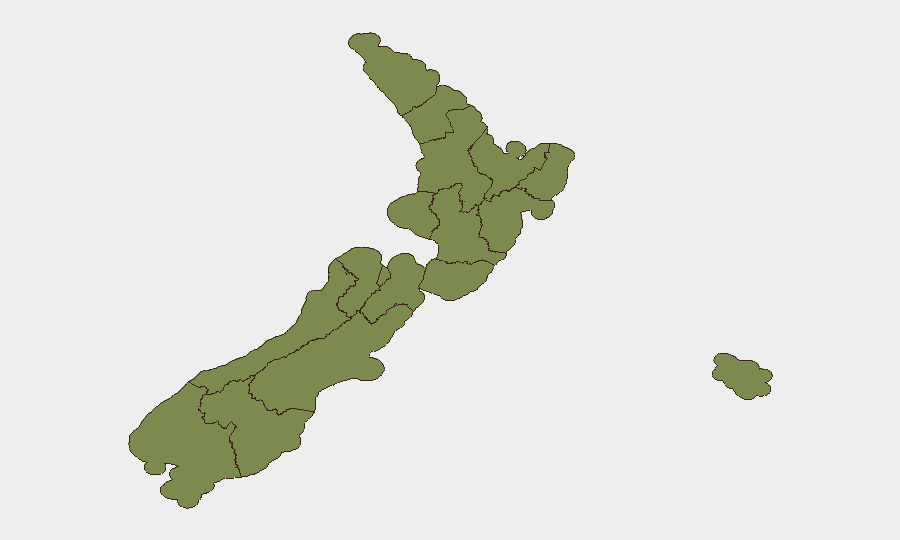
Situation Summary
New Zealand remains a stable, low-threat environment with no acute security incidents or civil unrest reported in the past 24–48 hours. The country ranks #151 globally on composite threat metrics, consistent with its position among the world's more peaceful nations. Recent activity signals reflect routine institutional and political discourse rather than security deterioration, with no verifiable incidents affecting corporate operations, critical infrastructure, or travel safety in the monitored window.
Key Developments
No discrete, credible security incidents—specific to locations, with confirmed dates in the last 24–48 hours—have been verified across conflict, crime, civil unrest, or infrastructure domains. Live web research and event-signal monitoring did not yield verifiable acute events meeting briefing criteria. Routine institutional statements and policy discussions were noted across government, healthcare, education, and private sector entities (2026-07-01 to 2026-07-02), but these reflect normal administrative activity rather than security threats. Organizations with operations in New Zealand should maintain standard duty-of-care protocols; no emergency escalation is warranted based on current intelligence.
Highest-Risk Areas
Canterbury presents elevated composite risk (31.8), significantly higher than other regions, though the specific drivers require targeted intelligence sweep to isolate. Auckland and the Waikato/Wellington corridors show moderate risk profiles (16.5–13.3), consistent with population density and economic activity concentration. Northland, Otago, and remaining districts register low to very low risk (<11). Risk ranking reflects historical event frequency and threat-vector density rather than imminent, acute threat; security teams should apply standard enhanced due diligence in Canterbury operations and routine baseline practices elsewhere, pending deeper analysis of Canterbury risk drivers.
How GeoBit Would Assist
Security teams protecting personnel and assets in New Zealand should use Intel Sweep and multi-language OSINT fusion to monitor institutional, political, and criminal-activity feeds for early indicators of sector-specific risk (e.g., labor unrest, regulatory action, supply-chain disruption). AOI Monitoring & Early Warning on Canterbury, Auckland, and Wellington—paired with conflict, crime, and cyber-threat search—would provide persistent, low-latency alerting if threat vectors shift. GIS & Spatial Analysis and Routing & Network Analysis support operational resilience planning for personnel movement and supply logistics across identified risk zones.
7-Day Outlook
No significant threat escalation is anticipated over the next seven days based on current signal patterns and regional stability indicators. Routine institutional activity, policy implementation, and standard business operations should proceed without security disruption. Teams should maintain baseline monitoring posture and escalate only if event signals show material uptick in frequency, severity, or specificity to corporate locations or operations.
GEOBIT THREAT RANKING: #151 global | Composite score: 5/100 | 141 tracked events
BRIEF DATE: 2026-07-03 | DATA WINDOW: 2026-07-01 to 2026-07-02
Highest-Risk Areas — Ranked
| # | State / Region | Risk |
|---|---|---|
| 1 | Canterbury | 31.8 |
| 2 | Auckland | 16.5 |
| 3 | Waikato | 13.3 |
| 4 | Wellington | 13.3 |
| 5 | Northland | 10.7 |
| 6 | Otago | 4.9 |
| 7 | Hawke's Bay | 3.9 |
| 8 | Bay of Plenty | 3.3 |
| 9 | Chatham Islands | 2.8 |
| 10 | Taranaki | 2.8 |
| 11 | West Coast | 2.3 |
| 12 | Southland | 2.3 |
Sources
Previous Daily Briefs
A new New Zealand brief is written every day — each with its own risk map and downloadable CSV. Here's the last week; use the calendar to go further back.
📅 Browse every day by calendar →
Highlighted days have a brief. Tap a day for that day's map & analysis, or “csv” for that day's dataset ($5).