Situation Summary
Pakistan remains at moderate composite threat (rank #25 globally, score 73), with security pressures concentrated in Punjab and Khyber Pakhtunkhwa. The immediate 24–48-hour environment is marked by elevated sectarian and militant activity coinciding with Muharram religious observances (25–26 June), increased military deployments in major urban centers, and ongoing counter-terrorism operations in KP. Urban crime, targeted killings in Karachi, and civil unrest in Pakistan-administered Kashmir are compounding the risk picture.
Key Developments
- Muharram Processions, Nationwide (25–26 June 2026): U.S. Embassy issued a Security Alert warning that Muharram processions, historically targeted by militants, pose elevated sectarian and terrorism risk. Army and Rangers deployed across Lahore, Karachi, and other major cities as of 24–25 June with checkpoints and enhanced patrolling around procession routes and Shia sites. Expect visible military presence and potential movement disruption.
- Lower Dir District, Khyber Pakhtunkhwa (24 June 2026): Police reported six alleged militants killed in a counter-terrorism operation, indicating active CT engagements in KP and potential for retaliatory militant activity in surrounding districts.
- Targeted Killing, Orangi Town, Karachi (24 June 2026): A man was shot dead by motorcycle-riding assailants in a suspected targeted killing; victim's son injured. Incident reflects ongoing small-arms violence in Karachi's western districts.
- Shooting, Ibrahim Hyderi, Karachi (24 June 2026): A 52-year-old man gunned down in eastern coastal Karachi. Motive unconfirmed but consistent with pattern of lethal firearms incidents in the city.
- Pakistan-Administered Kashmir Civil Unrest (ongoing into 24 June 2026): Protests and shutdowns persisting with at least 24 fatalities recorded over nearly two weeks. Security deployments, clashes, and communications restrictions remain in place in affected AJK districts.
- Pakistan–Iran Diplomatic Tensions (22 June 2026): Public statements exchanged between Pakistan and Iran, alongside involvement of Qatar and critical media commentary, signal elevated diplomatic friction that may affect border security posture and heighten sectarian sensitivities during Muharram.
Highest-Risk Areas
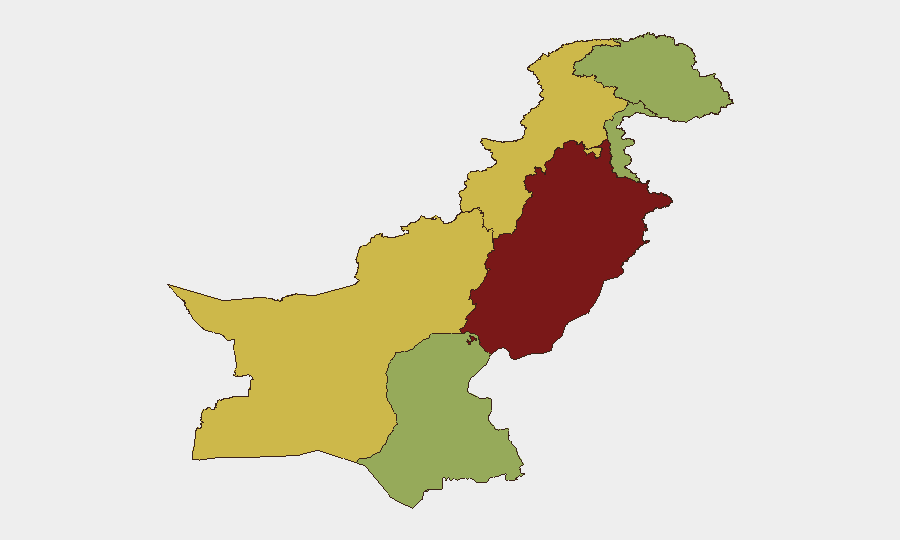
Punjab (81.4) and Khyber Pakhtunkhwa (67.1) drive overall risk, driven by sectarian violence, militant activity, and heavy-handed counter-terrorism operations. Islamabad (62.5), despite capital status, remains exposed to spillover from Punjab and KP networks. Balochistan (60.1) and Sindh (57.1) reflect persistent insurgency and urban crime respectively; Karachi's recurrent targeted killings and organized violence keep Sindh in the upper tier. Azad Kashmir's ongoing civil unrest (52.1) and border-adjacent Gilgit-Baltistan (51.4) round out the hierarchy, with political volatility and territorial sensitivities elevating risk in both regions.
How GeoBit Would Assist
Security teams would deploy AOI Monitoring & Early Warning on Muharram procession routes and sensitive Shia neighborhoods to detect tactical shifts or militant pre-positioning; Intel Sweep and X/Twitter & Telegram OSINT to track militant claims of responsibility and sectarian messaging in real time; and Routing & Network Analysis to identify safe transit corridors around checkpoints and crowd concentrations. Conflict mapping and Network & Actor Analysis would clarify militant retaliation risk following the Lower Dir operation, and Sentiment & Temporal Analysis on Pakistani and Iranian official channels would signal further diplomatic escalation that could sharpen sectarian tensions.
7-Day Outlook
Muharram processions present the immediate flash-point (25–26 June); security deployments will likely prevent mass-casualty attacks but create friction with crowds and disrupt urban mobility. CT operations in KP and alleged-militant networks may generate reprisal activity over the week ahead. Diplomatic strain with Iran and localized Karachi violence will persist as baseline friction unless a major incident triggers broader destabilization.
Highest-Risk Areas — Ranked
| # | State / Region | Risk |
|---|---|---|
| 1 | Punjab | 81.4 |
| 2 | Khyber Pakhtunkhwa | 67.1 |
| 3 | Islamabad Capital Territory | 62.5 |
| 4 | Balochistan | 60.1 |
| 5 | Sindh | 57.1 |
| 6 | Azad Kashmir | 52.1 |
| 7 | Gilgit-Baltistan | 51.4 |
Sources
Previous Daily Briefs
A new Pakistan brief is written every day — each with its own risk map and downloadable CSV. Here's the last week; use the calendar to go further back.
📅 Browse every day by calendar →
Highlighted days have a brief. Tap a day for that day's map & analysis, or “csv” for that day's dataset ($5).