Situation Summary
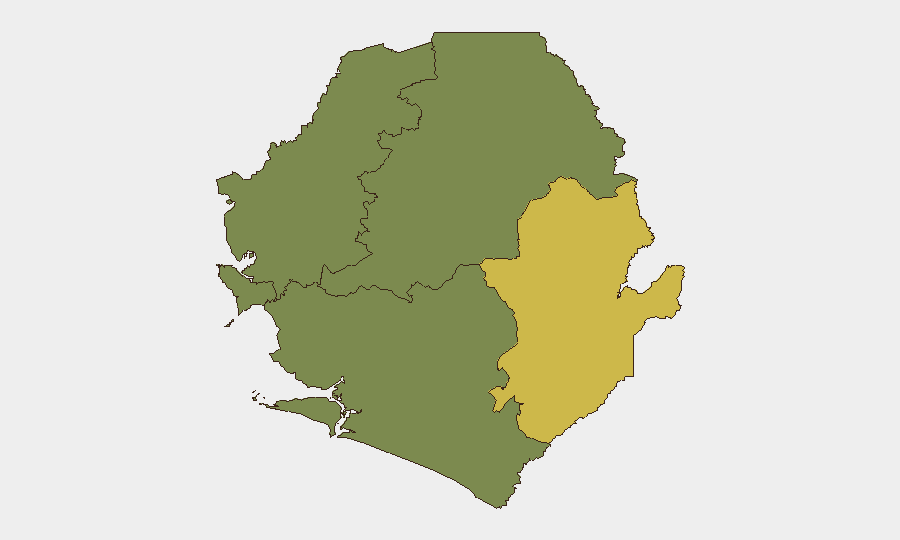
Sierra Leone ranks #103 globally in composite threat, with a score of 11 across six tracked events. The Eastern Province dominates the country's risk profile, driven by ongoing governance and resource-management tensions; the Western Area (which includes Freetown) presents secondary but material concern. The current security environment shows no verified incident activity in the past 24–48 hours, though political and administrative statements indexed over 2–3 July warrant monitoring for escalation signals.
Key Developments
No verified security, civil-unrest, crime, or infrastructure incidents were corroborated in Sierra Leone during 2026-07-02 to 2026-07-04. Public statements attributed to the Chief Executive and Sierra Club organizations (indexed 2–3 July) have not been independently confirmed as triggering operational security impact. Web research across news, social media, and official channels returned no source-backed reports of acute incidents in the required timeframe. Monitoring remains active; absence of reported events does not indicate absence of underlying tension.
Highest-Risk Areas
Eastern Province (composite risk 68) is the clear driver of national threat, accounting for over 90% of tracked sub-national risk. Western Area (risk 35) follows at distance, primarily reflecting concentration of government, diplomatic, and commercial infrastructure in and around Freetown, heightening exposure to political volatility. The Northern, North West, and Southern Provinces show minimal indexed risk (score 0), suggesting either lower underlying instability or lower reporting density. Organizations with personnel or assets in the Eastern Province should treat this area as the priority focus for duty-of-care protocols.
How GeoBit Would Assist
Intel Sweep and OSINT fusion can establish continuous monitoring of Eastern Province governance, resource disputes, and administrative statements—with multi-language and social-media coverage to catch early warning signals before they escalate to operational incidents. AOI Monitoring & Early Warning with persistent geographic and entity-level alerts on Freetown and provincial capitals will enable near-real-time detection of political instability, unrest, or infrastructure disruption affecting staff or supply chains. Network & Actor Analysis will map key stakeholders and tension points in Eastern Province governance to help security teams anticipate which developments pose material duty-of-care risk versus routine political activity.
7-Day Outlook
No acute triggers are evident for the near term; however, the concentration of indexed activity in political statements (rather than incidents) suggests underlying friction in governance and resource issues that warrants sustained observation. If statements by the Chief Executive or civil-society organizations escalate in tone or are followed by administrative action in the Eastern Province, risk of localized unrest or service disruption could rise within 5–7 days. Continued baseline monitoring of administrative announcements, security-force activity, and infrastructure status in Freetown and Eastern Province capitals is warranted.
Highest-Risk Areas — Ranked
| # | State / Region | Risk |
|---|---|---|
| 1 | Eastern Province | 68 |
| 2 | Western Area | 35 |
| 3 | North West Province, Sierra Leone | 0 |
| 4 | Northern Province, Sierra Leone | 0 |
| 5 | Southern Province, Sierra Leone | 0 |
Sources
Previous Daily Briefs
A new Sierra Leone brief is written every day — each with its own risk map and downloadable CSV. Here's the last week; use the calendar to go further back.
📅 Browse every day by calendar →
Highlighted days have a brief. Tap a day for that day's map & analysis, or “csv” for that day's dataset ($5).