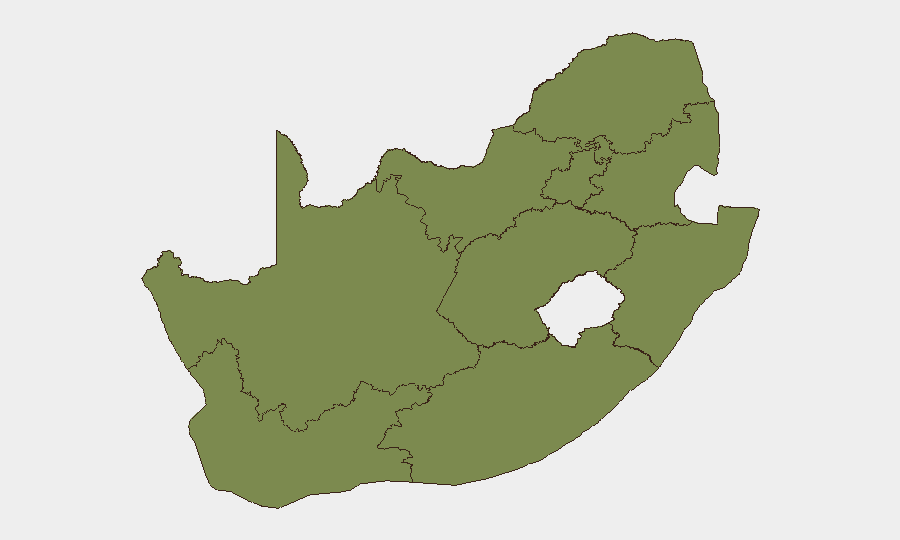
Situation Summary
South Africa's composite threat score of 17 (global rank #87) reflects persistent multi-domain security pressures: xenophobic violence, illegal mining-related armed confrontations, organized crime, and civil unrest tied to economic grievance and inter-community tension. The past 72 hours have surfaced violent protests, fatal law-enforcement operations, and significant arrest sweeps, with foreign nationals increasingly at risk in hotspot zones. Risk concentration in Gauteng (score 34.1) and secondary elevations across Eastern Cape, Western Cape, and Free State indicate both urban criminality and provincial-level instability. Trajectory remains volatile with no near-term stabilization signals.
Key Developments
- Jeffreys Bay, Eastern Cape (16 July, reported 22 July): Xenophobic anti-immigrant protest in Ocean View escalated to violent looting; 69 arrested, 23 foreign-owned shops targeted, 1 hospitalized, and foreign nationals relocated to temporary shelters. Reflects ongoing Gqeberha corridor tension.
- Ga-Mahlokwane mine, Limpopo (21 July): Armed altercation at site resulted in death of Gauteng police officer and one other; two murder cases opened and manhunt underway for gunmen—signals breakdown in operational security and possible illegal-mining-zone governance failure.
- CRD Mine, Western Johannesburg, Gauteng (17 July): Two SANDF members fatally fell into abandoned vertical shaft during Operation Prosper (anti-illegal mining); underscores hazard exposure in enforcement operations and zama-zama activity persistence.
- Johannesburg court/custody developments (19–22 July): Suspended Ekurhuleni Metro Police deputy chief in custody on multimillion-rand precious-stones theft; counter-intelligence and political-killings task-team activity ongoing. Reflects institutional corruption exposure.
- Nationwide Operation Shanela (13–19 July, reported 21 July): SAPS arrested 17,583 suspects (murder, attempted murder, rape, carjacking, firearms, drugs, immigration violations); 3,622 undocumented migrants detained. Signals scale of organized crime and border-control gaps.
- Anti-immigrant civil unrest (ongoing, nationwide snapshot 22 July): ~350 arrested for unlawful conduct, intimidation, incitement linked to xenophobic campaigns; police warnings of instability in multiple hotspots and sustained foreign-national travel risk.
Highest-Risk Areas
Gauteng dominates the risk landscape (34.1), driven by high-density urban crime, corruption-exposure in state institutions, and illegal mining zones. Eastern Cape and Western Cape secondary peaks (11.5 and 13.3 respectively) reflect xenophobic unrest in coastal and semi-urban areas (Jeffreys Bay, Gqeberha), looting, and displacement. Free State and North West (11.5 and 8.3) show emerging civil tension and criminality spillover. Limpopo's armed mining-zone incidents (6.9) indicate geographic variance in enforcement risk and non-state actor presence. KwaZulu-Natal's lower ranking (5.1) does not eliminate local crime or communal conflict; Northern Cape and Mpumalanga (4.1 each) remain secondary watch-zones.
How GeoBit Would Assist
Security teams would employ Intel Sweep and global event feeds to track xenophobic and mining-related unrest trajectories in real time, paired with X/Twitter and Telegram OSINT to monitor union rhetoric, incitement, and protest coordination. AOI Monitoring & Early Warning on Gauteng, Eastern Cape, and Gqeberha corridor would deliver persistent alerting on police operations, shop-front activity, and foreign-national displacement. Routing & Network Analysis would support safe passage planning for personnel in high-risk provinces, while Entity extraction and sentiment analysis would flag escalatory rhetoric before violent flashpoints. GIS & Spatial Analysis would map xenophobic hotspots and mine-zone enforcement zones for duty-of-care route avoidance.
7-Day Outlook
Xenophobic mobilization and illegal-mining enforcement are likely to sustain flashpoint activity through late July. Union action and civil-grievance signaling from 22 July briefings suggest possibility of secondary protest waves or work stoppages, particularly in Gauteng and Western Cape. No major state-level political events are flagged for the immediate week; however, police operations and court proceedings will remain high-visibility, and foreign-national safety advisories should remain in effect for Eastern Cape coastal zones and Johannesburg peripheries.
Highest-Risk Areas — Ranked
| # | State / Region | Risk |
|---|---|---|
| 1 | Gauteng | 34.1 |
| 2 | Western Cape | 13.3 |
| 3 | Eastern Cape | 11.5 |
| 4 | Free State | 11.5 |
| 5 | North West | 8.3 |
| 6 | Limpopo | 6.9 |
| 7 | KwaZulu-Natal | 5.1 |
| 8 | Northern Cape | 4.1 |
| 9 | Mpumalanga | 4.1 |
Sources
Previous Daily Briefs
A new South Africa brief is written every day — each with its own risk map and downloadable CSV. Here's the last week; use the calendar to go further back.
📅 Browse every day by calendar →
Highlighted days have a brief. Tap a day for that day's map & analysis, or “csv” for that day's dataset ($5).
Atlas — our AI intelligence desk — emails them this snapshot personally. Nothing else, no list.