Situation Summary
South Korea remains a stable, low-threat environment globally (#130 composite risk) with no corroborated significant security incidents, civil unrest, or infrastructure disruptions reported in the last 24–48 hours. Recent diplomatic signals—including statements on North Korea, Taiwan, China relations, and a domestic investigation—reflect routine geopolitical positioning rather than acute operational escalation. Baseline risks (petty crime, transport accidents, North Korea contingency) persist unchanged; no imminent threat to corporate operations or personnel is evident from open sources.
Key Developments
- 2026-06-21 · Domestic Investigation (Location: Seoul) — South Korean authorities initiated an unspecified investigation; no details on scope, target, or security relevance are yet available in open sources.
- 2026-06-20 · Presidential Statement on North Korea (National) — President issued a public statement regarding North Korea; tone and substance not yet confirmed in accessible English-language reporting, but consistent with ongoing diplomatic monitoring.
- 2026-06-20 · Government Statement on Foreign Company (Seoul) — South Korean government made a public statement concerning an unnamed company; type of concern (trade, compliance, data) remains unclear from available summaries.
- 2026-06-20 · Diplomatic Disapproval from China (National) — China issued disapproval of South Korean action or position; context and target policy area not yet detailed in corroborated reporting.
- 2026-06-20 · Washington Public Statement on South Korea (National) — U.S. issued a public statement regarding South Korea; alignment with earlier North Korea/Taiwan messaging not yet confirmed.
- Ongoing Diplomatic Tension (North Korea Border Region) — Standard heightened monitoring of inter-Korean military posture and rhetoric continues; no new kinetic activity or major escalation reported since June 19.
Highest-Risk Areas
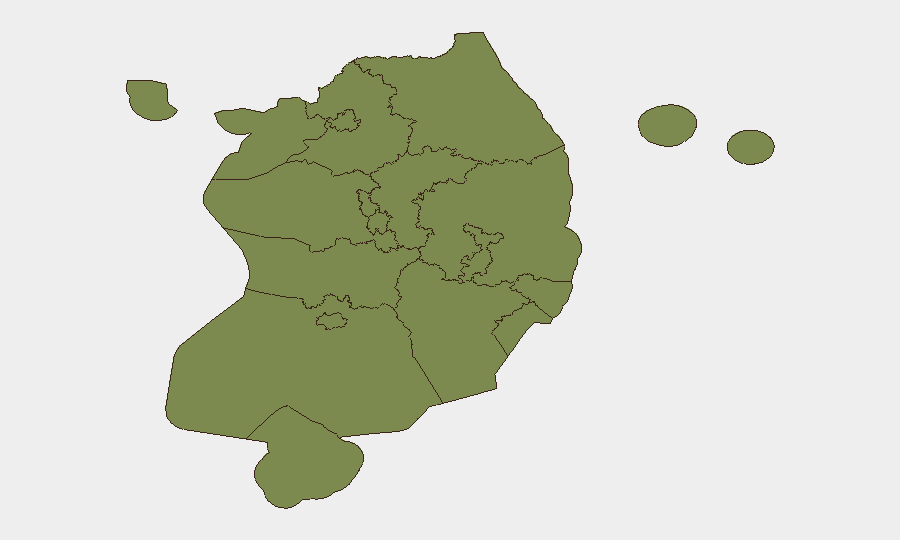
Seoul dominates the sub-national ranking (risk 31.5) by a substantial margin, reflecting its role as the capital, primary diplomatic hub, and most densely populated metropolitan area. North Chungcheong (24.2) follows—likely driven by proximity to the Demilitarized Zone and military concentration. Gangwon State (14.8), including the eastern DMZ corridor, represents the third-highest risk zone. All other regions score below 15, with peripheral and southern areas (Incheon, Sejong, South Chungcheong) at minimal risk. The concentration of threat in Seoul and the DMZ-adjacent provinces underscores that operational exposure is highest for personnel and assets in the capital and military-sensitive zones.
How GeoBit Would Assist
Intel Sweep and multi-language OSINT fusion would provide near-real-time corroboration of Korean-language government statements, company-specific allegations, and diplomatic developments before English-language confirmation reaches mainstream media. AOI Monitoring & Early Warning on Seoul and North Chungcheong—with persistent watch for protest activity, military movements, or infrastructure disruption—would alert security teams to rapid escalation before it affects corporate continuity. Network & Actor Analysis would map relationships between named government agencies and targeted companies, clarifying compliance and reputational risk.
7-Day Outlook
No acute escalation is expected in the next seven days; diplomatic rhetoric and routine investigations appear to reflect normal inter-agency and inter-allied communication cycles. However, the combination of North Korea statements, China disapproval, and U.S. positioning warrants continued close watch for any shift in messaging intensity or military signaling. Personnel and asset managers in Seoul should maintain standard duty-of-care protocols (comms check-in, evacuation familiarization, alternative routing awareness) without elevation to crisis-response posture.
Highest-Risk Areas — Ranked
| # | State / Region | Risk |
|---|---|---|
| 1 | Seoul | 31.5 |
| 2 | North Chungcheong | 24.2 |
| 3 | Gangwon State | 14.8 |
| 4 | Busan | 8.7 |
| 5 | Jeju | 4.8 |
| 6 | Gyeonggi | 2.6 |
| 7 | South Jeolla | 2 |
| 8 | Daegu | 2 |
| 9 | South Gyeongsang | 2 |
| 10 | Incheon | 1.5 |
| 11 | South Chungcheong | 1.5 |
| 12 | Sejong | 1.5 |
Sources
Previous Daily Briefs
A new South Korea brief is written every day — each with its own risk map and downloadable CSV. Here's the last week; use the calendar to go further back.
📅 Browse every day by calendar →
Highlighted days have a brief. Tap a day for that day's map & analysis, or “csv” for that day's dataset ($5).