Situation Summary
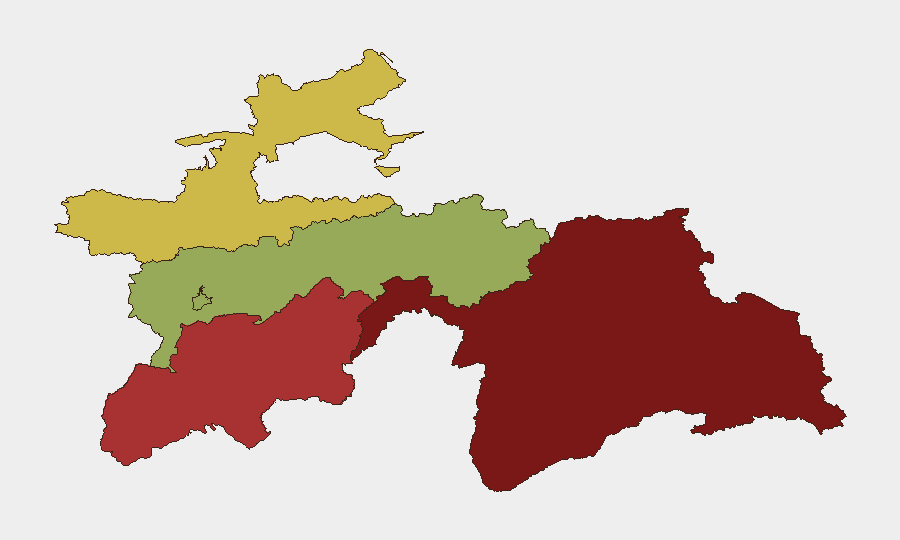
Tajikistan remains in a stable but structurally fragile security environment, ranked #110 globally with a composite threat score of 11. No discrete security incidents have been recorded in the current 24–48-hour window; however, underlying vulnerabilities persist, particularly along the Afghan border where CSTO-affiliated sources describe conditions as "complicated." The threat landscape is heavily concentrated in mountainous border regions, with Gorno-Badakhshan and Khatlon accounting for the majority of documented risk exposure.
Key Developments
No credible, time-stamped security, conflict, civil-unrest, or travel-risk incidents meeting verification criteria were identified in Tajikistan for June 27–29, 2026. Open-source reporting in the last 24–48 hours remains limited to standing assessments of border conditions and references to earlier seismic activity without confirmed current impact.
Background Context (not current developments):
- Tajik–Afghan border tensions have persisted as a chronic vulnerability; CSTO statements characterize the situation as "complicated" but have not reported acute escalations in the immediate window.
- A 6.1-magnitude earthquake affected parts of Afghanistan, Pakistan, Tajikistan, and Uzbekistan; open reporting does not clearly confirm this occurred within June 27–29, 2026, and likely refers to earlier activity.
Highest-Risk Areas
Gorno-Badakhshan Autonomous Region (risk score 92) and Khatlon Region (risk score 78) dominate the threat profile. Both territories border Afghanistan and exhibit structural vulnerabilities to cross-border infiltration, smuggling, and militant activity. Gorno-Badakhshan's remoteness and sparse security infrastructure elevate exposure to unmonitored border crossings and ungoverned space; Khatlon's higher population density and transportation networks increase vectors for trafficking and conflict spillover. By contrast, Dushanbe (risk score 42) and the Districts of Republican Subordination reflect substantially lower operational risk, reflecting stronger state presence and urban monitoring capacity.
How GeoBit Would Assist
Security teams monitoring Tajikistan should employ AOI Monitoring & Early Warning with persistent satellite and signal intelligence (SIGINT) watch on Gorno-Badakhshan and cross-border zones to detect militant movement or trafficking activity before it escalates. Multi-language OSINT fusion—combining Telegram, local radio, and Afghan-side reporting—enables early detection of border incidents or humanitarian events that formal government channels may delay reporting. Conflict & Military tracking of force deployments and Routing & Network Analysis for alternative travel corridors support duty-of-care teams planning personnel movements and supply logistics in high-risk regions.
7-Day Outlook
No acute escalation is anticipated in the seven-day window absent new triggering events on the Afghan frontier. However, the chronic border instability and seismic activity in the broader region warrant sustained monitoring, particularly in Gorno-Badakhshan, where infrastructure fragility and limited emergency-response capacity compound any secondary hazard exposure. Organizations with personnel or assets in mountainous regions should maintain contingency communication and evacuation protocols.
Highest-Risk Areas — Ranked
| # | State / Region | Risk |
|---|---|---|
| 1 | Gorno-Badakhshan Autonomous Region | 92 |
| 2 | Khatlon Region | 78 |
| 3 | Sughd Region | 65 |
| 4 | Districts of Republican Subordination | 58 |
| 5 | Dushanbe | 42 |
Sources
Previous Daily Briefs
A new Tajikistan brief is written every day — each with its own risk map and downloadable CSV. Here's the last week; use the calendar to go further back.
📅 Browse every day by calendar →
Highlighted days have a brief. Tap a day for that day's map & analysis, or “csv” for that day's dataset ($5).