Situation Summary
Turkey maintains a composite threat score of 33 (rank #47 globally) with 447 tracked events, reflecting a complex security environment shaped by ongoing counterterrorism operations, political dynamics, and organized-crime activity. The past 24–48 hours show elevated law-enforcement activity concentrated in Istanbul and Ankara, consistent with a broader tightened security posture linked to NATO summit activity and heightened counterterrorism pressure. While no major incident has been confirmed in the most recent cycle, the frequency of police detentions and investigative operations suggests sustained operational tempo against armed criminal networks and potential security threats.
Key Developments
- Istanbul (Bakırköy & Kadıköy), 28–29 July — Police detained 6 suspects in connection with armed attacks on workplaces; 2 were arrested and 4 remained under questioning. Case is attributed to "new generation armed criminal organizations," indicating organized armed activity targeting commercial/employment sites.
- Ankara, 28 July — Iraqi Prime Minister arrived for official security and bilateral talks with President Erdoğan covering counterterrorism, transport, energy, and water cooperation—a political-security development reflecting regional alignment on security issues.
- Ankara, 28–29 July — Turkish authorities maintained elevated security posture with broad restrictions on public gatherings and heightened police/security presence around the capital, consistent with NATO summit environment security protocols.
- Turkey-wide, 28–29 July — Counterterrorism detentions and investigative operations continued nationwide; security reporting indicated sustained pressure on suspected extremist and criminal networks, though specific new incidents beyond the ongoing operational posture were not independently confirmed in available sources.
- Threat signal, 29 July — Geobit event feed recorded a "Threaten" signal attributed to the Turkish presidency and separate academic sector threat activity, suggesting rhetorical escalation or security messaging around current political/institutional issues.
- Public demonstrations, 29 July — Citizen rally/demonstration activity was tracked, indicating some level of public mobilization, likely in response to political or security-related developments.
Highest-Risk Areas
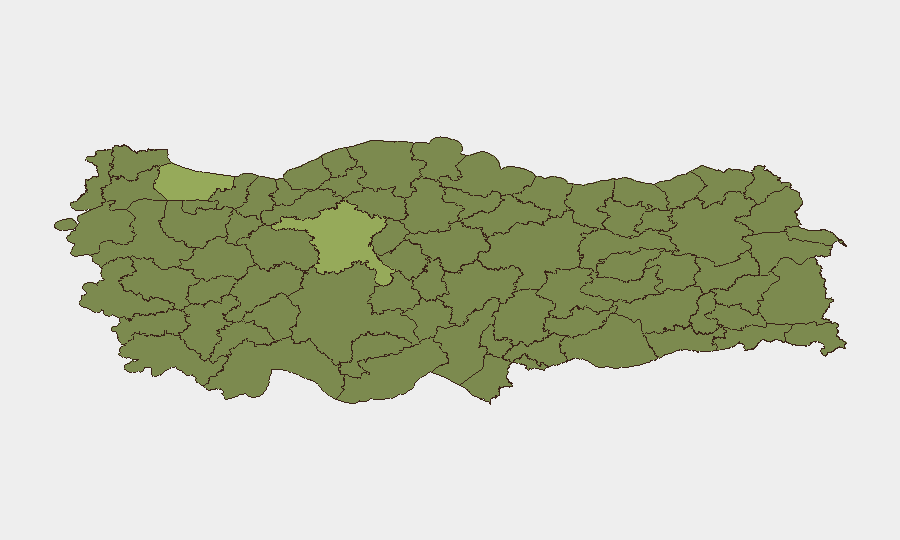
Ankara (53.2) dominates the sub-national ranking, driven by political-institutional concentration, diplomatic presence, and heightened counterterrorism and law-enforcement activity—particularly evident in the current NATO summit security environment. Istanbul (41.3) follows, reflecting organized-crime networks, armed criminal organizations, and the density of commercial and transportation infrastructure; the 28–29 July workplace-attack arrests underscore this pattern. Together, these two regions account for the majority of tracked threat events and composite risk. Southeastern provinces (Şırnak, Diyarbakır, Mardin, Muş) show sustained elevation (23.6–26.6), consistent with longer-term counterterrorism pressure and PKK-related activity; Kahramanmaraş and Tunceli similarly reflect organized violence and separatist-linked tensions.
How GeoBit Would Assist
Security teams monitoring Turkey would employ Intel Sweep and multi-language OSINT to track emerging threat signals in real time and correlate Turkish-language social media, news, and Telegram channels with confirmed incident patterns. AOI Monitoring & Early Warning on Ankara, Istanbul, and southeastern provinces would provide persistent alerts on police operations, detentions, demonstrations, and rhetorical escalation, enabling duty-of-care teams to anticipate restrictions or security lockdowns affecting personnel movement. Network & Actor Analysis would map relationships between organized-crime groups, state security operations, and foreign actors (e.g., Russian, Saudi investigative interest noted in event feed), allowing risk teams to identify indirect exposure to broader geopolitical or criminal dynamics.
7-Day Outlook
The NATO summit security environment is expected to sustain elevated restrictions, police operations, and surveillance intensity in Ankara and Istanbul through early August. Organized-crime and counterterrorism operations are likely to continue at current tempo, with intermittent detentions and public-order restrictions in major urban centers. No major escalation is currently signaled, but rhetorical and demonstration activity warrants ongoing monitoring for localized disruptions to business operations or personnel safety.
Highest-Risk Areas — Ranked
| # | State / Region | Risk |
|---|---|---|
| 1 | Ankara | 53.2 |
| 2 | Istanbul | 41.3 |
| 3 | Izmir | 33.4 |
| 4 | Canakkale | 30 |
| 5 | Şırnak | 26.6 |
| 6 | Tunceli | 24.9 |
| 7 | Kahramanmaraş | 24.3 |
| 8 | Uşak | 24 |
| 9 | Adana | 23.7 |
| 10 | Muş | 23.7 |
| 11 | Diyarbakır | 23.7 |
| 12 | Mardin | 23.7 |
Sources
Previous Daily Briefs
A new Turkey brief is written every day — each with its own risk map and downloadable CSV. Here's the last week; use the calendar to go further back.
📅 Browse every day by calendar →
Highlighted days have a brief. Tap a day for that day's map & analysis, or “csv” for that day's dataset ($5).
Atlas — our AI intelligence desk — emails them this snapshot personally. Nothing else, no list.