Situation Summary
Turkmenistan remains a stable, low-incident environment with no credible security incidents reported in the last 24–48 hours. The national composite threat score of 5 and absence of tracked events reflect a security landscape characterized by routine diplomatic and economic activity. Subnational risk concentrations in Balkan and Lebap regions reflect historical patterns rather than acute current instability, and no indicators suggest material change in the near term.
Key Developments
- Ashgabat, July 7: Armenian officials expressed interest in expanding gas-sector cooperation with Turkmenistan, focusing on energy and pipeline projects. This diplomatic development signals continued regional engagement in energy infrastructure and poses no direct security concern.
- Ashgabat, July 2026: The Chairman of the Halk Maslahaty participated in an interview with Iranian state broadcaster IRIB addressing themes of neutrality and cooperation; no unrest, conflict, or domestic instability was mentioned.
- Herat Province, Afghanistan / Turkmenistan TAPI corridor, recent: The governor of Herat met with Turkmenistan's TAPI project head (Begenj Abdullayev) to discuss pipeline construction commencement; no cross-border security incidents or destabilizing activity was reported in connection with this meeting.
- Turkmenistan (general), July 6–7: Regional analysis highlighted development of the Galkynysh gas field and offshore Caspian projects, with emphasis on energy security and diversification; no sabotage, attacks, or infrastructure failures were reported.
- No acute incident reporting (24–48h window): Open sources, news outlets, and social media monitoring produced no credible reports of violence, civil unrest, crime spikes, political instability, infrastructure disruption, or acute travel risks.
Highest-Risk Areas
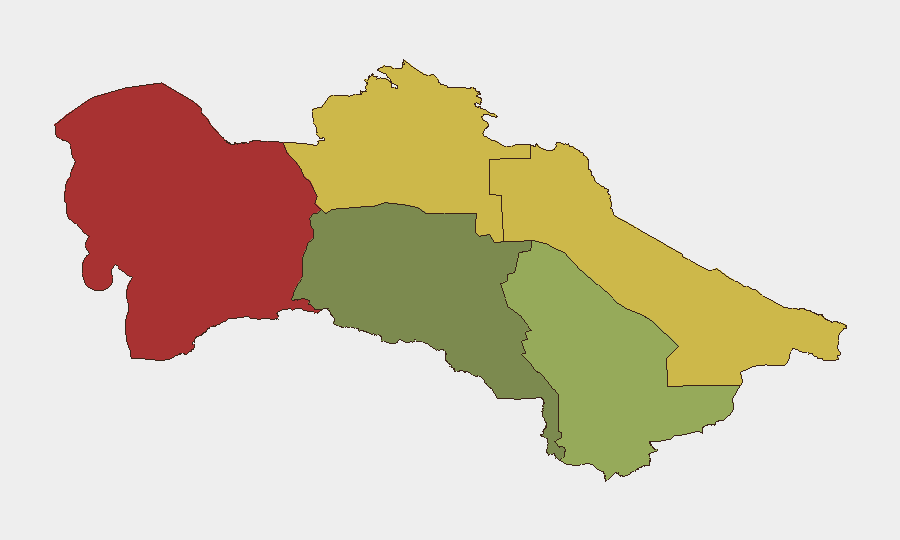
Balkan Region (risk 78) and Lebap Region (risk 68) drive the subnational ranking and warrant enhanced monitoring, though neither has generated acute incidents in the current window. Balkan's elevated score likely reflects historical patterns, border proximity considerations, and population density factors; Lebap similarly carries persistent elevated risk markers. Dashoguz Region (62) and Mary Region (42) remain secondary concerns. Ashgabat City scores substantially lower (18), consistent with capital-city security presence and state control. Organizations with personnel or assets in Balkan or Lebap should maintain standard duty-of-care protocols and contingency awareness, but no escalation indicators are present.
How GeoBit Would Assist
Security teams should employ Area-of-Interest Monitoring & Early Warning on Balkan and Lebap regions to detect emerging incident signals before they reach mainstream reporting. Multi-language OSINT (Intel Sweep, X/Telegram/YouTube monitoring, and entity extraction) enables continuous ambient intelligence collection across Turkmenistan's restrictive information environment, compensating for limited official or independent media. Risk & Threat Assessment and Network & Actor Analysis capabilities support longer-cycle mapping of actors, economic vulnerabilities, and regime-stability indicators to inform duty-of-care positioning and contingency planning.
7-Day Outlook
No material change in the current low-threat environment is anticipated over the next seven days. Ongoing energy diplomacy (gas cooperation, TAPI pipeline development) and routine state activity will likely continue. Organizations should maintain standard protocols while monitoring Balkan and Lebap regions for any signals divergence from the current baseline.
Highest-Risk Areas — Ranked
| # | State / Region | Risk |
|---|---|---|
| 1 | Balkan Region | 78 |
| 2 | Lebap Region | 68 |
| 3 | Dashoguz Region | 62 |
| 4 | Mary Region | 42 |
| 5 | Ahal Region | 35 |
| 6 | Ashgabat City | 18 |
Sources
Previous Daily Briefs
A new Turkmenistan brief is written every day — each with its own risk map and downloadable CSV. Here's the last week; use the calendar to go further back.
📅 Browse every day by calendar →
Highlighted days have a brief. Tap a day for that day's map & analysis, or “csv” for that day's dataset ($5).
Atlas — our AI intelligence desk — emails them this snapshot personally. Nothing else, no list.