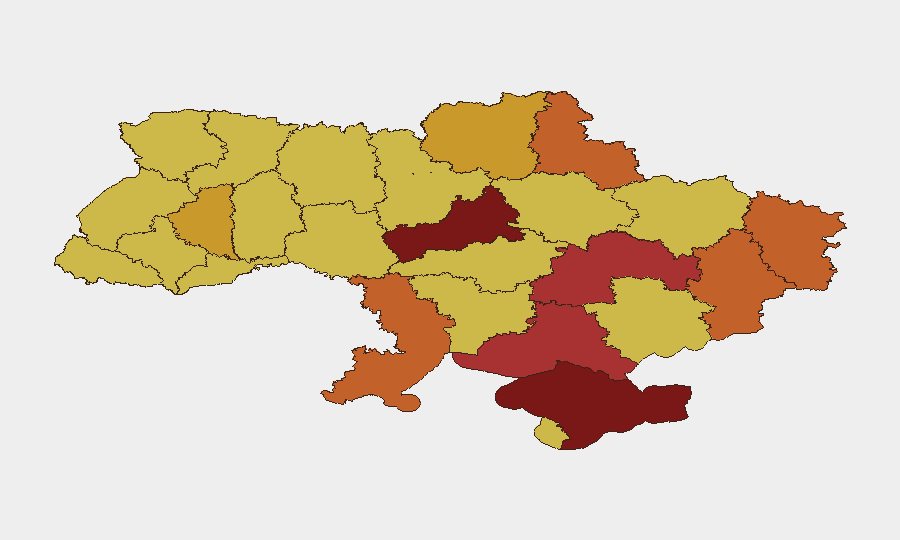
Situation Summary
Ukraine remains the third-highest-threat country globally, with 934 tracked events and a composite threat score of 100. The security environment is characterized by sustained Russian long-range strikes targeting critical infrastructure—particularly fuel and power networks—combined with Ukrainian counter-strikes against Russian-occupied logistics and energy assets. Frontline activity in southern and eastern sectors continues, with recent Ukrainian advances in western Zaporizhia Oblast indicating active ground operations amid broader air campaign intensity.
Key Developments
- Nationwide airstrike (night of June 25–26, 2026): Russian forces launched seven Iskander-M ballistic missiles from Bryansk and Kursk oblasts, plus 189 strike and decoy drones (Shahed, Gerbera, Italmas, Parodiya variants) from multiple Russian and occupied territories, targeting sites across Ukraine.
- Chernihiv Oblast fuel infrastructure (June 26, 2026): Russian Gerbera-type attack drones struck up to five gas stations in Chernihiv Oblast as part of a coordinated campaign to degrade Ukraine's fuel supply chain.
- Sumy Oblast fuel infrastructure (June 26, 2026): Gas stations in Sumy Oblast were hit by the same wave of Russian drone strikes targeting fuel logistics.
- Crimea emergency declaration (June 26, 2026): Moscow-installed authorities in Crimea and Sevastopol declared a regional-level emergency situation following intensified Ukrainian long-range drone and missile strikes on logistics chains and oil facilities, resulting in fuel shortages and power cuts across occupied Crimea.
- Ukrainian counter-strikes on Russian-occupied infrastructure (night of June 25–26, 2026): Ukrainian forces conducted intensified long-range drone and missile strikes against logistics and oil facilities in Russian-occupied Crimea, directly contributing to the fuel and power disruptions announced by occupation authorities.
- Western Zaporizhia Oblast advances (by June 26, 2026): Ukrainian forces achieved position advances in western Zaporizhia Oblast, reflecting ongoing frontline movement and active combat operations in the southern sector.
- Reported Russian air defense claims (June 26–27, 2026): Russia's defense ministry claimed interception of 660 Ukrainian drones, including large barrages over Moscow and annexed Crimea, with Ukrainian strikes reportedly focused on Russian oil processing and export infrastructure.
Highest-Risk Areas
Kyiv and Cherkasy Oblast lead the sub-national rankings (risk scores 100 and 99.3 respectively), reflecting sustained targeting of critical infrastructure and ongoing military-civil tensions. Crimea (85.3), Kherson Oblast (79.7), and Dnipropetrovsk Oblast (79.5) follow, driven by intensified drone and missile strikes on fuel, power, and logistics networks supporting military operations. The ranking reflects both Russian strikes on Ukrainian civilian infrastructure and Ukrainian counter-strikes on occupied and Russian logistics—making infrastructure-dependent sectors and critical nodes the primary risk drivers across all highest-risk regions.
How GeoBit Would Assist
Security teams monitoring duty-of-care obligations in Ukraine should prioritize AOI Monitoring & Early Warning for real-time alerts on drone, missile, and kinetic activity near personnel or asset locations; Conflict & Military mapping to track frontline movements and identify safe transit corridors; and Economic & Trade intelligence to monitor fuel, power, and supply-chain disruptions affecting operational continuity. Satellite & Imagery analysis and GIS & Spatial Analysis enable precise assessment of infrastructure damage and route viability for personnel movement or supply operations.
7-Day Outlook
Russian infrastructure targeting campaigns are likely to persist, with sustained focus on Ukrainian fuel, power, and logistics networks to degrade military mobility and civilian resilience. Ukrainian counter-strikes on Russian-occupied energy and transport assets will continue in parallel. Frontline activity in the south and east should remain active, with incremental positional shifts likely but no immediate major operational shifts expected over the next week.
Highest-Risk Areas — Ranked
| # | State / Region | Risk |
|---|---|---|
| 1 | Kyiv | 100 |
| 2 | Cherkasy Oblast | 99.3 |
| 3 | Autonomous Republic of Crimea | 85.3 |
| 4 | Kherson Oblast | 79.7 |
| 5 | Dnipropetrovsk Oblast | 79.5 |
| 6 | Donetsk Oblast | 75.8 |
| 7 | Sumy Oblast | 74.6 |
| 8 | Odesa Oblast | 74.3 |
| 9 | Luhansk Oblast | 74 |
| 10 | Chernihiv Oblast | 72 |
| 11 | Ternopil Oblast | 71.2 |
| 12 | Zhytomyr Oblast | 70.9 |
Sources
Previous Daily Briefs
A new Ukraine brief is written every day — each with its own risk map and downloadable CSV. Here's the last week; use the calendar to go further back.
📅 Browse every day by calendar →
Highlighted days have a brief. Tap a day for that day's map & analysis, or “csv” for that day's dataset ($5).