Situation Summary
The United Arab Emirates remains stable and secure with no confirmed attacks or civil unrest in the last 24–48 hours; however, the security environment is characterized by elevated regional tension stemming from Iranian missile and drone activity targeting neighboring Gulf states. A false missile alert on June 27 in Dubai and Abu Dhabi demonstrated heightened civil defense posture and the possibility of sudden alerts, though authorities confirmed no impact to infrastructure or casualties. Dubai's outsized risk score (31.8 versus 5.2 for Abu Dhabi) reflects its density, international profile, and exposure to cross-border spillover rather than active domestic instability.
Key Developments
- June 27 evening, Dubai & Abu Dhabi: A false missile alert was sent to residents' phones warning of potential missile threat; authorities immediately confirmed no attacks occurred and reported calm conditions and normal traffic throughout the night.
- June 27–28, nationwide: UAE Ministry of Foreign Affairs issued statements condemning regional incidents affecting Gulf security while explicitly emphasizing that Dubai and the wider UAE remained stable and secure with no major incidents reported.
- June 29–30, nationwide: UAE officials publicly condemned renewed Iranian missile and drone attacks on Bahrain and Kuwait as hostile acts threatening Gulf security; no evidence these strikes hit UAE territory, but they underscore regional tension and cross-border spillover risk.
- June 29–30, unverified social reports: Viral social-media posts claimed air-defense interceptions over Dubai and Abu Dhabi linked to incoming missiles; mainstream UAE outlets and official channels do not corroborate fresh impacts or casualties in this 24–48-hour window. Treat as low-confidence for incident reporting.
- June 29–30, travel policy: UAE lifted its two-month travel ban on Lebanon, signaling a policy shift but implicitly confirming that authorities continue to adjust restrictions in response to regional security risk. No new domestic threats prompted fresh travel bans in the last 48 hours.
- June 29–30, forward-looking aviation: Direct flights between Iran and the UAE are set to restart from July 1, 2026, after earlier disruptions. Sources frame the restart as normalization; no new confirmed disruption at Dubai Airport within the last 24–48 hours.
Highest-Risk Areas
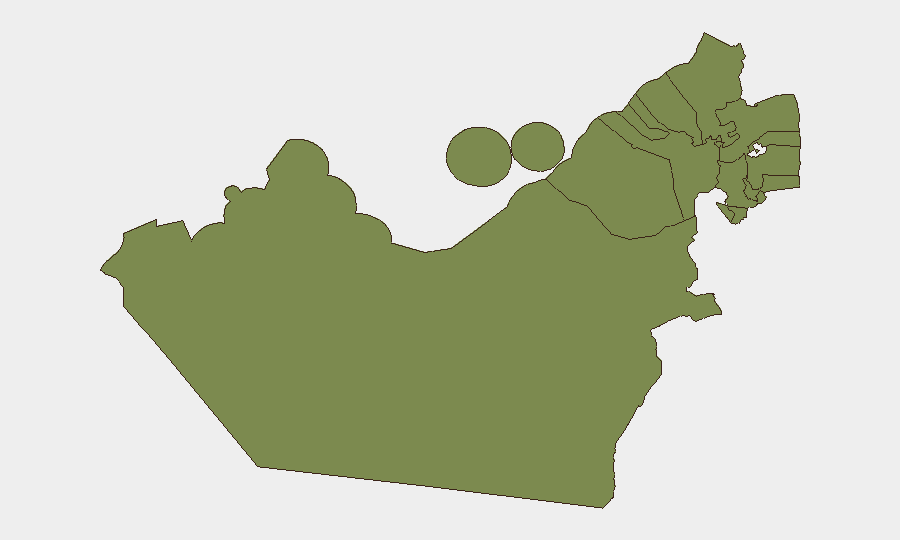
Dubai dominates the sub-national risk ranking with a composite score of 31.8—more than six times that of Abu Dhabi (5.2)—owing to its status as a global financial and logistics hub, dense expat and tourist population, and exposure to regional missile and drone activity as a high-visibility target. Abu Dhabi, the capital, carries the second-highest score but remains substantially lower in absolute terms. The remaining five emirates (Fujairah, Sharjah, Ajman, Ras al-Khaimah, Umm al-Quwain) all score below 2.0 and reflect minimal local threat drivers; risk there is primarily external and regional in nature.
How GeoBit Would Assist
Security and risk teams should employ Intel Sweep and OSINT fusion to monitor emerging reports across social media (X, Telegram, Facebook), local news, and regional sources in real time, cross-corroborating claims of missile/drone activity and distinguishing verified incidents from rumors. AOI Monitoring & Early Warning on Dubai and Abu Dhabi would provide persistent watch and alerting for new security incidents, policy changes, or aviation/port disruptions. Routing & Network Analysis can support contingency planning for alternative supply chains and travel corridors should regional escalation disrupt ports or direct flights.
7-Day Outlook
The UAE is likely to remain calm domestically while regional tensions—centered on Iranian ballistic and drone capabilities—persist. Expect continued elevated civil-defense posture with periodic alerts and ongoing official statements condemning hostile regional acts. The restart of Iran–UAE flights on July 1 may signal a tactical de-escalation, but cross-border spillover risk and the possibility of sudden alerts will remain part of the operational environment for the foreseeable future.
Highest-Risk Areas — Ranked
| # | State / Region | Risk |
|---|---|---|
| 1 | Dubai | 31.8 |
| 2 | Abu Dhabi Emirate | 5.2 |
| 3 | Fujairah Emirate | 4.9 |
| 4 | Sharjah Emirate | 1.8 |
| 5 | Ajman Emirate | 1.8 |
| 6 | Ras al-Khaimah | 1.8 |
| 7 | Umm al-Quwain | 1.8 |
Sources
Previous Daily Briefs
A new United Arab Emirates brief is written every day — each with its own risk map and downloadable CSV. Here's the last week; use the calendar to go further back.
📅 Browse every day by calendar →
Highlighted days have a brief. Tap a day for that day's map & analysis, or “csv” for that day's dataset ($5).