Situation Summary
The United Kingdom remains a composite threat level 5 globally (#134 ranking) with 518 tracked events, but acute operational risks are concentrated in England, which accounts for the majority of recent serious crime, public-order, and infrastructure-security incidents. The past 48 hours have seen multiple homicide investigations in London, a significant cyber-crime sentencing affecting critical transport infrastructure, policy reversals affecting national security frameworks, and rising political violence concerns. Risk trajectory is mixed: violent street crime in metropolitan areas is elevated, while counter-terrorism operations show evidence-based restraint; political-security risk is emerging as a distinct concern.
Key Developments
- London (Islington, East Finchley, Hackney) – Active homicide investigations, 18 July 2026: Metropolitan Police launched at least three concurrent murder investigations across north London within 24 hours, with arrests made in East Finchley and public appeals issued in Hackney. These incidents reflect elevated violent-crime operational tempo in the capital.
- Greater London – Transport for London cyber-attack sentencing, within last 48 hours: Two members of the Scattered Spider cybercrime group (Thalha Jubair, Owen Flowers) were sentenced to five years and six months each for a major attack on Transport for London systems, coordinated between UK National Crime Agency and FBI. This represents a significant infrastructure-security prosecution.
- Suffolk / Eastern England – Terrorism investigation status update, 18 July 2026: Seven men arrested in connection with a suspected threat to an Islamic event were released without charge after evidence review; the case remains under investigation as part of a broader extreme right-wing terrorism inquiry across multiple English sites.
- London – National March for Palestine, operational conditions imposed, 18 July 2026: Metropolitan Police formally restricted a large protest march on 18 July, citing public-order and safety management; this reflects heightened management of mass gatherings in the capital.
- United Kingdom (national policy) – Digital ID scheme scrapped, 18 July 2026: Incoming Prime Minister Andy Burnham confirmed the government will abandon the planned "Brit card" digital identity programme, removing a contested civil-liberties control measure with immigration and employer-vetting implications.
- United Kingdom (national) – Violence against politicians highlighted as concern, last 48 hours: Broadcast media reporting emphasized rising threat perception to UK political figures, referencing recent attacks and questioning adequacy of protection measures.
Highest-Risk Areas
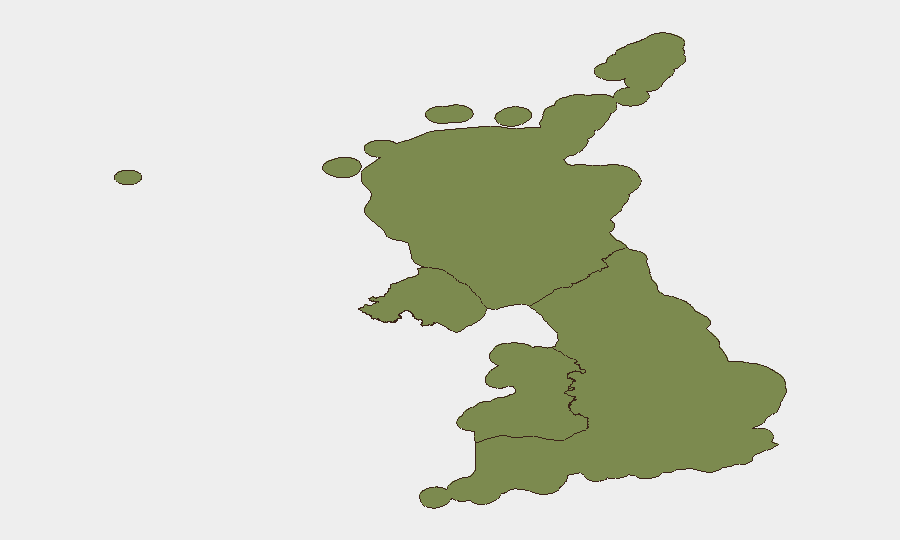
England dominates the risk ranking (composite score 32) and accounts for nearly all tracked serious-crime, cyber-infrastructure, and political-security incidents in the current window. London specifically—encompassing Islington, East Finchley, Hackney, and the Westminster security environment—is the operational epicentre. Scotland (3.9) and Northern Ireland (3.5) remain substantially lower-risk; Wales (2.1) is minimal. The concentration of risk in England reflects metropolitan violent-crime density, critical-infrastructure concentration, and the political-security environment surrounding parliamentary institutions and large public events.
How GeoBit Would Assist
Security teams would employ AOI Monitoring & Early Warning to track emerging crime hotspots and protest activity in high-density London postcodes. Network & Actor Analysis would map homicide investigation networks and extremist-cell structures across the terrorism and crime domains. OSINT & Intel Sweep capabilities would monitor social media, extremist forums, and activist channels for protest escalation, threats to political figures, and cyber-threat intelligence related to critical infrastructure.
7-Day Outlook
Violent street crime in London is likely to remain elevated in the near term; homicide investigations will continue at current operational tempo. Political-security risk—including protection of public figures and management of large demonstrations—will likely remain a sustained operational priority. Counter-terrorism investigations will progress on evidence-based lines without immediate mass-casualty indicators.
Highest-Risk Areas — Ranked
| # | State / Region | Risk |
|---|---|---|
| 1 | England | 32 |
| 2 | Scotland | 3.9 |
| 3 | Northern Ireland | 3.5 |
| 4 | Wales | 2.1 |
Sources
Previous Daily Briefs
A new United Kingdom brief is written every day — each with its own risk map and downloadable CSV. Here's the last week; use the calendar to go further back.
📅 Browse every day by calendar →
Highlighted days have a brief. Tap a day for that day's map & analysis, or “csv” for that day's dataset ($5).
Atlas — our AI intelligence desk — emails them this snapshot personally. Nothing else, no list.