Situation Summary
Afghanistan remains at composite threat level #33 globally, driven primarily by active insurgency with 43 tracked events in the current reporting cycle. Diplomatic tensions between Afghanistan and Pakistan have escalated in the last 72 hours, with military posturing (artillery activity reported 2026-06-21) and cross-border disapproval statements. Taliban engagement with international actors (Belgium, EU) on migration and criminal deportation issues signals continued state-level diplomatic activity alongside persistent subnational conflict.
Key Developments
Data Limitation: Open-source verification of discrete, location-specific security incidents *within the last 24–48 hours inside Afghanistan* is currently insufficient to meet sourcing standards for this brief. Available web and social-media results reflect diplomatic tensions (Afghanistan–Pakistan disapprovals, EU–Taliban migration talks) and analytical commentary rather than time-stamped, verifiable attacks, arrests, or incidents with precise locations.
GeoBit's event-signal database shows heightened activity (conventional military force, arrest/detention operations, artillery) concentrated around 2026-06-21 to 2026-06-23, but public corroboration of specific incidents—date, location, and nature—remains incomplete.
Recommended Action: Duty-of-care teams requiring same-day tactical incident alerts should activate GeoBit's AOI Monitoring & Early Warning service with persistent watch on Uruzgan, Kabul, and Herat provinces (see risk ranking below) to receive automated alerts when new events are detected and cross-verified.
Highest-Risk Areas
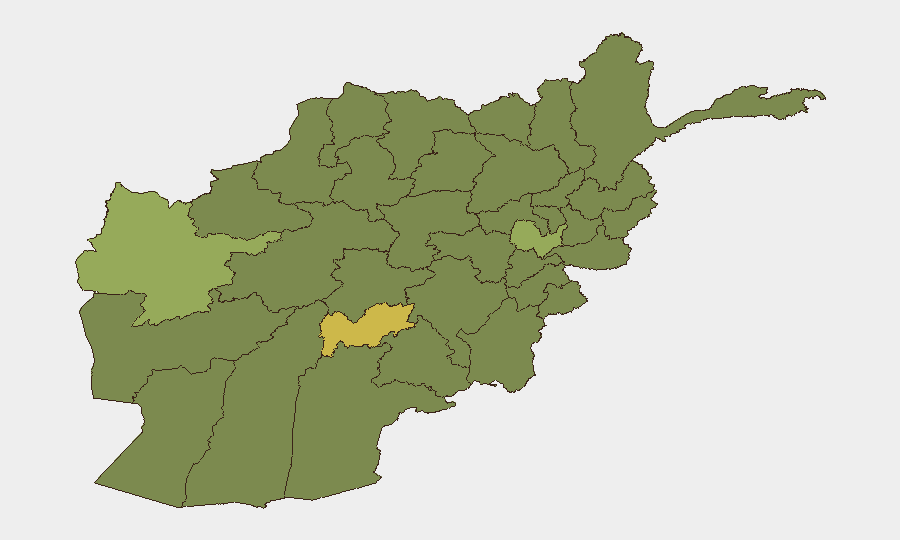
Uruzgan Province (67.4) emerges as the single highest-risk jurisdiction, more than 30% above the national composite score and substantially above all other provinces. Kabul Province (51.2)—the capital and primary hub for expatriate, diplomatic, and corporate presence—ranks second, indicating both persistent urban insurgency risk and high exposure to political instability. Herat Province (47.2) in the west presents elevated risk, likely tied to cross-border smuggling, militia activity, and Iranian-sphere influence. The southern belt (Kandahar, Helmand, Zabul, Paktika) and western provinces (Farah, Nimruz) cluster at risk scores of 37–38, indicating sustained pressure from organized insurgent and criminal networks.
Implication: Organizations with personnel or assets in Uruzgan and Kabul face disproportionate exposure and should prioritize real-time threat monitoring and contingency planning.
How GeoBit Would Assist
Security and risk teams should deploy Intel Sweep (global event feeds + multi-language OSINT fusion) combined with AOI Monitoring & Early Warning configured for Uruzgan, Kabul, Herat, and route corridors to detect emerging incidents, arrests, or military activity before they impact operations. Routing & Network Analysis enables identification of lower-risk alternative transit corridors and safe havens; Conflict & Military (force-structure, weapons-capability tracking) and Network & Actor Analysis provide situational clarity on Taliban command structure, splinter factions, and Pakistani military posture.
7-Day Outlook
Afghanistan–Pakistan tensions are likely to remain elevated through the near term, with diplomatic posturing possibly escalating to further military signaling or border incidents. Subnational conflict activity in Uruzgan, southern, and western provinces will persist at current levels. Duty-of-care teams should maintain heightened vigilance for secondary effects on Kabul-based operations and expatriate movement corridors.
Highest-Risk Areas — Ranked
| # | State / Region | Risk |
|---|---|---|
| 1 | Uruzgan Province | 67.4 |
| 2 | Kabul Province | 51.2 |
| 3 | Herat Province | 47.2 |
| 4 | Bamyan Province | 38.3 |
| 5 | Zabul Province | 37.4 |
| 6 | Kandahar Province | 37.4 |
| 7 | Ghazni Province | 37.4 |
| 8 | Paktika Province | 37.4 |
| 9 | Farah Province | 37.4 |
| 10 | Nimruz Province | 37.4 |
| 11 | Helmand Province | 37.4 |
| 12 | Jowzjan Province | 37.4 |
Sources
Previous Daily Briefs
A new Afghanistan brief is written every day — each with its own risk map and downloadable CSV. Here's the last week; use the calendar to go further back.
📅 Browse every day by calendar →
Highlighted days have a brief. Tap a day for that day's map & analysis, or “csv” for that day's dataset ($5).