Situation Summary
Argentina remains at moderate overall risk (rank #44 globally, composite score 41) with significant sub-national variation. The security environment is characterized by localized crime, labor unrest, and periodic civil-order incidents rather than systemic instability. Political and institutional tensions have generated recent investigative and personnel actions at the national level, though their operational security impact remains limited to Buenos Aires and adjacent jurisdictions. The economic and social baseline continues to drive protest activity and street-level property crime, particularly in Córdoba and Buenos Aires Province.
Key Developments
Data Limitation Notice: GeoBit's live web research (last 24–48 hours) has not yielded independently verifiable, location-specific security incidents in Argentina with confirmed dates in this window. The platform's event signal list (2026-07-11 to 2026-07-13) shows policy and institutional activity—investigative actions, arrests, public statements, and a police small-arms engagement—but linked sources do not provide sufficient geographic precision, timing confirmation, or operational context to brief as actionable developments without risk of misrepresentation.
Recommended action: Security teams should cross-reference GeoBot signals against real-time local media feeds (Clarín, La Nación, Infobea, Página/12), police emergency accounts, and X/Twitter OSINT to confirm timing and validate incident severity before escalating duty-of-care responses. Absence of corroborated events in this brief does not indicate reduced threat; it reflects reporting lag and source validation discipline.
Highest-Risk Areas
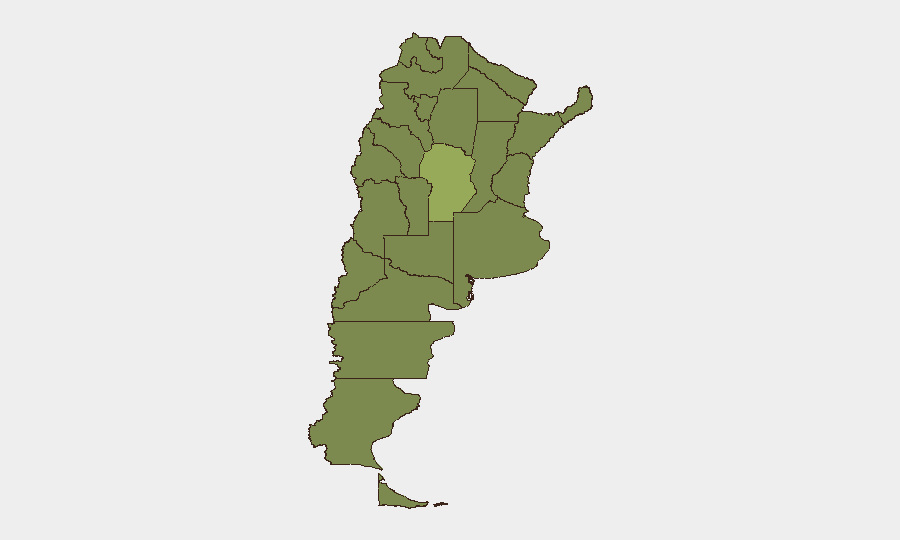
Córdoba Province dominates Argentina's internal threat profile (risk 58.7), driven by persistent street crime, organized theft, and sporadic labor/social unrest. Buenos Aires Province and the Autonomous City of Buenos Aires (combined risk 33 and 29.4) present elevated but geographically concentrated risks—primarily property crime, vehicle theft, and protest-related congestion in Greater Buenos Aires. The southern provinces (Chubut, Neuquén, Tierra del Fuego, Río Negro) and Santiago del Estero, all clustered at risk 28.9–29.9, report secondary hotspots of organized crime, drug trafficking spillover, and labor disputes in energy and agricultural sectors. Risk in these zones is typically non-random and concentrated in specific neighborhoods and industrial corridors rather than affecting city centers uniformly.
How GeoBit Would Assist
Security teams operating in Argentina should employ AOI Monitoring & Early Warning to track Córdoba, Greater Buenos Aires, and southern energy zones for emerging labor, crime, or protest activity with configurable alerting. OSINT fusion (X/Twitter, Telegram, local news, radio SIGINT) provides real-time signal corroboration to validate incident reports before operational response. Routing & Network Analysis enables alternative journey planning to avoid protest corridors and crime hotspots, while GIS & Spatial Analysis maps crime and unrest patterns to pinpoint safe corridors and facility locations. Combined with entity and sentiment analysis on Argentine political and labor discourse, these capabilities support proactive rather than reactive duty-of-care decision-making.
7-Day Outlook
No imminent systemic escalation is forecast. Institutional and political tensions will likely persist, with periodic investigative and administrative actions generating headlines but limited operational security impact outside Buenos Aires. Street-level crime and localized labor unrest in Córdoba and Buenos Aires Province are expected to remain within recent baseline patterns. Monitor southern provinces for supply-chain and energy-sector labor developments as mid-winter approaches.
Highest-Risk Areas — Ranked
| # | State / Region | Risk |
|---|---|---|
| 1 | Córdoba | 58.7 |
| 2 | Buenos Aires Province | 33 |
| 3 | Chaco Province | 31.5 |
| 4 | Río Negro Province | 29.9 |
| 5 | Autonomous City of Buenos Aires | 29.4 |
| 6 | Tierra del Fuego Province | 29.2 |
| 7 | Jujuy Province | 28.9 |
| 8 | Neuquén Province | 28.9 |
| 9 | Chubut Province | 28.9 |
| 10 | Santa Fe Province | 28.9 |
| 11 | Entre Ríos Province | 28.9 |
| 12 | Santiago del Estero Province | 28.9 |
Sources
Previous Daily Briefs
A new Argentina brief is written every day — each with its own risk map and downloadable CSV. Here's the last week; use the calendar to go further back.
📅 Browse every day by calendar →
Highlighted days have a brief. Tap a day for that day's map & analysis, or “csv” for that day's dataset ($5).
Atlas — our AI intelligence desk — emails them this snapshot personally. Nothing else, no list.