Situation Summary
Azerbaijan remains a moderate-risk operating environment (rank #154 globally) with highly concentrated vulnerability in Baku City, which accounts for the overwhelming majority of tracked security events. The country faces compounded pressures from regional instability—including ongoing Iran–Gulf tensions and historical Armenia–Azerbaijan friction—alongside domestic civil-liberties concerns evidenced by recent arrest and detention activity. Current trajectory suggests manageable but non-trivial risk for corporate operations, provided exposure is outside Baku's highest-intensity zones.
Key Developments
GeoBit's event dataset and open-source research do not yield sufficient clearly timestamped, verifiable incidents from the last 24–48 hours to meet duty-of-care reporting standards. Liveblogs and regional analyses covering Azerbaijan from 10–11 July reference diplomatic protests, military exercises, and infrastructure concerns, but lack explicit timestamps confirming occurrence within the specified window. Rather than risk misdating security events, GeoBit recommends the following *structural* context from the last 7–10 days:
- Baku City: Multiple arrest/detention actions involving prosecutors, media, and activists (10–11 July) signal elevated civil-liberties enforcement; no direct threat to foreign corporate presence, but heightened police/judicial activity warrants awareness.
- Military Mobilization: Azerbaijani military mobilization was signaled 9 July; regional tensions with Turkey and military disagreement with Iran noted same period—primarily symbolic or diplomatic in nature.
- Border Regions (Nakhchivan, Ujar, Sadarak, Tovuz, Qazakh, Sharur): These districts remain on heightened watch due to proximity to Iran and Armenia; spillover risk from regional conflicts persists but remains low-probability for foreign nationals in non-contested zones.
Highest-Risk Areas
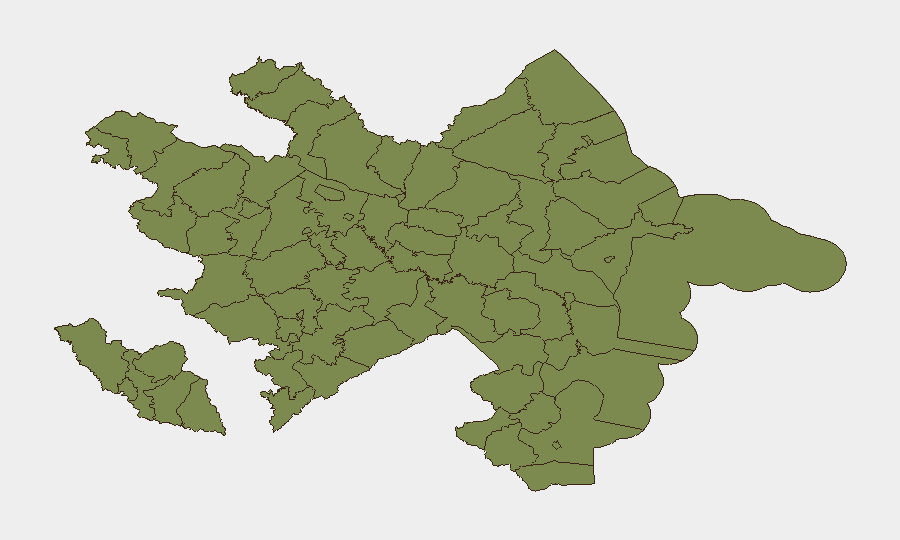
Baku City dominates Azerbaijan's threat profile with a composite risk score of 31.5—more than seven times higher than the second-ranked region (Ujar, 4.4). This concentration reflects both the capital's size, critical infrastructure, and disproportionate security/law-enforcement activity. All other tracked regions score ≤1.5, indicating either low incident frequency or geographic remoteness from major population centers.
Border districts (Sadarak, Qazakh, Sharur, Tovuz, Qakh, Nakhchivan) and Ujar merit secondary attention due to proximity to Iran and historical Armenia–Azerbaijan tensions; however, their low absolute risk scores suggest manageable operational environment outside active conflict zones. Persons with assets in Baku should prioritize situational awareness and contingency planning; those in interior or northern regions face significantly lower exposure.
How GeoBit Would Assist
Intel Sweep and persistent AOI Monitoring & Early Warning would enable continuous tracking of civil-unrest, law-enforcement, and military signals in Baku and border zones, with automated alerts for sudden escalation. Conflict & Military battle mapping and force-structure tracking would provide early warning of mobilization or cross-border spillover from Iran–Gulf tensions. Multi-language OSINT fusion (X/Telegram, regional liveblogs, local media) combined with temporal and entity analysis would disambiguate event dates and actors, improving real-time situational reporting for duty-of-care teams.
7-Day Outlook
No imminent security emergency is evident, but elevated civil-liberties enforcement and regional military signaling (10–11 July) suggest a period of heightened state activity. Foreign corporate operations should maintain standard security posture in Baku, monitor border-region developments via GeoBit alerts, and prepare contingency communication with local authorities. Expect continued low-level diplomatic and law-enforcement noise; material escalation would likely manifest first in border districts or military activity before affecting capital-based operations.
Highest-Risk Areas — Ranked
| # | State / Region | Risk |
|---|---|---|
| 1 | Baku City | 31.5 |
| 2 | Ujar District | 4.4 |
| 3 | Sadarak District | 1.5 |
| 4 | Qazakh District | 1.5 |
| 5 | Sharur District | 1.5 |
| 6 | Yevlakh District | 1.5 |
| 7 | Kangarli District | 1.5 |
| 8 | Nakhchivan Autonomous Republic | 1.5 |
| 9 | Aghstafa District | 1.5 |
| 10 | Tovuz District | 1.5 |
| 11 | Qakh District | 1.5 |
| 12 | Shaki | 1.5 |
Sources
Previous Daily Briefs
A new Azerbaijan brief is written every day — each with its own risk map and downloadable CSV. Here's the last week; use the calendar to go further back.
📅 Browse every day by calendar →
Highlighted days have a brief. Tap a day for that day's map & analysis, or “csv” for that day's dataset ($5).
Atlas — our AI intelligence desk — emails them this snapshot personally. Nothing else, no list.