Situation Summary
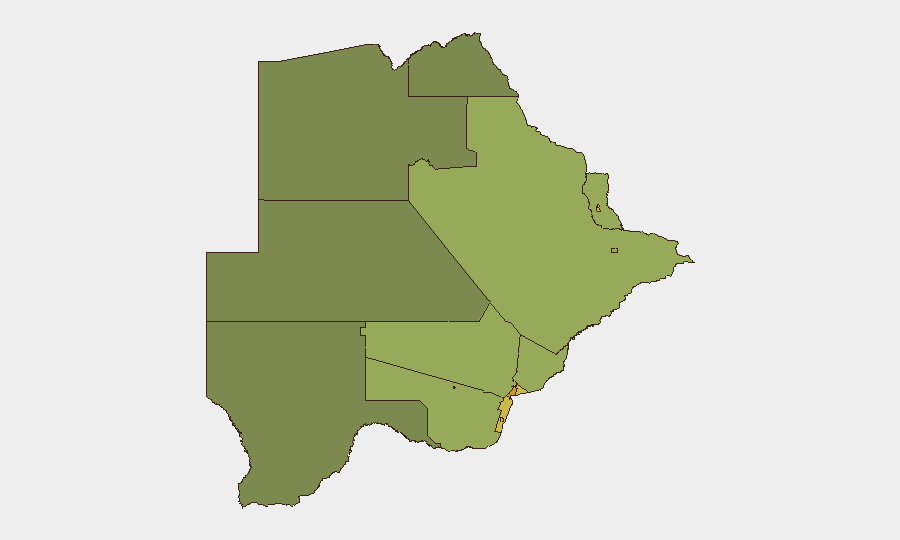
Botswana remains a low-threat environment globally (composite score 3; no tracked acute incidents in the current assessment window). Open-source reporting for 2–3 August 2026 does not yield dated, corroborated security events meeting operational-brief standards. The security baseline remains stable; risk concentration is localized to urban centers—primarily Gaborone, South-East District, and Lobatse—where crime, economic friction, and infrastructure strain drive elevated sub-national scores.
Key Developments
No discrete security or unrest incidents with confirmed 2–3 August 2026 dates have been corroborated by accessible open sources. Recent Botswana media outlets (Mmegi, Botswana Guardian Sun, DailyNews) carry crime and political reporting, but publicly available snippets lack precise publication timestamps or clearly anchored calendar references sufficient to place incidents within the last 24–48 hours. Earlier reporting (late June–1 July 2026) documented BPF party unrest, police disciplinary cases, and minor street crime in Gaborone and Mogoditshane; a fatal road accident near Francistown was also reported but without confirmed current-week dating. A P423 million digital security/PKI project collapse (attributed to Directorate of Intelligence and Security mismanagement) circulated on social media but lacks verified disclosure date. Regional defence cooperation discussions with Angola were dated 29 July 2026—outside the current 24–48h window.
Operational note: absence of reported incidents does not indicate absence of risk; rather, it reflects limitation in publicly timestamped open-source corroboration for this specific window.
Highest-Risk Areas
Gaborone (risk 72) and South-East District (risk 68) anchor the risk profile, followed by Lobatse (65) and Francistown (62). These urban and peri-urban zones concentrate crime (robbery, burglary, vehicle theft), informal-settlement tensions, and economic hardship—factors that historically correlate with street crime and occasional civil friction. Gaborone's scale and economic centrality make it a natural magnet for both criminal activity and political gatherings; Francistown and Lobatse's mining-dependent economies create periodic labor and social stress. Rural and northern districts (North-West, North-East, Central) score substantially lower (38–45), reflecting lower population density, fewer reported incidents, and less frequent political assembly.
How GeoBit Would Assist
Corporate security and duty-of-care teams monitoring Botswana operations would benefit from Intel Sweep and multi-language OSINT to detect and timestamp emerging incidents in real time across Mmegi, DailyNews, and social feeds—filtering by publication date to meet operational windows. AOI Monitoring & Early Warning on Gaborone, Francistown, and Lobatse, coupled with sentiment and temporal analysis, would flag localized unrest, labor actions, or civil friction before they escalate. Conflict and crime-focused Search & Research combined with network and actor analysis would identify organized crime networks, protest organizers, and persons of interest relevant to specific corporate sites or supply chains.
7-Day Outlook
No indicators suggest imminent major security events in Botswana. Underlying drivers—petty crime, informal-economy friction, governance concerns around infrastructure and digital-security projects—remain chronic rather than acute. Continued monitoring of Gaborone and urban labor dynamics, particularly any organized labor responses to economic strain, is warranted; however, the trajectory is stable absent new triggering events.
Highest-Risk Areas — Ranked
| # | State / Region | Risk |
|---|---|---|
| 1 | Gaborone | 72 |
| 2 | South-East District | 68 |
| 3 | Lobatse | 65 |
| 4 | Francistown | 62 |
| 5 | Jwaneng | 61 |
| 6 | Selebi Phikwe | 58 |
| 7 | Southern District | 55 |
| 8 | Kgatleng District | 50 |
| 9 | Kweneng District | 48 |
| 10 | North-East District | 45 |
| 11 | Central District | 42 |
| 12 | North-West District | 38 |
Sources
Previous Daily Briefs
A new Botswana brief is written every day — each with its own risk map and downloadable CSV. Here's the last week; use the calendar to go further back.
📅 Browse every day by calendar →
Highlighted days have a brief. Tap a day for that day's map & analysis, or “csv” for that day's dataset ($5).
Atlas — our AI intelligence desk — emails them this snapshot personally. Nothing else, no list.