Situation Summary
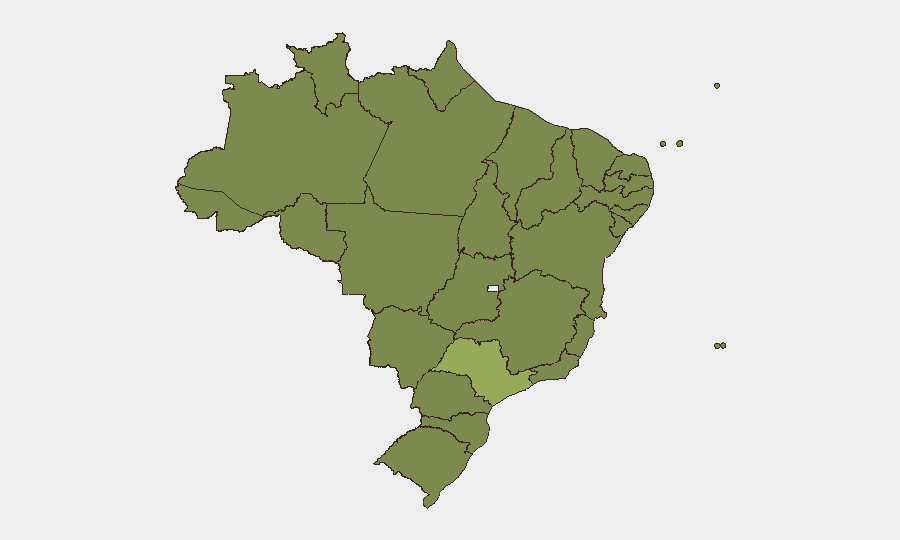
Brazil's composite threat score remains moderate (39th globally, score 39/100) but masks significant sub-national variance, with São Paulo and Rio de Janeiro driving elevated risk. Recent 24–48 hour activity reflects concurrent pressures across drug trafficking, arms smuggling, diplomatic friction, and public health—each isolated but cumulatively indicative of systemic strain. Political tensions ahead of October's presidential election, coupled with transnational organized crime activity along Paraguay and other border zones, are sustaining operational complexity for corporate security teams. The trajectory is stable but fragmented by geography and threat vector.
Key Developments
- São Paulo State, 2026-07-25: Brazilian federal police intercepted a helicopter carrying 288 kg of cocaine base originating from the Paraguay border region, underscoring active aerial drug-trafficking routes into major population centers.
- Santa Terezinha de Itaipu (Paraná), 2026-07-25: The Polícia Rodoviária Federal executed Brazil's largest historical rifle seizure on BR-277 highway during a routine inspection, indicating heightened arms-trafficking enforcement and underlying weapon-smuggling pressure.
- Brasília (Federal District), 2026-07-24: Brazilian authorities denied visa requests for two U.S. Trump-administration officials planning to question electoral-system integrity ahead of October elections—a direct signal of political sensitivity and foreign-interference risk.
- Western Rio de Janeiro State, 2026-07-25: Two helicopters collided in flight, killing at least six people; localized air-transport and emergency-response risk in a high-risk state.
- Amambai area (Mato Grosso do Sul, Brazil–Paraguay border), 2026-07-25: Ranch guards allegedly tortured an Indigenous man with electric prods, flagging rural security and ethnic-tension escalation in a border region already under strain.
- Brazil (national), 2026-07-25: Government temporarily suspended the first single-dose dengue vaccine following two suspected deaths, introducing public-health and travel-confidence risk alongside existing vector-borne disease pressure.
- Brazil (national), 2026-07-25: Brazilian government promulgated a Mercosur police-cooperation agreement enabling cross-border pursuit and joint operations against organized crime—a structural shift in transnational law-enforcement capacity.
Highest-Risk Areas
São Paulo (54.8) and Rio de Janeiro (36.3) account for the largest absolute risk concentration, driven by drug-trafficking throughput, urban crime, and infrastructure strain. Goiás, Minas Gerais, and the border states (Paraná, Mato Grosso do Sul, Rondônia) sustain secondary-tier elevation due to Paraguay and Peru transit routes, arms smuggling, and rural violence. Frontier zones show consistent patterns of transnational organized crime, Indigenous-land incursions, and uneven police presence—conditions that create both enforcement opportunity and human-rights risk.
How GeoBit Would Assist
Corporate teams with Brazil exposure should employ AOI Monitoring & Early Warning on São Paulo, Rio de Janeiro, and key border crossings (Amambai, Santa Terezinha de Itaipu) to detect real-time trafficking and security incidents. Intelligence & OSINT (multi-language feed fusion, Telegram/X intelligence, entity extraction) enables tracking of organized-crime network shifts and electoral-interference signals ahead of October elections. Routing & Network Analysis supports supply-chain rerouting around confirmed drug and arms-trafficking corridors, while Maritime & Aviation tracking flags anomalous helicopter and border-crossing activity in high-risk states.
7-Day Outlook
Organized-crime enforcement intensity will likely remain elevated as federal police consolidate border operations and capitalize on the new Mercosur cooperation framework. Political temperature ahead of the October election may trigger additional visa denials and diplomatic friction with U.S. officials, increasing uncertainty around foreign investment and regulatory clarity. Public-health confidence may weaken if dengue-vaccine suspicion spreads; simultaneously, rural and border violence patterns (ethnic, criminal) are unlikely to de-escalate without targeted intervention.
Highest-Risk Areas — Ranked
| # | State / Region | Risk |
|---|---|---|
| 1 | São Paulo | 54.8 |
| 2 | Rio de Janeiro | 36.3 |
| 3 | Goiás | 33.6 |
| 4 | Minas Gerais | 33.4 |
| 5 | Paraná | 31.3 |
| 6 | Mato Grosso do Sul | 31.3 |
| 7 | Pernambuco | 31 |
| 8 | Bahia | 28.7 |
| 9 | Amapá | 27.9 |
| 10 | Amazonas | 25.8 |
| 11 | Rio Grande do Sul | 25.8 |
| 12 | Rondônia | 25.3 |
Sources
Previous Daily Briefs
A new Brazil brief is written every day — each with its own risk map and downloadable CSV. Here's the last week; use the calendar to go further back.
📅 Browse every day by calendar →
Highlighted days have a brief. Tap a day for that day's map & analysis, or “csv” for that day's dataset ($5).
Atlas — our AI intelligence desk — emails them this snapshot personally. Nothing else, no list.