Situation Summary
Cuba remains at composite global threat rank #95 with a score of 10, reflecting chronic systemic vulnerabilities rather than acute security deterioration. Event signals from 2026-07-10 to 2026-07-12 indicate sustained political friction—involving government-opposition dynamics, administrative disputes, and demonstration activity—alongside ongoing infrastructure strain. The country's threat profile is dominated by structural scarcity (fuel, food, medicine, hard currency) and service disruptions (power cuts, transport failures) that create operational and safety hazards for corporate personnel and assets. No major escalation in violence or regime instability is evident, but contingency planning remains essential.
Key Developments
The available open-source record does not surface discrete, time-stamped security incidents (protests, arrests, infrastructure failures, or violence) confirmed to have occurred within the last 24–48 hours.
Signal-level observations from 2026-07-10 to 2026-07-12:
- Multiple "Disapprove" events involving Cuban government, opposition figures (including Manuel Marrero Cruz and unnamed opposition leaders), and international actors (U.S. Administration, Europe) suggest sustained political tension and public dissent.
- A "Violent Repression" signal on 2026-07-11 involving government and riot police indicates forceful crowd control, though specific location and casualty data are not available in open sources.
- A "Conventional Military Force" signal on 2026-07-11 from authorities suggests military or security mobilization, context unspecified.
- "Demonstrate/Rally" activity on 2026-07-11 confirms ongoing public assembly, likely unauthorized and subject to repression.
Structural, ongoing risks (no precise last-48h timestamp):
- Countrywide fuel and food shortages; unpredictable daily power cuts and occasional nationwide outages lasting >24 hours.
- Severe transportation disruption; inter-city and intra-city travel compromised.
- Scarcity of potable water and essential medicines.
- Telecommunications and internet reliability degraded during power outages.
Highest-Risk Areas
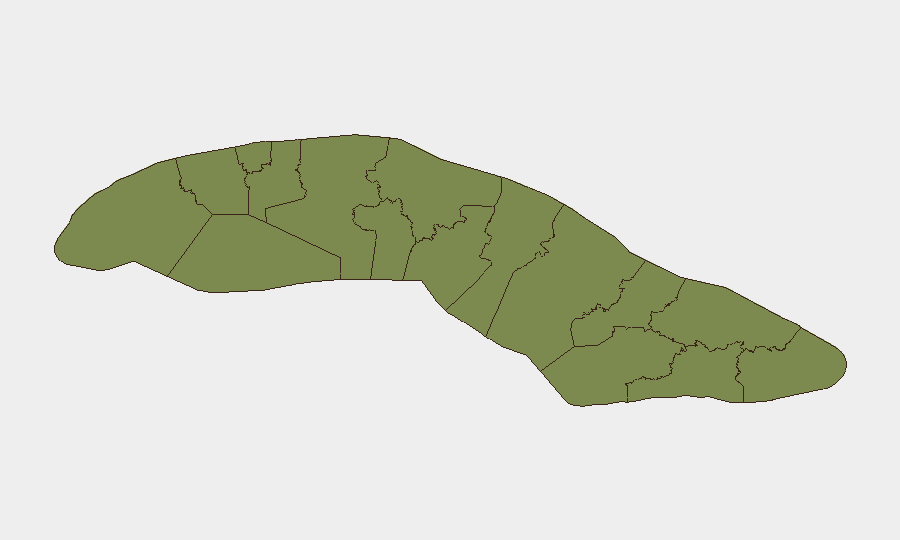
Sancti Spiritus (risk 34) and Havana (risk 27.6) are the two dominant risk nodes, together accounting for disproportionate threat concentration. Santiago de Cuba (13.1) and Artemisa (12.5) follow. The elevated scores in Sancti Spiritus and Havana likely reflect population density, economic hardship, political grievances, and historical patterns of protest and government response. Havana's rank reflects both capital-city concentration of political activity and service failures affecting the largest urban population. Provincial ranking thereafter drops sharply, suggesting risk is geographically concentrated; personnel in lower-ranked regions (e.g., Pinar del Río, Las Tunas, Villa Clara) face baseline structural hazards but lower acute incident probability.
How GeoBit Would Assist
Corporate security and duty-of-care teams should employ AOI Monitoring & Early Warning with persistent watch on Havana, Sancti Spiritus, and Santiago de Cuba to detect protest onset, security force mobilization, or infrastructure crises in near-real time. OSINT Fusion & Corroboration (X/Twitter, local media, NGO monitors) will distinguish genuine discrete incidents from noise and verify event scale and location. Conflict & Military force-tracking and Network & Actor Analysis can map government security deployments and opposition actor locations to assess risk to corporate facilities and personnel movement corridors.
7-Day Outlook
Political friction and public dissent are expected to persist, with sporadic demonstration and government repression cycles continuing. Structural shortages and service disruptions will remain the dominant operational constraint; no rapid amelioration is forecast. A major escalation in violence or regime instability is not indicated, but localized clashes and power/telecommunications outages remain probable, particularly in Havana and Sancti Spiritus.
Highest-Risk Areas — Ranked
| # | State / Region | Risk |
|---|---|---|
| 1 | Sancti Spiritus | 34 |
| 2 | Havana | 27.6 |
| 3 | Santiago de Cuba | 13.1 |
| 4 | Artemisa | 12.5 |
| 5 | Mayabeque | 11.7 |
| 6 | Ciego de Avila | 7 |
| 7 | Matanzas | 6.2 |
| 8 | Granma | 5 |
| 9 | Holguín | 5 |
| 10 | Pinar del Rio | 4.9 |
| 11 | Villa Clara | 4.4 |
| 12 | Las Tunas | 4.2 |
Sources
Previous Daily Briefs
A new Cuba brief is written every day — each with its own risk map and downloadable CSV. Here's the last week; use the calendar to go further back.
📅 Browse every day by calendar →
Highlighted days have a brief. Tap a day for that day's map & analysis, or “csv” for that day's dataset ($5).
Atlas — our AI intelligence desk — emails them this snapshot personally. Nothing else, no list.