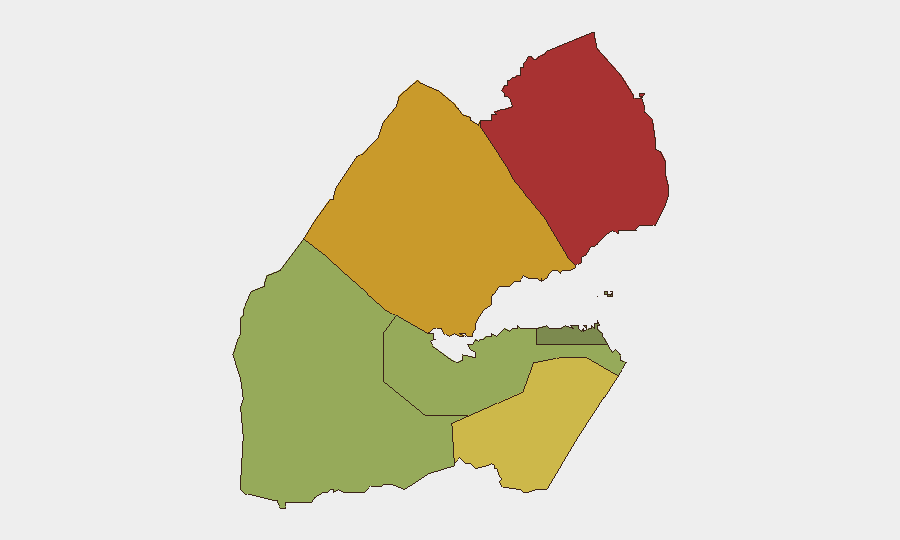
Situation Summary
Djibouti remains stable across the national territory as of 2 August 2026, with no verified security incidents, civil unrest, armed activity, or infrastructure disruptions reported in the past 24–48 hours. The country's composite threat score (18) reflects persistent structural vulnerabilities in northern border regions and the Bab el-Mandeb maritime corridor, but the current operating environment for businesses and personnel does not show acute crisis indicators. Risk remains compartmentalized by sub-national geography rather than nationwide.
Key Developments
- No verified incident-level security events reported, 1–2 August 2026. Open-source monitoring, major news outlets, and specialized security platforms recorded no credible protests, armed clashes, major crimes, infrastructure failures, or sudden travel restrictions nationwide during this 24–48 hour window.
- Routine port and maritime operations continuing. Djibouti City and Port Authority activity remains normal; no disruptions to vessel transits or cargo handling have been reported in the assessment period.
- Older geopolitical statement carries residual relevance. The Djibouti government warning (30 July) against unilateral tolls on Bab el-Mandeb traffic remains a policy-level signal of maritime security posture, though it is outside the current 24–48 hour window and represents no new incident.
- Inter-ministerial economic task force active. Since late July, an inter-ministerial task force has been monitoring Middle East spillover risks to supply chains and essential goods—a governance measure rather than a crisis response, but indicative of sustained attention to trade-route vulnerability.
Highest-Risk Areas
Obock (risk 78) and Tadjourah (risk 72) in the north drive the country's composite risk profile, driven by border instability, limited state capacity, and historical militia activity. Ali Sabieh (risk 65) in the west presents secondary risk linked to cross-border dynamics and smuggling networks. Djibouti City and the national capital region (risk 35) remain the lowest-risk zone and retain functional security and emergency services; corporate and diplomatic operations are concentrated here and benefit from greater state presence. Organizations with personnel or assets in the northern regions should maintain heightened situational awareness and contingency planning; central and southern locations present substantially lower day-to-day threat exposure.
How GeoBit Would Assist
Security and duty-of-care teams should deploy AOI Monitoring & Early Warning on Obock, Tadjourah, and Ali Sabieh to detect emerging unrest, cross-border incursions, or militia activity before they escalate. Maritime & Aviation tracking combined with Economic & Trade analysis will provide real-time visibility into port operations, vessel movements, and supply-chain disruptions tied to Red Sea tensions. Intel Sweep and multi-language OSINT fusion across local news, Telegram, and regional outlets supply early signals of localized security shifts faster than traditional reporting cycles.
7-Day Outlook
The near-term trajectory is stable, with no indicators of imminent large-scale unrest or security degradation. However, the northern border regions remain vulnerable to seasonal cross-border movement and militia activity, and maritime chokepoint tension tied to regional conflicts will persist. Organizations should maintain baseline monitoring protocols and ensure supply-chain redundancy, particularly for goods transiting the Bab el-Mandeb.
Highest-Risk Areas — Ranked
| # | State / Region | Risk |
|---|---|---|
| 1 | Obock | 78 |
| 2 | Tadjourah | 72 |
| 3 | Ali Sabieh | 65 |
| 4 | Arta | 48 |
| 5 | Dikhil | 42 |
| 6 | Djibouti | 35 |
Sources
Previous Daily Briefs
A new Djibouti brief is written every day — each with its own risk map and downloadable CSV. Here's the last week; use the calendar to go further back.
📅 Browse every day by calendar →
Highlighted days have a brief. Tap a day for that day's map & analysis, or “csv” for that day's dataset ($5).
Atlas — our AI intelligence desk — emails them this snapshot personally. Nothing else, no list.