Situation Summary
Georgia faces elevated infrastructure vulnerability following two major nationwide power outages within 48 hours (July 23–25, 2026), with the State Security Service formally investigating potential sabotage of critical energy systems. While broader country-level threat ranking remains moderate (score 15, globally #67), the incidents signal systemic exposure in power grid resilience and have triggered heightened political sensitivity around state stability. Abkhazia remains the dominant risk driver at the sub-national level; however, the recent blackouts and investigation suggest near-term operational risk is concentrated in transport, utilities, and communications sectors nationwide.
Key Developments
- Nationwide (Tbilisi, Batumi, Kutaisi) – July 23–24, 2026 – First nationwide blackout left most of Georgia without electricity for several hours, disrupting transport and water supplies across multiple regions.
- Nationwide – July 24–25, 2026 – Second wave of emergency power outages occurred within 48 hours of the first, affecting transport, water systems, and communications infrastructure again before full restoration by late July 25.
- Tbilisi – July 25, 2026 – State Security Service publicly announced a formal criminal investigation under sabotage law into whether the back-to-back blackouts represent deliberate interference with critical infrastructure; authorities framed incidents as "a threat to the interests of the Georgian state."
- Tbilisi – July 25, 2026 – Local media and civil society accounts reported secondary cascading effects including transport delays, temporary water supply disruptions, and localized communication failures in and around the capital during recovery phase.
- Multiple regions (Georgia) – July 24–25, 2026 – State Security Service statements confirmed the outages affected "multiple regions across the country," with heightened security posture implemented around key energy and utility infrastructure nationwide.
- Tbilisi – July 24–25, 2026 – Political commentators on social platforms linked the power incidents and sabotage probe to broader discourse on state resilience, internal stability, and potential external interference, though no official attribution of responsibility has been made beyond the criminal investigation.
Highest-Risk Areas
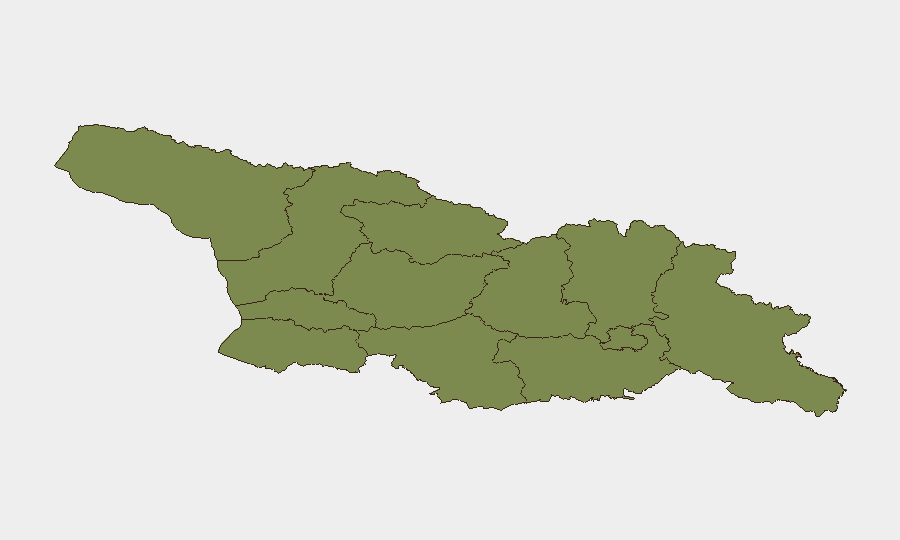
Abkhazia dominates the sub-national ranking at 31.4 (more than 2.7× the national composite score), reflecting its status as a de facto autonomous territory with longstanding separatist tensions and Russian security alignment. Lower Kartli, Kakheti, Racha-Lechkhumi, and Imereti cluster at 11.4, representing a secondary tier of regional instability. However, the recent power outages and sabotage investigation indicate that infrastructure and critical-sector risk now extends to Tbilisi and other nominally lower-risk administrative zones; operational teams should treat nationwide utility disruption as a current hazard independent of traditional geographic risk profiles.
How GeoBit Would Assist
Security teams protecting people and assets in Georgia should leverage AOI Monitoring & Early Warning to track energy infrastructure sites and Tbilisi transport hubs for further disruption signals; Intel Sweep and X/Twitter OSINT to detect emerging attribution claims or state-actor communications; and Conflict & Military network analysis paired with regime-stability assessment to distinguish between accidental grid failure, criminal sabotage, or state-level interference. Real-time routing & network analysis supports contingency travel planning for personnel whose movements depend on functioning transport systems.
7-Day Outlook
The sabotage investigation and dual blackout incidents suggest Georgia's critical infrastructure is under active scrutiny—whether from internal actors, state adversaries, or both—and should be treated as a potential vector for repeated disruption over the next week. Personnel should anticipate possible secondary outages, transport delays, and communication gaps; supply chains dependent on power or road transport should activate contingency protocols. Watch for official attribution announcements or escalated security responses, which may signal broader geopolitical friction.
Highest-Risk Areas — Ranked
| # | State / Region | Risk |
|---|---|---|
| 1 | Autonomous Republic of Abkhazia | 31.4 |
| 2 | Lower Kartli | 11.4 |
| 3 | Kakheti | 11.4 |
| 4 | Racha-Lechkhumi and Kvemo Svaneti | 11.4 |
| 5 | Imereti | 11.4 |
| 6 | Mtskheta-Mtianeti | 1.4 |
| 7 | Tbilisi | 1.4 |
| 8 | Samegrelo-Upper Svaneti | 1.4 |
| 9 | Guria | 1.4 |
| 10 | Autonomous Republic of Adjara | 1.4 |
| 11 | Samtskhe-Javakheti | 1.4 |
| 12 | Shida Kartli | 1.4 |
Sources
Previous Daily Briefs
A new Georgia brief is written every day — each with its own risk map and downloadable CSV. Here's the last week; use the calendar to go further back.
📅 Browse every day by calendar →
Highlighted days have a brief. Tap a day for that day's map & analysis, or “csv” for that day's dataset ($5).
Atlas — our AI intelligence desk — emails them this snapshot personally. Nothing else, no list.