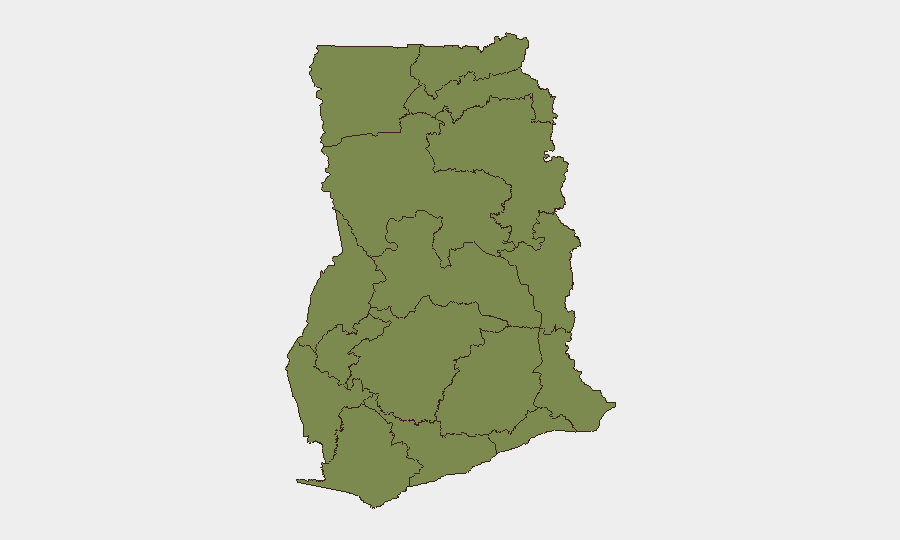
Situation Summary
Ghana remains a relatively stable West African state with a composite threat score of 8 (rank #106 globally), though security dynamics are increasingly shaped by Sahel-region spillover and localized resource conflicts. The threat landscape is heavily concentrated in Greater Accra Region, which accounts for the vast majority of tracked incident density (risk score 33.4 vs. 3.4–7.7 elsewhere), reflecting urban crime, petty violence, and occasional civil unrest rather than organized insurgency. No major security incidents have been confirmed in the last 24–48 hours; the event signal feed reflects routine government and political statements without clear indicators of acute destabilization. The security environment for corporate and NGO operations remains broadly permissive outside high-density urban areas and the northern border zones.
Key Developments
Unable to confirm specific security or unrest incidents in Ghana within the last 24–48 hours. The available event signal feed contains timestamped public statements and routine police/government activity (2026-07-05 to -07-07) but no verified reports of acute conflict, crime escalation, infrastructure failure, or travel disruption tied to those dates. Older analytical pieces on Sahel threat spillover and land disputes in northern Ghana (May 2025 and prior) provide strategic context but are outside the requested recency window. Operational teams requiring live incident confirmation should consult Ghana Police Service public notices, National Security Council communications, and verified outlets (Joy News, Citi Newsroom, Graphic Online) with direct timestamp verification.
Highest-Risk Areas
Greater Accra Region dominates Ghana's threat profile, with a composite risk score of 33.4—more than four times that of the second-highest region (Bono East, 7.7). This disparity reflects urban crime concentration, petty assault, robbery, and occasional civil disorder rather than organized armed conflict; corporate and NGO staff in Accra face the country's highest exposure to street crime and opportunistic violence. Secondary elevated risk appears in Bono East and Eastern regions (6.3–7.7), likely driven by resource-competition dynamics and historical land disputes; northern border regions (Upper East, Upper West, Savannah, North East, Northern, Oti) remain at baseline risk (3.4) but warrant monitoring for Sahel-adjacent cross-border activity and small-arms proliferation over a 6–12 month horizon.
How GeoBit Would Assist
Security teams operating in Ghana should deploy AOI Monitoring & Early Warning on Greater Accra, key transport corridors, and northern border zones to detect emerging crime clusters, protest mobilization, or security-force deployments before they impact operations. Network & Actor Analysis combined with multi-language OSINT (Facebook, X, Telegram, local radio) would provide early signals of civil unrest, labor action, or inter-communal tension before mainstream media coverage. Routing & Network Analysis enables security and logistics teams to identify alternative transport routes around high-risk districts in Accra and to plan evacuation pathways in the event of localized disruption.
7-Day Outlook
No acute security deterioration is anticipated in the next seven days. Monitoring should focus on routine political communication, any escalation in northern border-zone reporting, and crime-trend data from Accra. Longer-term risk (3–6 months) remains tied to Sahel-region spillover dynamics and resource-competition cycles in rural zones; corporate teams should maintain standard duty-of-care protocols and quarterly risk reviews.
Highest-Risk Areas — Ranked
| # | State / Region | Risk |
|---|---|---|
| 1 | Greater Accra Region | 33.4 |
| 2 | Bono East Region | 7.7 |
| 3 | Eastern Region | 6.3 |
| 4 | Volta Region | 6.3 |
| 5 | Upper East Region | 3.4 |
| 6 | Upper West Region | 3.4 |
| 7 | Savannah Region | 3.4 |
| 8 | North East Region | 3.4 |
| 9 | Northern Region | 3.4 |
| 10 | Oti Region | 3.4 |
| 11 | Bono Region | 3.4 |
| 12 | Ahafo Region | 3.4 |
Sources
Previous Daily Briefs
A new Ghana brief is written every day — each with its own risk map and downloadable CSV. Here's the last week; use the calendar to go further back.
📅 Browse every day by calendar →
Highlighted days have a brief. Tap a day for that day's map & analysis, or “csv” for that day's dataset ($5).
Atlas — our AI intelligence desk — emails them this snapshot personally. Nothing else, no list.