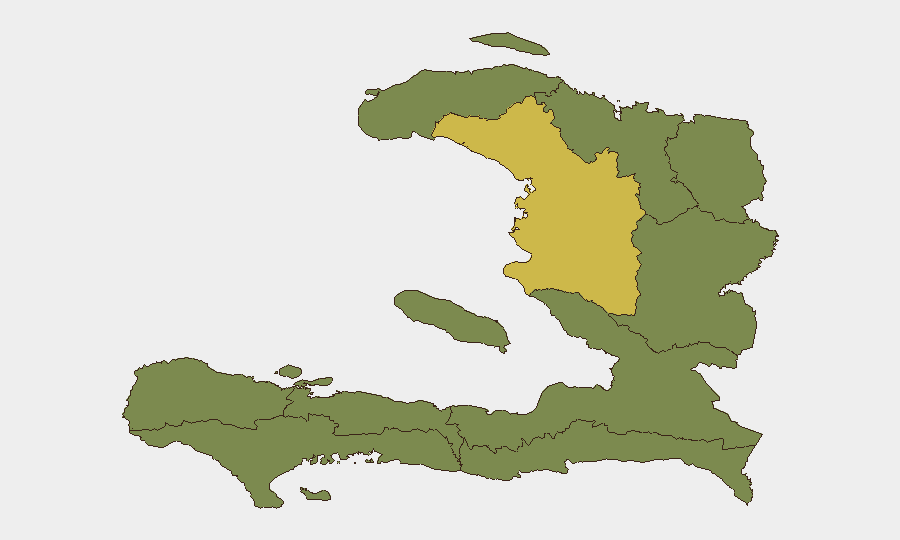
Situation Summary
Haiti remains under U.S. State Department Level 4 "Do Not Travel" advisory amid escalating gang violence, mass displacement, and limited state capacity to provide security or emergency assistance. Gang Suppression Force (GSF) and Haitian National Police (PNH) operations are intensifying across multiple departments, particularly Artibonite and the Port-au-Prince metropolitan area, but control remains contested. The capital and surrounding regions face ongoing kidnapping, armed clashes between displaced persons, and significant civilian casualties. Current trajectory indicates continued volatility with periodic spikes in gang activity and internal displacement.
Key Developments
- Port-au-Prince (Martin Luther King Avenue / Route de Nazon) – 17 July 2026
U.S. Embassy issued a security alert warning that kidnapping may spike on and near Martin Luther King Avenue in the coming days; residents advised to avoid the area and monitor for violence and demonstrations.
- Port-au-Prince (Kenscoff, Pétion-Ville, Robin community) – 17 July 2026 (UN confirmation of 4–9 July attacks)
UN human rights officials confirmed Village de Dieu gang attacks (4–9 July) killed at least 61 residents, including 14 children; 5,840 people displaced; gang presence remains active in Kenscoff with the situation described as "tense."
- Port-au-Prince (internally displaced persons sites, multiple locations) – 18 July 2026
OCNH reported violent confrontations and projectile exchanges between internally displaced groups at multiple sites in the metropolitan area; called for urgent PNH intervention to prevent further escalation.
- Port-au-Prince metropolitan area – 17–19 July 2026 (ongoing)
Haitian authorities and UN partners documented continued gang presence, intimidation, and neighborhood control by armed groups contributing to secondary displacement and heightened civilian risk across the capital.
- Artibonite Department and Kenscoff commune – mid-to-late July 2026 (active operations)
PNH has intensified anti-gang operations under new acting director general; GSF units continue to support operations and transfer arrested individuals and seized weapons to Haitian authorities under MOA signed by Minister of Justice.
Highest-Risk Areas
Artibonite Department stands significantly above all other regions (66.2 composite score) and is the primary driver of national risk, reflecting sustained gang control, PNH/GSF operational intensity, and displacement pressure. The remaining nine departments cluster at 36.2, indicating nationwide diffusion of violence; however, Port-au-Prince metropolitan areas—particularly Kenscoff, Pétion-Ville, Robin, and neighborhoods along Martin Luther King Avenue—represent the most acute near-term threat to foreign nationals and corporate assets given documented mass casualty events, kidnapping alerts, and IDP-related confrontations in the past 10 days.
How GeoBit Would Assist
Security and duty-of-care teams can employ AOI Monitoring & Early Warning to maintain persistent watch on high-risk neighborhoods and displacement sites in the capital with real-time alerting on gang activity, PNH/GSF operations, and protest/demonstration formation. Multi-language OSINT fusion (X, Telegram, Haitian media, radio SIGINT) and entity extraction and sentiment analysis provide rapid, corroborated detection of emerging violence, kidnapping patterns, or roadblock establishment. Routing & Network Analysis enables alternative journey planning around compromised corridors (e.g., Martin Luther King Avenue) and identifies security-viable transit corridors for staff and asset movement.
7-Day Outlook
Gang-PNH/GSF operational tempo is likely to remain elevated through early August as pressure on armed groups increases, though territorial control will remain contested and localized. Kidnapping activity on major Port-au-Prince thoroughfares and secondary displacement from gang strongholds (Kenscoff, Pétion-Ville, surrounding districts) should be expected. Any significant PNH/GSF operational success or failure could trigger rapid escalation or temporary localized calm; monitoring for statements from Ministry of Justice and UN security updates will provide early indication of trajectory shifts.
Highest-Risk Areas — Ranked
| # | State / Region | Risk |
|---|---|---|
| 1 | Artibonite Department | 66.2 |
| 2 | Grande-Anse Department | 36.2 |
| 3 | Sud Department | 36.2 |
| 4 | Nippes Department | 36.2 |
| 5 | Nord-Ouest Department | 36.2 |
| 6 | Nord Department | 36.2 |
| 7 | Nord-Est Department | 36.2 |
| 8 | de l'Ouest Department | 36.2 |
| 9 | Centre Department | 36.2 |
| 10 | Sud-Est Department | 36.2 |
Sources
Previous Daily Briefs
A new Haiti brief is written every day — each with its own risk map and downloadable CSV. Here's the last week; use the calendar to go further back.
📅 Browse every day by calendar →
Highlighted days have a brief. Tap a day for that day's map & analysis, or “csv” for that day's dataset ($5).
Atlas — our AI intelligence desk — emails them this snapshot personally. Nothing else, no list.