Situation Summary
Indonesia remains a moderate, fragmented threat environment (global rank #48, composite score 35) with civil unrest, localized armed activity, and governance friction as primary drivers. The past 48 hours have seen escalation in student-led protests against the free meals program, heightened militarization in Papua's remote areas, and ongoing enforcement operations in drug and smuggling corridors. The political controversy surrounding the flagship social initiative is amplifying civil discontent in major urban centers, while Papua continues to experience tribal tensions, seismic activity, and armed-group vulnerability at critical transport nodes.
Key Developments
- Nationwide student protests intensify (July 26–27, Jakarta, Bandung, Yogyakarta, Surabaya, and university hubs). Large demonstrations against President Prabowo's free school meals program have escalated across multiple cities, drawing counter-protests and raising risk of road blockages, police clashes, and disruptive rallies near parliament and regional government offices.
- Papua airstrip security reinforced (July 27, Papua and Papua Pegunungan). TNI announced deployment of military forces to guard high-risk remote airstrips vulnerable to armed separatist groups and criminal gangs; expect heightened passenger and cargo checks and continued flight disruption risk in Papua's interior.
- Gold smuggling interdiction, North Sumatra–Riau maritime corridor (July 27). Authorities foiled an attempt to smuggle ~3 kg of gold to Malaysia; indicates active cross-border enforcement and potential for increased inspections of travelers and cargo on Sumatra–Malaysia ferries and flights.
- Police attacked during drug operation, Central Kalimantan (late July, Tumbang Kalemei Village, Katingan Regency). Five suspects attacked three police officers conducting narcotics eradication; demonstrates elevated tension around drug enforcement in rural areas and localized violence risk during police raids.
- Inter-tribal tension warnings, Papua Pegunungan (late July, Wamena, Jayawijaya Regency). Regional police urged residents to resolve disputes through legal channels rather than tribal warfare, signaling underlying communal frictions and risk of sudden outbreaks affecting road access in highland zones.
- Free meals program leadership crisis deepens (July 22–27, Jakarta). Agency head resigned amid budget cuts and criminal investigation; budget slashed again with new Gerindra-party chief appointed. Political friction and investigations are fueling public discontent and protests across major cities.
- Minor seismic activity recorded near Sarmi (July 24, offshore Papua). BMKG reported two shallow earthquakes (magnitudes 4.3 and 3.5) in clustered succession; poses risk to poorly built infrastructure, airstrips, and landslide-prone roads in coastal and upland Papua.
Highest-Risk Areas
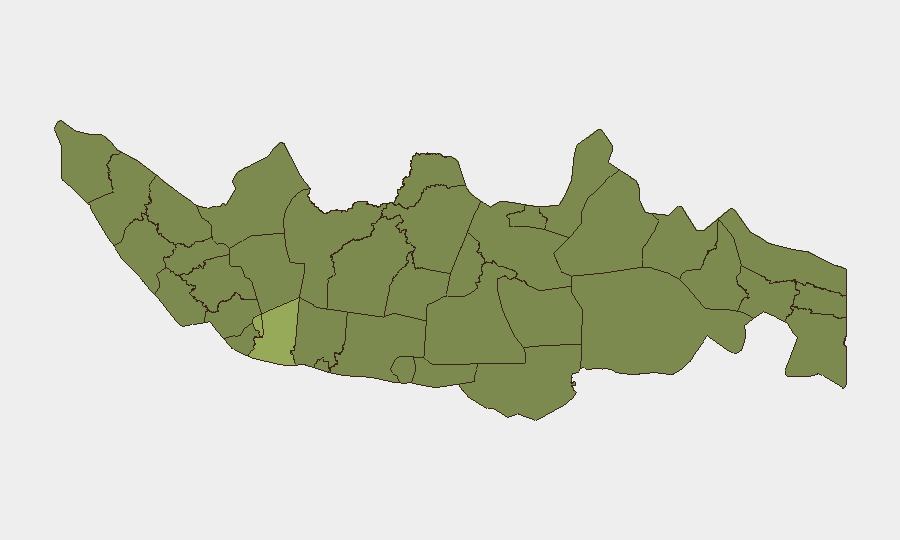
Jakarta (54.6) and West Java (46.3) dominate the national risk ranking, driven primarily by student protests, political volatility, and dense urban activity around government institutions. Central Java (37.1) and North Sumatra (34.5) follow, reflecting ongoing drug-trafficking violence and cross-border smuggling enforcement. Papua-region provinces (including Papua Pegunungan) rank mid-tier but concentrate armed-group activity, tribal conflict, seismic hazard, and critical supply-chain vulnerability at remote airfields; corporate teams with personnel or logistics in these zones should treat them as elevated-risk despite lower composite scores due to operational isolation and limited emergency services.
How GeoBit Would Assist
Intelligence teams should deploy AOI Monitoring & Early Warning on Jakarta's university campuses and parliament precincts to detect protest escalation and road closures in real time. OSINT fusion (X/Telegram monitoring, local-media feeds, radio SIGINT) across Papua will track armed-group activity, tribal tensions, and TNI deployments affecting airstrip access and remote operations. Alternative route/journey planning via the Routing & Network Analysis tool enables security teams to identify safe passage around protest zones and smuggling checkpoints on Sumatra–Malaysia corridors.
7-Day Outlook
Student demonstrations are expected to remain volatile through early August, with particular risk around parliament and regional administrative hubs in Jakarta, Bandung, and East Java. Papua's military reinforcement of airstrips will create operational friction for commercial and private aviation; supply-chain teams should expect delays and heightened documentation requirements. Political pressure on the free meals program will likely sustain media attention and grassroots anger, supporting continued civil unrest in urban centers.
Highest-Risk Areas — Ranked
| # | State / Region | Risk |
|---|---|---|
| 1 | Special capital Region of Jakarta | 54.6 |
| 2 | West Java | 46.3 |
| 3 | Central Java | 37.1 |
| 4 | North Sumatra | 34.5 |
| 5 | East Java | 32.8 |
| 6 | Banten | 28.1 |
| 7 | East Nusa Tenggara | 27.4 |
| 8 | Aceh | 25.7 |
| 9 | Jambi | 25.7 |
| 10 | South Sulawesi | 25.7 |
| 11 | Bali | 25.3 |
| 12 | Riau | 25.1 |
Sources
Previous Daily Briefs
A new Indonesia brief is written every day — each with its own risk map and downloadable CSV. Here's the last week; use the calendar to go further back.
📅 Browse every day by calendar →
Highlighted days have a brief. Tap a day for that day's map & analysis, or “csv” for that day's dataset ($5).
Atlas — our AI intelligence desk — emails them this snapshot personally. Nothing else, no list.