Situation Summary
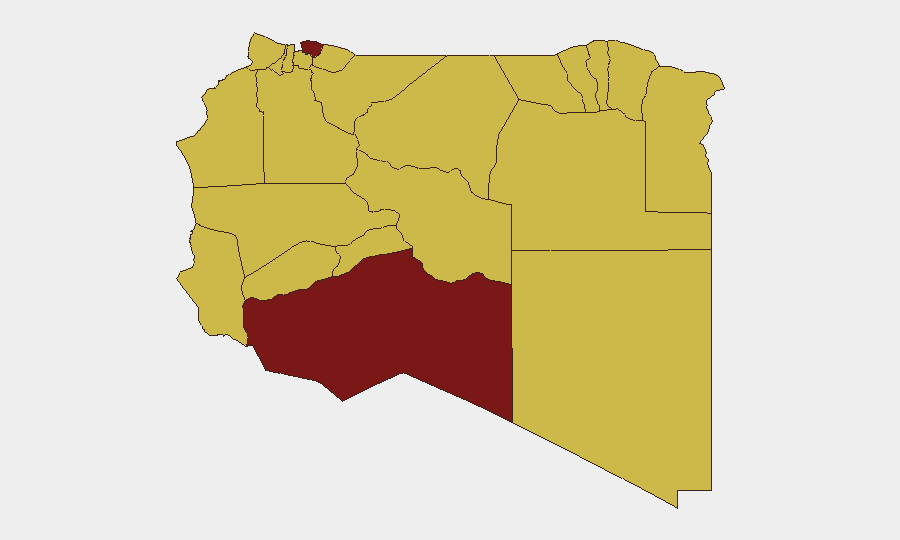
Libya remains fragmented across competing political and security authorities, with institutional tensions and localized instability driving a composite threat score of 95 (rank #19 globally). The most recent signals—including a rejection of Italian overtures by government, reduced relations between a ministry and industry stakeholder, and ongoing detention actions—suggest political hardening rather than acute escalation. Murzuq and Tripoli remain the highest-risk nodes; however, the absence of independently corroborated major violent incidents in the last 24–48 hours indicates tactical rather than strategic deterioration at present.
Key Developments
- Tripoli (2026-07-04, recent): Government issued public statement rejecting Italian engagement, signaling tightening of foreign relations and possible policy reorientation toward European counterparts.
- National (2026-07-04, recent): Ministry-industry relations have deteriorated, with formal reduction of engagement noted; no underlying motive or sectoral focus confirmed in available reporting.
- Status unknown location (2026-07-04, recent): Defector issued public statement; context, identity, and organizational affiliation not specified in event signal but may indicate intra-authority fracture.
- Judicial/medical sector (2026-07-03, recent): Arrest or detention action recorded between judge and doctor; suggests either political purge or criminal/misconduct investigation; location and underlying cause not provided.
- Surman district (timing not fully specified, last 7 days): Libyan Criminal Investigation Department dismantled a car bomb prepared for remote detonation positioned in front of a school, indicating active explosive-device planning against civilian infrastructure.
- Chad–Libya border (2026-07-02, 2× reports): Two abduction or hostage incidents involving Chadian nationals recorded; suggests cross-border criminal activity or irregular detention at or near frontier.
- Student occupation (2026-07-03): Student group occupied territory; location and political motivation unclear; may reflect civil-society or institutional protest rather than armed conflict.
- UN statement (2026-07-02): United Nations authorities issued public statement regarding Libya; content not specified but likely relates to sanctions, governance, or humanitarian access.
Highest-Risk Areas
Murzuq (96.5) and Tripoli (84.8) drive the majority of composite risk and warrant prioritized monitoring. Murzuq's elevation reflects southern desert geography, limited state presence, and historical trafficking and militant-group activity; Tripoli's score reflects political capital concentration, competing security institutions, and proximity to Mediterranean smuggling routes. A second tier of districts—Kufra, Nalut, Ghat, and western coastal zones (Surman, Az Zawiya, Jafara)—all score 66–68, indicating endemic instability across Libya's periphery and indicating no safe sanctuary for extended operations.
How GeoBit Would Assist
Security teams should deploy AOI Monitoring & Early Warning against Murzuq, Tripoli, and Surman to flag violence, detention, and explosive-device preparation in real time. Intel Sweep and multi-language OSINT—including X, Telegram, and Arabic-language news feeds—will surface ministry-industry and government-defector narratives before they escalate into travel restrictions or asset seizure. Network & Actor Analysis will map institutional fault lines and foreign-relations shifts (e.g., Italian pivot) to anticipate diplomatic or sanction-related duty-of-care impacts.
7-Day Outlook
Political friction is likely to intensify absent mediation, with reduced foreign engagement and internal authority splits creating procedural uncertainty for corporate and expatriate presence. No major offensive or organized-violence campaign is signaled in current data, but explosive-device activity in civilian zones (Surman school) and cross-border abductions suggest persistent operational capacity among non-state and criminal actors. Risk of sudden movement restrictions or asset freeze warrants heightened stakeholder communication and contingency planning through mid-July.
Highest-Risk Areas — Ranked
| # | State / Region | Risk |
|---|---|---|
| 1 | Murzuq | 96.5 |
| 2 | Tripoli | 84.8 |
| 3 | Kufra | 68.2 |
| 4 | Nalut | 66.5 |
| 5 | Ghat | 66.5 |
| 6 | Baladiyah Surman | 66.5 |
| 7 | Az Zawiya District | 66.5 |
| 8 | Wadi al Shatii | 66.5 |
| 9 | Wadi al Hayaa | 66.5 |
| 10 | Nuqat al Khams | 66.5 |
| 11 | Jafara | 66.5 |
| 12 | Murqub | 66.5 |
Sources
Previous Daily Briefs
A new Libya brief is written every day — each with its own risk map and downloadable CSV. Here's the last week; use the calendar to go further back.
📅 Browse every day by calendar →
Highlighted days have a brief. Tap a day for that day's map & analysis, or “csv” for that day's dataset ($5).
Atlas — our AI intelligence desk — emails them this snapshot personally. Nothing else, no list.