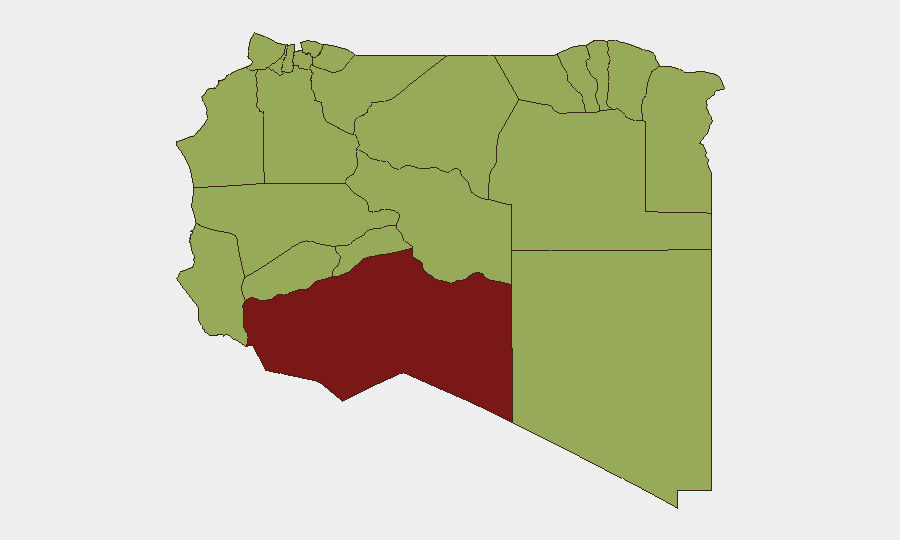
Situation Summary
Libya remains a composite-threat environment (#26 globally, score 75) marked by institutional instability, diplomatic friction, and localized cross-border criminality rather than large-scale violent escalation. The past 48 hours have produced no confirmed major attacks or coordinated military operations, but recent developments signal ongoing strain within security leadership, deteriorating foreign relations, and vulnerability at critical infrastructure sites. Risk is concentrated in southern and western regions (Murzuq, Kufra, Sirte) where ungoverned space, cross-border movement, and militant activity persist.
Key Developments
- Tripoli, 4 July 2026: Prime Minister Abdulhamid Dbeibah convened a security meeting with newly appointed Intelligence Service chief Abdulmajid Meliqta to review "latest political and security developments," indicating active restructuring of national security apparatus and potential shifts in institutional priorities and capability.
- National Level, 4 July 2026: Government formally rejected diplomatic engagement with Italy and simultaneous reporting documented deterioration in ministry–industry relations, signaling heightened political friction and foreign-relations tension without associated confirmed violence.
- Tripoli, 2 July 2026 (evening): A fire occurred at a security headquarters facility; investigation ongoing and cause (accidental or deliberate) not yet confirmed, highlighting infrastructure vulnerability at critical security installations.
- Undisclosed Location, 3 July 2026: Detention of a judge and a doctor recorded; motive and precise location remain unclear, suggesting possible politically motivated arrests or professional-sector misconduct investigations with rule-of-law implications.
- Chad–Libya Border Region, 2 July 2026: Two abduction/hostage incidents involving Chadian nationals reported in border-adjacent areas, continuing established pattern of cross-border criminal activity and irregular detentions affecting travel security in southern frontier zones.
Highest-Risk Areas
Murzuq (82.4) and the secondary cluster of Kufra and Sirte (both 59.9) constitute the primary loci of elevated risk, driven by limited state control, ungoverned territory, and persistent militant and criminal networks. Murzuq's exceptional score reflects its position as a nexus for transnational trafficking, irregular militia activity, and weak institutional presence. The western and coastal zones (Az Zawiya, Tripoli, Baladiyah Surman) register moderate-to-significant risk (52.4) linked to political fragmentation, state-security restructuring, and periodic diplomatic tension, while Tripoli itself adds critical-infrastructure vulnerability (demonstrated by the recent security-headquarters fire). Personnel and asset-owners in southern regions should maintain heightened vigilance; those in Tripoli should monitor institutional changes and verify security of fixed facilities.
How GeoBit Would Assist
Security and risk teams should deploy AOI Monitoring & Early Warning on Murzuq, Kufra, Sirte, and Tripoli security sites to detect emerging incidents (attacks, fires, unusual force movements) in near-real time. Intel Sweep, multi-language OSINT, and Telegram/X monitoring enable rapid detection of defector statements, militant declarations, or cross-border incident reporting—critical given the 3–4 July defector signal and ongoing Chadian-national incidents. Routing & Network Analysis supports safe transit planning for personnel in high-risk southern and western corridors, accounting for abduction risk and border instability.
7-Day Outlook
No major escalation is forecast in the near term; institutional restructuring and diplomatic friction are expected to persist without triggering coordinated large-scale violence. Cross-border incidents (abductions, trafficking) in southern zones will likely continue. Security teams should anticipate further leadership or policy signals from the new intelligence chief and monitor foreign-relations rhetoric, particularly toward Italy and regional actors, as proxies for broader stability.
Highest-Risk Areas — Ranked
| # | State / Region | Risk |
|---|---|---|
| 1 | Murzuq | 82.4 |
| 2 | Kufra | 59.9 |
| 3 | Sirte | 59.9 |
| 4 | Nalut | 52.4 |
| 5 | Ghat | 52.4 |
| 6 | Baladiyah Surman | 52.4 |
| 7 | Az Zawiya District | 52.4 |
| 8 | Wadi al Shatii | 52.4 |
| 9 | Wadi al Hayaa | 52.4 |
| 10 | Nuqat al Khams | 52.4 |
| 11 | Tripoli | 52.4 |
| 12 | Jafara | 52.4 |
Sources
Previous Daily Briefs
A new Libya brief is written every day — each with its own risk map and downloadable CSV. Here's the last week; use the calendar to go further back.
📅 Browse every day by calendar →
Highlighted days have a brief. Tap a day for that day's map & analysis, or “csv” for that day's dataset ($5).
Atlas — our AI intelligence desk — emails them this snapshot personally. Nothing else, no list.