Situation Summary
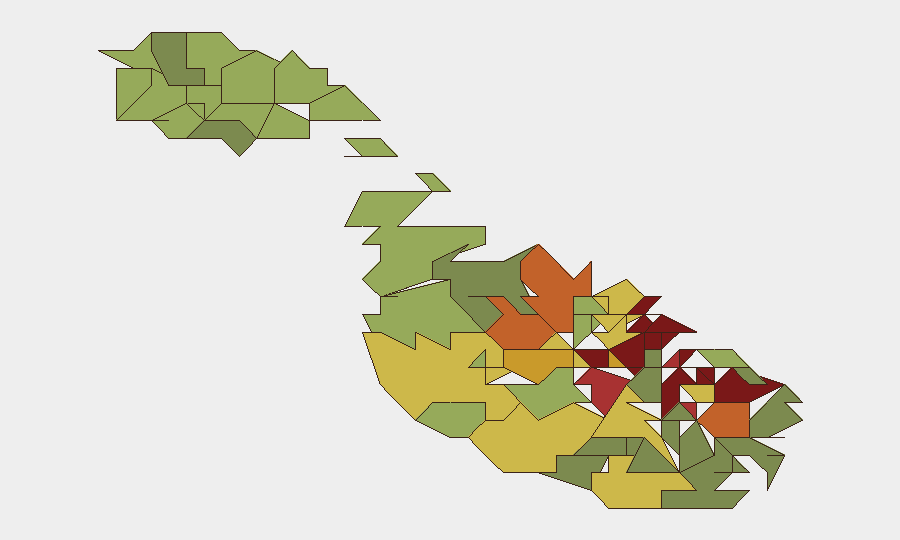
Malta maintains a composite threat score of 5 globally (rank #164), indicating a low baseline security environment with no tracked major incidents as of 20 August 2026. However, sub-national risk concentration in Valletta, Sliema, and Saint Julian's—all scoring above 90—reflects localized pressure points, likely driven by urban density, tourism, and anti-social disturbances. The overall trajectory remains stable, though overnight security operations in Sliema-adjacent areas (Swieqi) suggest ongoing management of minor public-order challenges.
Key Developments
- Valletta/Italian national — 2026-08-19 to 2026-08-20: A 15-year-old Italian minor remained in custody following a false bomb alarm at his school; decision reported by Italian-language outlets. Context: false alarms represent low direct threat but may indicate elevated alert posture or copycat risk in educational settings.
- Malta travel documentation — 2026-08-19: Senior Israeli official confirmed Malta's recognition of all Israeli travel documents; administrative change with no direct security implication but relevant to duty-of-care teams managing multinational personnel mobility.
- Armed Forces/Police joint operation — Swieqi (overnight, prior to 2026-08-20): Armed Forces of Malta and police increased presence to deter anti-social disturbances; indicates localized public-order management rather than significant security escalation.
Note on reporting environment: Web research over the last 24–48 hours yielded limited incident data meeting briefing thresholds. No credible reports of violence, terrorism, organized crime, cyber incidents, or civil unrest emerged from current OSINT sweep. Baseline travel-risk assessments remain low to moderate.
Highest-Risk Areas
Valletta (95), Sliema (92), and Saint Julian's (90) drive the national risk profile, collectively representing Malta's urban core and primary tourist/financial nodes. These three areas alone account for elevated composite scores despite the nation's overall security stability, suggesting risk concentration in high-density, high-footfall zones rather than systemic national instability. Supporting areas—Gżira, Hamrun, Paola, Msida—form a contiguous high-risk band around Valletta, likely reflecting shared factors (tourism, nightlife, transient populations, vehicle density). Mid-tier risk zones (Birgu, Senglea, Cospicua) along the Grand Harbour indicate historical urban-core patterns. Risk drivers remain consistent with anti-social activity, petty crime, and crowd management rather than organized violence or political instability.
How GeoBit Would Assist
Security teams with personnel or assets in Malta's top-risk zones (Valletta, Sliema, Saint Julian's) should employ Intel Sweep and global event feeds for early warning of civil disturbance escalation; AOI Monitoring & Early Warning on high-footfall corporate/diplomatic sites; and OSINT fusion (X/Twitter, Telegram, local media) to detect emerging public-order incidents before they reach mainstream reporting. GIS & Spatial Analysis layered against transport and population data can refine risk routing and duty-of-care protocols for employee commute and asset movement, while Network & Actor Analysis supports identification of organized crime or anti-social networks operating in sub-national hotspots.
7-Day Outlook
No material escalation in threat level is anticipated over the next seven days absent external shocks (e.g., maritime incident, political event, or tourism surge). Localized anti-social management by security forces is expected to continue in Sliema, Swieqi, and similar high-density zones. Monitoring of the Italian national's custody disposition and any secondary false-alarm activity in schools warranted as precautionary signals.
Highest-Risk Areas — Ranked
| # | State / Region | Risk |
|---|---|---|
| 1 | Valletta | 95 |
| 2 | Sliema | 92 |
| 3 | Saint Julian's | 90 |
| 4 | Gżira | 88 |
| 5 | Hamrun | 87 |
| 6 | Paola | 86 |
| 7 | Msida | 85 |
| 8 | Birkirkara | 84 |
| 9 | Birgu | 83 |
| 10 | Senglea | 82 |
| 11 | Cospicua | 81 |
| 12 | Żabbar | 80 |
Sources
Previous Daily Briefs
A new Malta brief is written every day — each with its own risk map and downloadable CSV. Here's the last week; use the calendar to go further back.
- August 18, 2026
- August 15, 2026
- August 13, 2026
- August 11, 2026
- August 9, 2026
- August 7, 2026
- August 5, 2026
📅 Browse every day by calendar →
Highlighted days have a brief. Tap a day for that day's map & analysis, or “csv” for that day's dataset ($5).
Atlas — our AI intelligence desk — emails them this snapshot personally. Nothing else, no list.