Situation Summary
Pakistan remains at moderate composite threat level (#27 globally, score 73) with 788 tracked events. The security environment is regionally fragmented, with Khyber Pakhtunkhwa and Punjab accounting for the highest concentrations of risk. Recent signal activity points to multi-domain friction—educational policy disputes, law enforcement actions, cross-border diplomatic tension with Qatar, and underlying separatist and militant activity—though the 24–48 hour window lacks independently verified new incident reporting. Trajectory remains tense but not acutely destabilized.
Key Developments
Unable to confidently report specific incidents from 24–25 June 2026. Available web sources either predate this window (e.g., GeoBit brief of 22 June detailing Chagai mining attack, North Waziristan suicide bombing, Khairpur drone strike, and nationwide alerts) or lack precise timestamps. Signal data from 23 June indicates ongoing activity in education policy rejection, media detention, court petitions (Lahore High Court demand), and police investigation escalation, but underlying incident detail and verified locations remain unavailable without live news feeds or official sources. Recommendation: Cross-reference GeoBit's Intel Sweep function against live Dawn, Geo News, and ARY feeds for real-time incident verification and location mapping.
Highest-Risk Areas
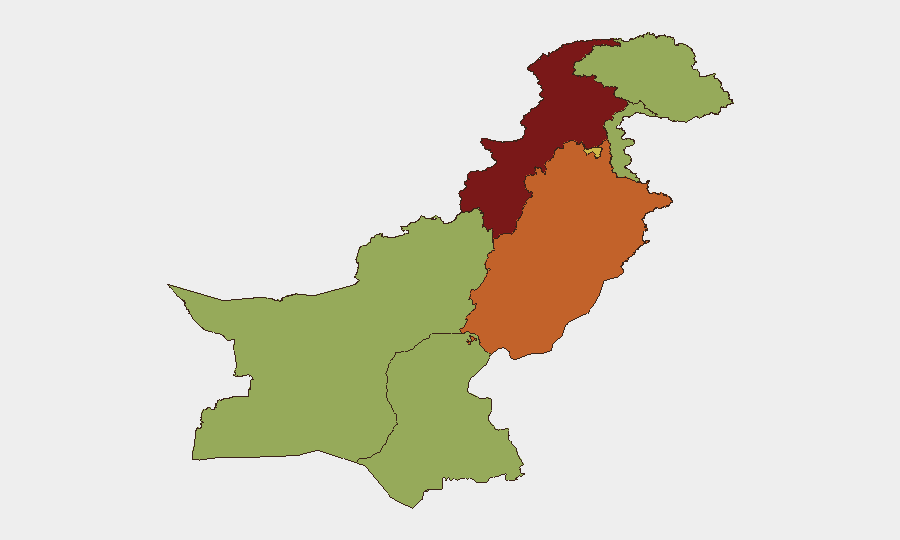
Khyber Pakhtunkhwa (80.8) and Punjab (75.6) anchor Pakistan's risk profile. KP's score reflects persistent militant and insurgent presence, cross-border Taliban activity, and suicide bombing history; Punjab's reflects urban terrorism, sectarian friction, and high population density amplifying impact. Islamabad Capital Territory (61.2) presents acute political-security overlap due to concentration of state institutions, protest activity, and media/detainee incidents flagged on 23 June. Southern and northern zones (Sindh, Balochistan, Azad Kashmir, Gilgit-Baltistan) maintain elevated but secondary risk, driven by separatist cells, organized crime, and resource disputes. Corporate and diplomatic assets in Punjab and ICT face layered threat from both transnational and domestic actors.
How GeoBit Would Assist
AOI Monitoring & Early Warning would enable persistent watch on high-risk districts (North Waziristan, Lahore, Islamabad) with alerting on security incidents, protest formation, and law enforcement surges. Conflict & Military (force structure, militant faction tracking) and Network & Actor Analysis would map militant-state interactions and cross-border spillover. Intel Sweep combined with multi-language OSINT (Urdu, Pashto news feeds, Telegram/X channels) would triangulate incident reporting in real time and resolve ambiguities in timing and location—critical for duty-of-care teams validating travel, facility, and personnel security decisions.
7-Day Outlook
Near-term trajectory likely remains elevated and fragmented rather than cascading. Education and court-order disputes may continue to generate public-sector friction; cross-border tensions with Qatar and periodic militant activity in KP/Punjab will sustain background threat. No indicators of imminent state collapse, major militant offensive, or uncontrolled civil unrest, but volatility in Islamabad over institutional disputes and localized violence in frontier zones should be assumed persistent. Organizations with presence in Punjab or ICT should maintain operational security postures and monitor incident reporting channels closely.
Highest-Risk Areas — Ranked
| # | State / Region | Risk |
|---|---|---|
| 1 | Khyber Pakhtunkhwa | 80.8 |
| 2 | Punjab | 75.6 |
| 3 | Islamabad Capital Territory | 61.2 |
| 4 | Sindh | 59.3 |
| 5 | Balochistan | 54.8 |
| 6 | Azad Kashmir | 51.5 |
| 7 | Gilgit-Baltistan | 50.8 |
Sources
Previous Daily Briefs
A new Pakistan brief is written every day — each with its own risk map and downloadable CSV. Here's the last week; use the calendar to go further back.
📅 Browse every day by calendar →
Highlighted days have a brief. Tap a day for that day's map & analysis, or “csv” for that day's dataset ($5).