Situation Summary
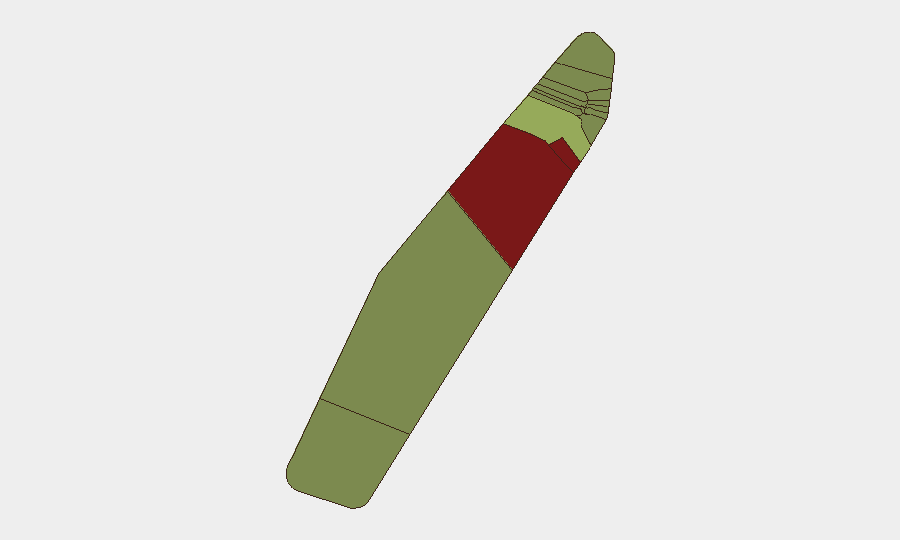
Palau remains a low-threat environment with no verified security incidents, civil unrest, or infrastructure disruptions reported in the last 24–48 hours. The nation's composite threat score reflects minimal organized conflict, terrorism, or crime activity at the national level. However, sub-national risk concentration in Peleliu and Angaur—driven by historical territorial sensitivities, limited state capacity, and economic marginalization—warrants targeted monitoring for personnel and asset protection in those states.
Key Developments
No discrete security, civil-unrest, crime, political-instability, infrastructure, or travel-risk events were verified in Palau during the last 24–48 hours. Routine administrative and legislative activity (including a July 20 cybersecurity vote) continues, but these do not constitute operational security developments for corporate teams. Maritime activity involving Palau-flagged vessels occurs globally; a Palau-registered ship incident was reported on 26 July in the Black Sea, but is external to Palau territory and does not affect domestic or regional operations in the country.
Highest-Risk Areas
Peleliu (risk score 92) and Angaur (risk score 88) together account for the nation's highest-risk profile, despite Palau's overall low global threat ranking. Both states carry historical political-autonomy grievances, limited law-enforcement resources, and economic constraints that create friction points for labor disputes, informal governance tensions, or localized resource conflicts. Koror (score 45), the commercial and population center, ranks third but remains substantially lower-risk; the remaining nine states exhibit minimal tracked risk. Corporate teams with operations or personnel in Peleliu or Angaur should maintain heightened situational awareness and contingency protocols, particularly around local political calendars and resource-allocation disputes.
How GeoBit Would Assist
AOI Monitoring & Early Warning with persistent watch on Peleliu and Angaur would enable automated alerting on emerging political statements, labor actions, or infrastructure incidents before they escalate. OSINT fusion across X/Twitter, Telegram, and local media—combined with multi-language search and sentiment analysis—would surface community-level discontent or official policy shifts affecting business continuity or personnel safety. Network & Actor Analysis would map relationships among local officials, civil-society groups, and informal power brokers to contextualize risk trajectories and inform duty-of-care decision-making.
7-Day Outlook
No imminent triggering events are identified for the next seven days. Baseline monitoring should continue on legislative developments, any cyclical resource-allocation disputes in outer states, and maritime activity affecting supply chains; the absence of current incidents does not eliminate latent structural vulnerabilities in high-risk states. A resumption of routine briefings in 14 days is recommended unless sub-national tensions accelerate.
Highest-Risk Areas — Ranked
| # | State / Region | Risk |
|---|---|---|
| 1 | Peleliu | 92 |
| 2 | Angaur | 88 |
| 3 | Koror | 45 |
| 4 | Melekeok | 35 |
| 5 | Airai | 32 |
| 6 | Ngatpang | 28 |
| 7 | Ngeremlengui | 26 |
| 8 | Ngaraard | 25 |
| 9 | Ngardmau | 24 |
| 10 | Aimeliik | 23 |
| 11 | Ngiwal | 22 |
| 12 | Ngchesar | 21 |
Sources
Previous Daily Briefs
A new Palau brief is written every day — each with its own risk map and downloadable CSV. Here's the last week; use the calendar to go further back.
📅 Browse every day by calendar →
Highlighted days have a brief. Tap a day for that day's map & analysis, or “csv” for that day's dataset ($5).
Atlas — our AI intelligence desk — emails them this snapshot personally. Nothing else, no list.