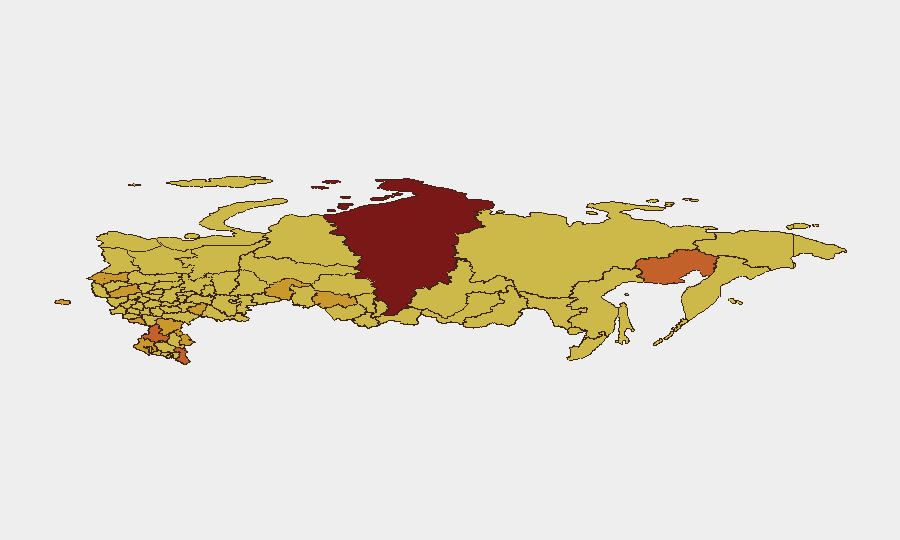
Situation Summary
Russia faces sustained operational pressure from large-scale Ukrainian drone strikes targeting critical infrastructure in and around Moscow and other western regions. On 20 June, Ukraine conducted one of its largest drone offensives against the capital in two years, forcing airport disruptions and causing fires at fuel storage facilities. Russian air-defense systems are reportedly under strain from the volume and frequency of deep-penetration attacks, creating a widening gap between intercept capacity and incoming threat density. The combination of active kinetic operations, infrastructure damage, and diplomatic friction (reflected in rejection statements from Brussels and internal Russian government discord) sustains Russia's #8 global threat ranking.
Key Developments
- Moscow region, 20 June – Ukrainian drones launched a coordinated mass attack with over 1,000 UAVs engaged across Russia in 24 hours; dozens targeted Moscow, triggering temporary flight suspensions and diversions at major airports for air-defense operations.
- Moscow (western districts), 20 June – A major fire at a fuel storage facility was likely caused by a Russian air-defense missile intercepting an incoming drone directly above the depot, resulting in a secondary explosion and damage to regional energy infrastructure.
- Moscow (residential high-rise), 20 June – A drone struck the upper floors of an apartment building, damaging the façade and scattering debris; consistent with the broader 24-hour UAV attack wave across the capital.
- Moscow region airspace, 20 June – Russian Ministry of Defense reported intercepting numerous drones; Ukrainian intelligence assessed that sustained deep-strike operations are forcing Russia to expend S-300/S-400 interceptors at potentially unsustainable rates, raising concerns about future air-defense availability.
- Multiple western Russian regions, 20 June – Coordinated Ukrainian strikes on oil refineries, fuel storage, and air-defense assets across western Russia caused fires and localized infrastructure damage, with downstream risk to logistics and fuel-supply networks serving Moscow.
- Russian-occupied territories (Crimea, Luhansk), 19–20 June – Ukraine continued intensive targeting of Russian air-defense systems in occupied areas, degrading radar and launcher coverage and enabling deeper drone penetration into Russia proper.
Highest-Risk Areas
Moscow dominates the risk landscape (score 100) due to active drone targeting of critical infrastructure, airport disruptions, and residential impact. Krasnoyarsk Krai (97.4), Rostov Oblast (75.9), and Magadan Oblast (73.6) reflect both proximity to active operations and strategic importance to Russian energy and military logistics. Saint Petersburg (76.5) and Leningrad Oblast (72) face secondary risk from the broader pattern of western-region targeting. These rankings are driven primarily by ongoing kinetic activity and infrastructure vulnerability rather than internal instability.
How GeoBit Would Assist
Security teams should employ AOI Monitoring & Early Warning on Moscow, Krasnoyarsk Krai, and other high-risk regions to track real-time drone activity, fire outbreaks, and airport/logistics disruptions. Intel Sweep combined with OSINT fusion (X/Telegram, Russian state media, and Ukrainian official channels) enables rapid corroboration of attack claims and damage extent within hours of incidents. Routing & Network Analysis helps identify alternative transport and supply chains bypassing damaged fuel infrastructure and airspace closures.
7-Day Outlook
Ukrainian deep-strike drone operations are expected to persist or intensify as Russia's air-defense interceptor stockpile continues to degrade. Moscow and western industrial regions will remain the primary targets, with elevated risk of cascading fuel-supply disruptions and temporary transport delays. Diplomatic friction and internal Russian military-government tension may increase in response to sustained infrastructure losses, though no imminent escalation to nuclear or WMD use is assessed.
Highest-Risk Areas — Ranked
| # | State / Region | Risk |
|---|---|---|
| 1 | Moscow | 100 |
| 2 | Krasnoyarsk Krai | 97.4 |
| 3 | Saint Petersburg | 76.5 |
| 4 | Rostov Oblast | 75.9 |
| 5 | Dagestan | 74.3 |
| 6 | Magadan Oblast | 73.6 |
| 7 | Tyumen Oblast | 72.5 |
| 8 | Astrakhan Oblast | 72.3 |
| 9 | Volgograd Oblast | 72.1 |
| 10 | Leningrad Oblast | 72 |
| 11 | Kaliningrad | 71.9 |
| 12 | Novosibirsk Oblast | 71.9 |
Sources
Previous Daily Briefs
A new Russia brief is written every day — each with its own risk map and downloadable CSV. Here's the last week; use the calendar to go further back.
📅 Browse every day by calendar →
Highlighted days have a brief. Tap a day for that day's map & analysis, or “csv” for that day's dataset ($5).