Situation Summary
South Africa's security environment remains elevated but stable, with Gauteng province driving the majority of national risk (composite score 33.6 of 86 global rank). Recent 24–48 hour activity centers on anti-immigration enforcement actions in Johannesburg, ongoing Operation Shanela II mass-arrest campaigns, and xenophobic shop closures in Mpumalanga. High-profile political developments—including presidential arrest/investigation signals and public disapproval statements—add uncertainty to the governance backdrop, though direct operational threat to corporate assets remains localized to Gauteng and select areas of the Western Cape.
Key Developments
- Johannesburg, Gauteng (2026-07-24): Anti-immigration groups seized foreign nationals from homes and handed them to police; part of escalating civil unrest targeting undocumented residents and cross-border movement. Travel and foot traffic in affected neighborhoods warrant heightened situational awareness.
- Gauteng province (2026-07-21–25): Operation Shanela II (SAPS nationwide enforcement) resulted in 1,200+ arrests in Gauteng alone, including undocumented migrants, wanted suspects, and gang-affiliated individuals. Heightened police and vigilante activity in urban and peri-urban zones.
- Mpumalanga (2026-07-21–22): Community-led forced closures of foreign-national–owned shops; residents cite lack of permits and documentation. Pattern indicates xenophobic sentiment spreading beyond Johannesburg into secondary cities.
- Sandton, Johannesburg (2026-07-21): Senior Crime Intelligence officer (Col. Ismail Dawood) remanded in custody on intimidation and extortion charges (R3.5 million); signals internal security-sector vulnerabilities and potential corruption in law enforcement.
- Bryanston, Johannesburg (recent): City of Johannesburg enforcement action against hijacked properties; 17+ properties under investigation. Reflects ongoing property crime and state capacity challenges in securing assets.
- Presidential developments (2026-07-25): Signals of arrest, investigation, and public disapproval of the president introduce short-term governance uncertainty; no immediate operational security impact reported, but political instability can reduce law enforcement predictability.
Highest-Risk Areas
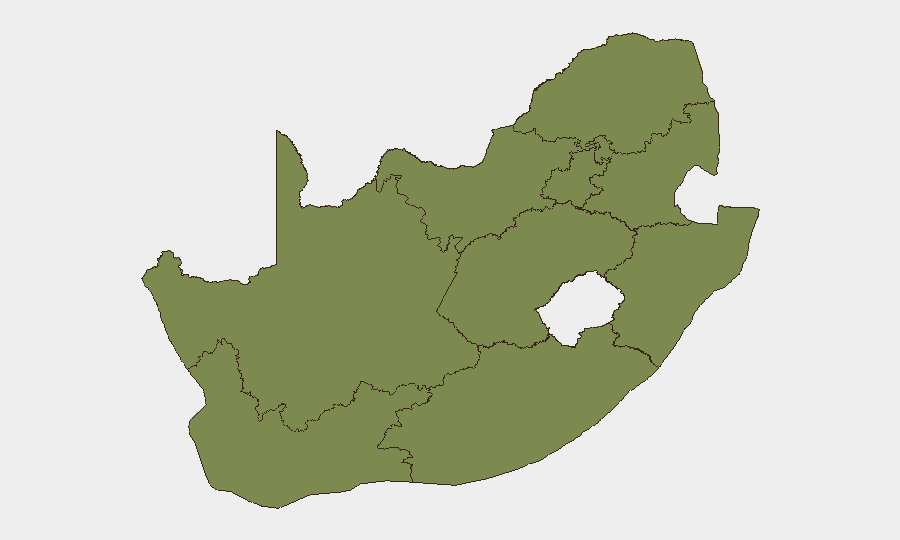
Gauteng's dominance (score 33.6) reflects Johannesburg's scale, density, and concentration of commercial, residential, and transit hubs vulnerable to criminal enterprise, xenophobic action, and police-led operations. Western Cape (16.3) and Eastern Cape (13.1) follow at considerable distance, with risk in those regions primarily driven by organized crime, property crime, and localized gang activity rather than mass civil action. Limpopo (10.6) registers elevated risk linked to border-region smuggling and organized-crime networks. KwaZulu-Natal and remaining provinces show lower composite scores but warrant monitoring for secondary xenophobic or labor-action spillover.
How GeoBit Would Assist
Corporate security teams should deploy AOI Monitoring & Early Warning on key Johannesburg nodes (Sandton, Bryanston, Kew, CBD) and Mpumalanga urban centers to track police operations, informal-sector action, and property-crime patterns in near–real time. Intel Sweep (X/Twitter, Telegram, local crime feeds) combined with sentiment & temporal analysis will surface emergent xenophobic mobilization or labor unrest before mass action. GIS & Spatial Analysis and alternative-route planning enable duty-of-care teams to redirect personnel and supply chains away from high-activity zones during enforcement sweeps or civil unrest.
7-Day Outlook
Xenophobic sentiment and anti-immigration enforcement are likely to intensify in Gauteng and expand into Mpumalanga and Eastern Cape over the next week; monitor for secondary labor-action or community-mobilization signals. Presidential instability and ongoing Operation Shanela II may create periodic police surges and checkpoints; compliance and document verification should be reinforced for all personnel. No imminent large-scale security event is signaled, but localized civil unrest and property-crime risk in Gauteng remain elevated.
Highest-Risk Areas — Ranked
| # | State / Region | Risk |
|---|---|---|
| 1 | Gauteng | 33.6 |
| 2 | Western Cape | 16.3 |
| 3 | Eastern Cape | 13.1 |
| 4 | Limpopo | 10.6 |
| 5 | KwaZulu-Natal | 6.8 |
| 6 | North West | 5.5 |
| 7 | Northern Cape | 4.5 |
| 8 | Free State | 4.2 |
| 9 | Mpumalanga | 3.6 |
Sources
Previous Daily Briefs
A new South Africa brief is written every day — each with its own risk map and downloadable CSV. Here's the last week; use the calendar to go further back.
📅 Browse every day by calendar →
Highlighted days have a brief. Tap a day for that day's map & analysis, or “csv” for that day's dataset ($5).
Atlas — our AI intelligence desk — emails them this snapshot personally. Nothing else, no list.