Situation Summary
South Korea remains a moderate-threat environment (composite score 16) with concentrated risk in Seoul and North Chungcheong, driven primarily by cyber-security incidents and government investigations rather than civil unrest or military escalation. A significant data breach at a national startup platform on 22 June exposed personal information for approximately 5,000 competition winners, triggering a formal investigation by the National Cyber Security Center. Recent event signals show elevated government activity—including investigations, military-force posturing, and public statements—alongside diplomatic friction with China; however, these remain reactive and contained rather than indicative of systemic instability.
Key Developments
- Seoul, Government Complex Seoul – 22 June 2026: A Ministry of SMEs and Startups data-breach incident exposed email addresses, startup idea summaries, and evaluation comments for ~5,000 competition participants; the National Cyber Security Center is investigating 9 IP addresses linked to unauthorized access attempts, with 54 formal damage reports filed.
- South Korea (nationwide) – 21–22 June 2026: Multiple government investigations initiated (dates 21 and 22 June); concurrent public statements and one instance of conventional military-force signaling recorded, suggesting elevated inter-agency or cross-sector coordination activity.
- South Korea (nationwide) – 20 June 2026: Government issued disapproval statement in response to Chinese diplomatic action; same date saw separate public statement from South Korea versus a private company (details unspecified in available sources).
- South Korea (nationwide) – 22 June 2026: Public disapproval statement issued; separate public statement directed at a ministry-level entity on the same date.
No further corroborated South Korea–specific developments in civil unrest, transport disruption, labor action, or localized crime were verified in the last 24–48 hours from independent open sources.
Highest-Risk Areas
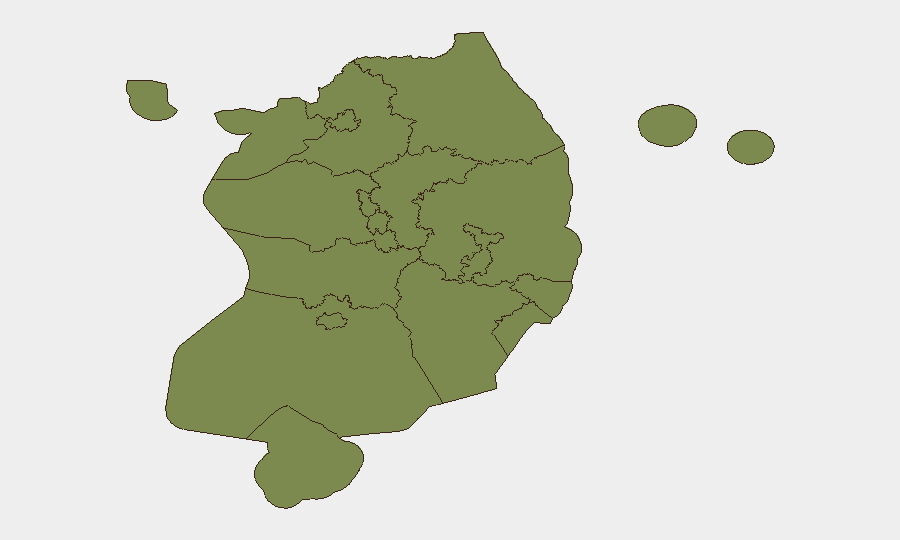
Seoul (31.2) accounts for the largest absolute risk share, driven by the startup-data breach and ongoing National Cyber Security Center investigation—a concentrated cyber-incident risk affecting government digital infrastructure and the startup ecosystem. North Chungcheong (27.7), by contrast, shows elevated risk without a single dominant verified incident in the last 24–48 hours, suggesting either persistent underlying conditions, sustained investigation activity, or data-collection artifacts. Busan (21) ranks third but remains significantly below Seoul and North Chungcheong. All other regions (Gyeonggi, South Gyeongsang, South Jeolla, Jeonbuk, Daegu, Incheon, South Chungcheong) score below 3, indicating minimal assessed risk. The concentration in Seoul and North Chungcheong is cyber and investigative rather than kinetic or civil-disorder driven.
How GeoBit Would Assist
Security teams managing personnel or assets in South Korea should employ Intel Sweep and multi-language OSINT fusion to monitor unfolding government investigations—particularly the National Cyber Security Center's cyber-forensics work—and track any secondary impacts on startup-ecosystem companies or government vendors. Early Warning & Prediction capabilities combined with AOI Monitoring & Early Warning for Seoul and North Chungcheong would provide persistent alerting on escalation signals (additional breaches, sanctions, or operational friction). Network & Actor Analysis can map the nine IP addresses and investigation scope to assess whether this represents isolated criminal activity or part of a broader campaign.
7-Day Outlook
The data breach remains under active investigation but is expected to stabilize within the current 24–48-hour cycle absent new confirmed incidents. Government activity signals (investigations, statements, military posturing) are likely to continue at baseline level; escalation risk remains low unless North Korea–related military activity or additional cyber incidents emerge. Overall threat trajectory for South Korea remains stable through the near term.
Highest-Risk Areas — Ranked
| # | State / Region | Risk |
|---|---|---|
| 1 | Seoul | 31.2 |
| 2 | North Chungcheong | 27.7 |
| 3 | Busan | 21 |
| 4 | Gangwon State | 17.1 |
| 5 | Jeju | 3.8 |
| 6 | Gyeonggi | 2.5 |
| 7 | South Gyeongsang | 2.5 |
| 8 | South Jeolla | 2.1 |
| 9 | Jeonbuk State | 1.6 |
| 10 | Daegu | 1.6 |
| 11 | Incheon | 1.2 |
| 12 | South Chungcheong | 1.2 |
Sources
Previous Daily Briefs
A new South Korea brief is written every day — each with its own risk map and downloadable CSV. Here's the last week; use the calendar to go further back.
📅 Browse every day by calendar →
Highlighted days have a brief. Tap a day for that day's map & analysis, or “csv” for that day's dataset ($5).