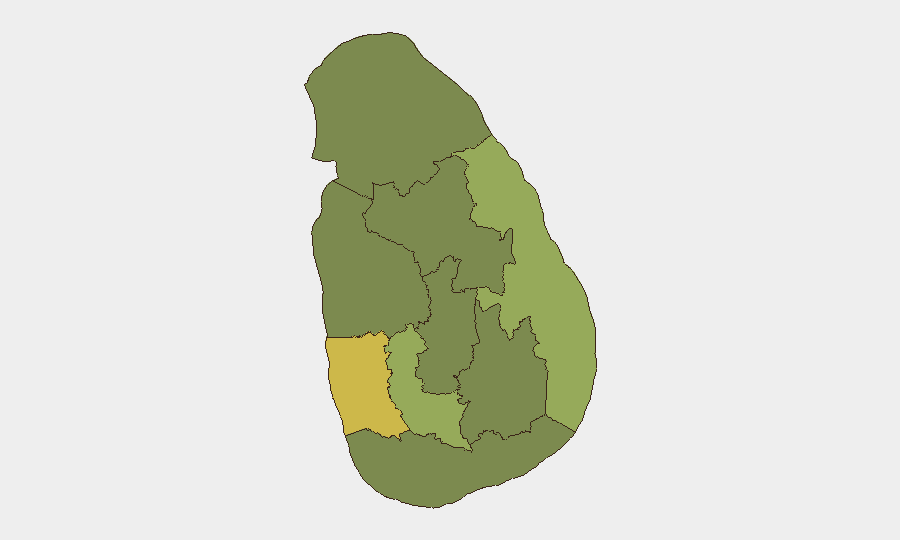
Situation Summary
Sri Lanka remains at moderate global risk (#39 globally, composite threat score 52) with a sharp spike in domestic security volatility driven by a major prison uprising. A deadly riot at Negombo Prison in Western Province on 7–8 July resulted in at least 26–28 deaths and over 100 injuries, triggering military and air force deployment and prompting emergency government action to address chronic prison overcrowding. The incident has triggered cross-institutional tensions, international diplomatic friction (notably with the US), and exposed critical gaps in detention facility management that pose cascading risks to public order and rule-of-law institutions.
Key Developments
- Negombo Prison riot, Western Province (7–8 July): Drug-gang inmates clashed with security forces over two consecutive days; at least 26–28 dead (including 4–8 guards), over 100 wounded. Inmates reportedly seized firearms. Military and air force units deployed to restore control; Negombo General Hospital received 19 bodies and >100 admissions.
- Security force response escalation (8 July): Security personnel opened fire inside the prison as violence continued into a second day, indicating heightened force posture and potential for further casualties if unrest resurfaces.
- Justice Ministry emergency response (8 July): Justice Minister Harshana Nanayakkara ordered conversion of a disused hospital in Mahamodara, Galle District (Southern Province) into a new prison facility to relieve overcrowding (currently at ~4× intended capacity) and reduce recurrence risk.
- Military mobilization signal (7 July): Deployment of conventional military units and air force to a domestic detention facility signals elevated government threat perception and potential precedent for military involvement in civilian security crises.
- International diplomatic friction (6–8 July): US threats, American demands, and Sri Lankan government counter-statements on unspecified issues suggest concurrent geopolitical strain; Justice Ministry statements indicate defensive posture.
- Medical infrastructure strain: Negombo General Hospital capacity reached critical threshold; injury caseload (>100) and fatality logistics strained local emergency response, indicating systemic vulnerability in provincial healthcare under surge conditions.
Highest-Risk Areas
Western Province (composite risk 66.3) is driving the national threat picture, with Negombo Prison now the locus of acute institutional failure and security force escalation. Sabaragamuwa (41.6), Eastern (40.0), and Northern (37.4) provinces remain elevated, likely reflecting historical grievance zones and organized crime networks; however, Western Province's concentration of commercial activity, state institutions, and now demonstrated prison-security volatility presents the highest near-term risk to business continuity and expatriate/international presence. The Southern Province's new role as an emergency detention-expansion site may introduce secondary risks as inmate transfers occur.
How GeoBit Would Assist
Risk teams monitoring Sri Lanka should deploy AOI Monitoring & Early Warning on Negombo Prison and emerging detention facilities to track unrest recurrence and force posture. Network & Actor Analysis and OSINT fusion (X/Twitter, Telegram, local news feeds) will track drug-gang communication, government response coordination, and international diplomatic signaling. Conflict & Military capabilities enable tracking of military unit movements and air force deployment patterns to assess escalation thresholds in domestic crises.
7-Day Outlook
The immediate risk trajectory remains elevated. Government emergency response (facility conversion, force deployment) will likely suppress acute violence, but underlying drivers (overcrowding, gang organization, detention-facility governance) remain unresolved. Diplomatic friction with the US and internal political defensiveness may constrain transparent crisis resolution. Watch for secondary unrest in other facilities or spillover into Colombo's commercial districts if inmate transfers trigger gang retaliation.
Highest-Risk Areas — Ranked
| # | State / Region | Risk |
|---|---|---|
| 1 | Western Province | 66.3 |
| 2 | Sabaragamuwa Province | 41.6 |
| 3 | Eastern Province | 40 |
| 4 | Northern Province | 37.4 |
| 5 | Uva Province | 37.1 |
| 6 | Central Province | 36.5 |
| 7 | North Western Province | 36.3 |
| 8 | North Central Province | 36.3 |
| 9 | Southern Province | 36.3 |
Sources
Previous Daily Briefs
A new Sri Lanka brief is written every day — each with its own risk map and downloadable CSV. Here's the last week; use the calendar to go further back.
📅 Browse every day by calendar →
Highlighted days have a brief. Tap a day for that day's map & analysis, or “csv” for that day's dataset ($5).
Atlas — our AI intelligence desk — emails them this snapshot personally. Nothing else, no list.