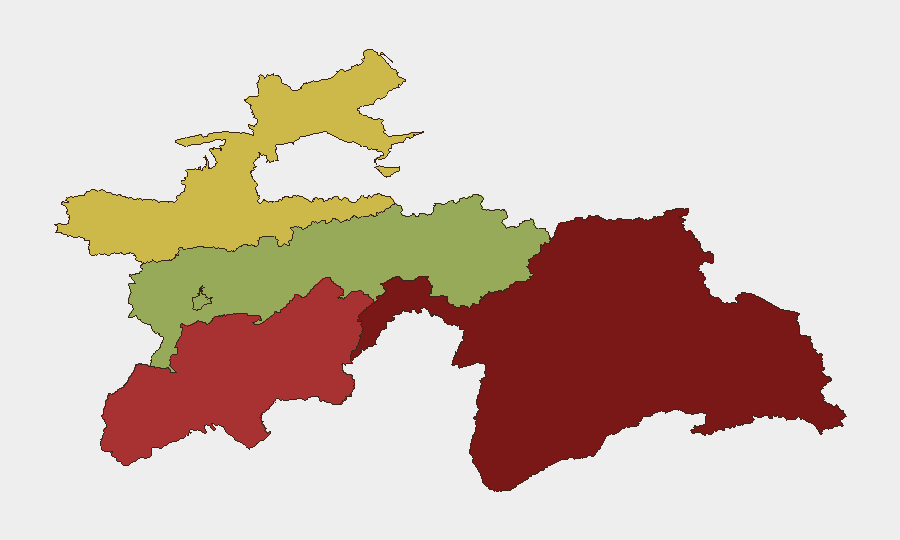
Situation Summary
Tajikistan remains a low–frequency, moderately dispersed threat environment (global rank #116, composite score 8) with no verified security incidents in the last 24–48 hours. The country's risk profile is heavily concentrated in its mountainous borderlands—particularly the Gorno-Badakhshan Autonomous Region and Khatlon—reflecting ongoing cross-border tensions and terrain-dependent instability. Capital Dushanbe and the central districts present substantially lower baseline risk. The two most recent event signals (both dated 2026-07-04) involve diplomatic demands between Tajikistan and the United States and Turkey, respectively; their operational significance remains to be clarified.
Key Developments
- No verified security, conflict, or infrastructure incidents detected in the last 24–48 hours. GeoBit's live web research identified no new attack, unrest, crime, travel advisory, or political-instability events within the relevant window.
- Diplomatic signals (2026-07-04): Tajikistan has issued demands toward both the United States and Turkey. Context and intent are not yet clear from available open sources; escalation risk and any operational implications require further clarification through official channels and regional media monitoring.
- Background context (April 2026): Chinese construction crews resumed work on the Dushanbe–Kulma highway in eastern Tajikistan under armed protection, following disruptions in November 2025. This project remains relevant to commercial and supply-chain operations but is not a current incident.
Highest-Risk Areas
Gorno-Badakhshan (risk 92) and Khatlon (risk 78) together account for the overwhelming majority of Tajikistan's threat burden. These regions are defined by remote, rugged terrain along the Afghan and Kyrgyz borders—historically vulnerable to cross-border militant activity, narcotics trafficking, and resource-driven conflict. Gorno-Badakhshan's extreme isolation and Khatlon's population density create distinct operational challenges. Sughd (risk 65) presents moderate risk, likely tied to regional connectivity. By contrast, Dushanbe (risk 42) and central administrative districts remain materially safer, though diplomatic incidents or large-scale unrest could alter that picture rapidly.
How GeoBit Would Assist
Organizations operating in or traveling to Tajikistan should deploy AOI Monitoring & Early Warning on Gorno-Badakhshan and Khatlon, combined with Satellite & Imagery analysis to track cross-border movement and infrastructure changes along disputed or sensitive frontier zones. Multi-language OSINT (including Tajik and Russian media, X, and Telegram) will capture early signals of unrest, border incidents, or diplomatic escalation before they reach international wire services. For personnel or supply-chain routing, Routing & Network Analysis can model safe alternative corridors and assess real-time transit risk by sub-national zone.
7-Day Outlook
No sharp escalation is indicated for the immediate week. The July 4 diplomatic demands warrant close monitoring to determine whether they signal broader strategic repositioning or are routine bilateral exchanges. Cross-border activity in Gorno-Badakhshan and Khatlon will remain the primary risk vector; seasonal climate, herding patterns, and narcotics flows typically drive incident frequency in these zones during summer months. Teams should maintain standard heightened awareness in high-risk regions and establish rapid communication protocols with local partners and embassies.
Highest-Risk Areas — Ranked
| # | State / Region | Risk |
|---|---|---|
| 1 | Gorno-Badakhshan Autonomous Region | 92 |
| 2 | Khatlon Region | 78 |
| 3 | Sughd Region | 65 |
| 4 | Districts of Republican Subordination | 58 |
| 5 | Dushanbe | 42 |
Sources
Previous Daily Briefs
A new Tajikistan brief is written every day — each with its own risk map and downloadable CSV. Here's the last week; use the calendar to go further back.
📅 Browse every day by calendar →
Highlighted days have a brief. Tap a day for that day's map & analysis, or “csv” for that day's dataset ($5).
Atlas — our AI intelligence desk — emails them this snapshot personally. Nothing else, no list.