Situation Summary
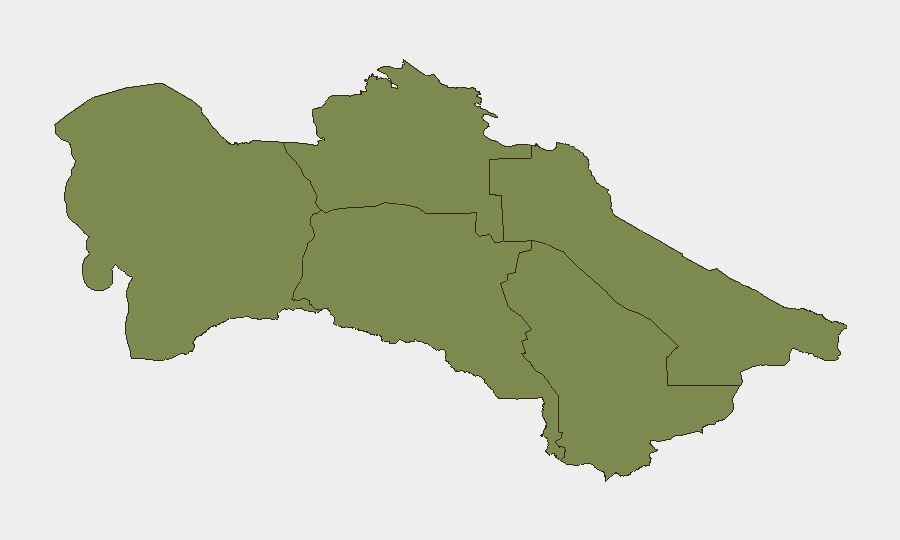
Turkmenistan remains a low-threat environment globally (rank #135, composite score 6) with no verified security incidents or civil unrest reported in the last 24–48 hours. Risk is heavily concentrated in the northern Dashoguz Region (score 31.5), which borders Uzbekistan and Afghanistan and has historically been the primary flashpoint for transnational organized crime, trafficking, and smuggling activity. The capital Ashgabat and southern regions (Balkan, Lebap, Ahal, Mary) remain stable with minimal reported incident activity. Current trajectory suggests continuation of baseline security conditions absent new geopolitical or internal triggers.
Key Developments
No security, conflict, civil unrest, crime, political instability, or infrastructure incidents were verified in Turkmenistan during the last 24–48 hours. Platform web research returned no actionable incident signals for the period 2026-07-12 to 2026-07-13. Historical event trackers note a customs official investigation signal (2026-07-10) and a military force event flagged in Jerusalem (2026-07-10), neither of which appear directly incident to Turkmenistan territory or nationals. Duty-of-care teams should maintain standard monitoring posture; no advisory or alert upgrade is warranted at this time.
Highest-Risk Areas
Dashoguz Region in northern Turkmenistan drives nearly all assessed risk (31.5/100), reflecting its geography as a transit corridor for illicit goods, precursor chemicals, and persons between Central Asia, Afghanistan, and Russia. Border permeability, limited state enforcement capacity, and proximity to conflict zones in Afghanistan create persistent vulnerabilities to trafficking networks and contraband flows. Ashgabat (risk 4) faces lower but non-negligible risk tied to political stability, regime-controlled media, and intermittent customs enforcement. Southern and eastern regions (Balkan, Lebap, Ahal, Mary) remain peripheral to organized crime and geopolitical tension, with risk scores near baseline (1.5 each).
How GeoBit Would Assist
Security teams operating in or transiting Turkmenistan should deploy AOI Monitoring & Early Warning on Dashoguz, Balkanabat, and Ashgabat with alert thresholds for trafficking, border incidents, and flight disruptions. OSINT Fusion combining local news, X/Twitter, Telegram, and regional Uzbek/Dari-language sources will close the current 24–48-hour visibility gap and surface emerging smuggling or regime-stability signals. Routing & Network Analysis can model secure transit corridors and alternative supply routes avoiding high-risk border zones, critical for staff mobility and asset movement in the Dashoguz theater.
7-Day Outlook
No escalation in security conditions is forecast over the next seven days absent external shocks (e.g., Afghan border flare-up, regional sanctions). Dashoguz will remain elevated-risk due to structural trafficking dynamics; routine customs and enforcement activity should be expected. Ashgabat and southern regions are expected to remain stable. Teams should update contingency plans if regional geopolitical tensions spike or if individual-level intelligence surfaces specific threats tied to staff, operations, or assets.
Highest-Risk Areas — Ranked
| # | State / Region | Risk |
|---|---|---|
| 1 | Dashoguz Region | 31.5 |
| 2 | Ashgabat City | 4 |
| 3 | Balkan Region | 1.5 |
| 4 | Lebap Region | 1.5 |
| 5 | Ahal Region | 1.5 |
| 6 | Mary Region | 1.5 |
Sources
Previous Daily Briefs
A new Turkmenistan brief is written every day — each with its own risk map and downloadable CSV. Here's the last week; use the calendar to go further back.
📅 Browse every day by calendar →
Highlighted days have a brief. Tap a day for that day's map & analysis, or “csv” for that day's dataset ($5).
Atlas — our AI intelligence desk — emails them this snapshot personally. Nothing else, no list.