Situation Summary
The United Arab Emirates remains stable and secure as of 1 July 2026, with no verified attacks, civil unrest, or major crime incidents reported in the last 24–48 hours. Open-source reporting and official government communications confirm routine conditions across Dubai, Abu Dhabi, and other emirates, with authorities issuing only standard traffic and heat-safety guidance. Regional tensions persist in neighboring states, but no spillover violence or domestic protests have materialized within UAE territory. The threat environment in the UAE is assessed as low relative to global comparators.
Key Developments
- Dubai & UAE-wide (30 Jun): Multiple official and social sources confirm a calm 24-hour period with no security incidents, infrastructure disruptions, or emergencies reported by Dubai Police or government authorities; routine heat and traffic advisories remain in effect.
- UAE Ministry of Foreign Affairs (29–30 Jun): Travel ban on Lebanon lifted after two months, with UAE nationals now permitted to resume travel to Beirut and other Lebanese destinations; decision reflects controlled de-escalation of prior security restrictions and signals confidence in reduced immediate risk to UAE travelers.
- Dubai false-alert clarification (27–28 Jun, relevant to current risk perception): Incoming missile alerts reported on 27 June evening were confirmed as false; authorities and news digests explicitly stated no incidents occurred during the 27–28 June period, correcting earlier social-media alarmism and reinforcing stability narrative.
- UAE Ministry of Foreign Affairs (late Jun, regional context): Official statements condemned Israeli strikes in Syria and called for regional de-escalation and dialogue; no domestic unrest, protests, or anti-government activity linked to these statements in the 24–48 hour window.
- Dubai government operations (29 Jun onward): "Our Flexible Summer 2026" program introduced for government employees, offering remote work and flexible hours through 10 September; framed as work-life-balance measure, not a security response, indicating normal operational continuity.
Highest-Risk Areas
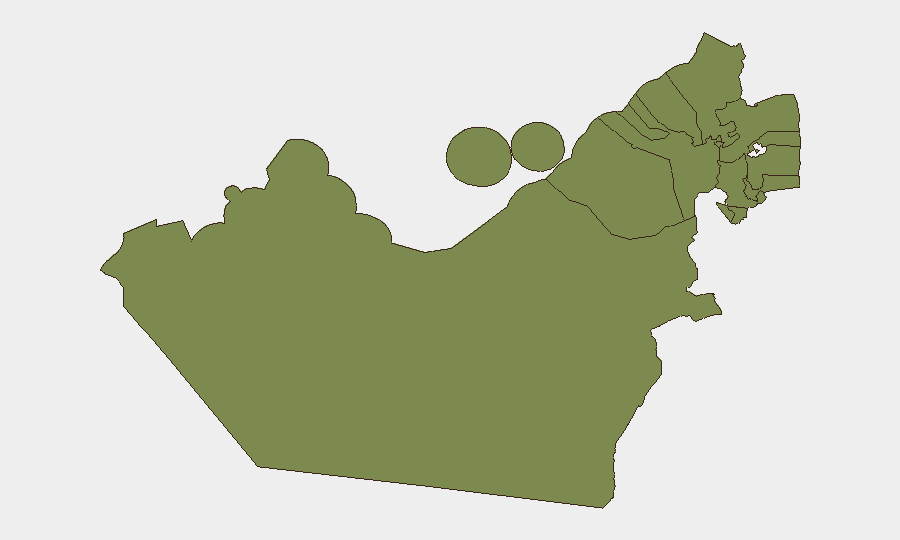
Dubai carries disproportionate risk (composite score 31.8) within the UAE, primarily due to its status as a major international financial and logistics hub with large expatriate and transient populations; however, absolute risk remains low and no active incidents are underway. Abu Dhabi Emirate (5.5), Fujairah (5.2), and the northern emirates show significantly lower scores, reflecting more limited international exposure and smaller economic footprints. The concentration of risk in Dubai reflects asset and personnel density rather than active instability; security posture and policing capacity are strong across all emirates.
How GeoBit Would Assist
Corporate security teams should employ AOI Monitoring & Early Warning on Dubai and Abu Dhabi to detect any shift in incident reporting or official advisories in real time. OSINT Fusion & Corroboration (X/Twitter, Telegram, news digests, government statements) ensures rapid verification of rumors and false alerts, as demonstrated by the 27 June missile-alert debunking. Regional Conflict & Regime Stability Search and Network & Actor Analysis provide early warning of spillover from Syria, Lebanon, or Iranian activity that could affect UAE security posture.
7-Day Outlook
No escalation is anticipated in the next seven days. The UAE's de-escalatory move on Lebanon travel, combined with sustained official messaging on calm conditions, suggests confidence in the near-term security picture. Monitoring should remain routine, with focus on regional developments in Syria and Lebanon that could trigger policy shifts or travel warnings affecting UAE operations.
Highest-Risk Areas — Ranked
| # | State / Region | Risk |
|---|---|---|
| 1 | Dubai | 31.8 |
| 2 | Abu Dhabi Emirate | 5.5 |
| 3 | Fujairah Emirate | 5.2 |
| 4 | Sharjah Emirate | 1.8 |
| 5 | Ajman Emirate | 1.8 |
| 6 | Ras al-Khaimah | 1.8 |
| 7 | Umm al-Quwain | 1.8 |
Sources
Previous Daily Briefs
A new United Arab Emirates brief is written every day — each with its own risk map and downloadable CSV. Here's the last week; use the calendar to go further back.
📅 Browse every day by calendar →
Highlighted days have a brief. Tap a day for that day's map & analysis, or “csv” for that day's dataset ($5).