Situation Summary
The United Kingdom faces a mixed but actively volatile security picture as of 20 July 2026. Counter-terrorism operations against extreme right-wing networks have intensified following the disruption of a credible attack on a religious gathering in Suffolk, while localized public-order incidents and cyber intrusions into critical infrastructure and educational systems continue. England remains the primary risk concentration, driven by terrorist-threat activity and associated law-enforcement response; overall national risk remains moderate (global rank #132), but momentum is upward in terrorism and cyber domains.
Key Developments
- Barham, Suffolk – 19 July 2026: Counter Terrorism Policing arrested twelve individuals across multiple UK locations and forcibly curtailed the Iima Islamic event at Shrubland Hall after identifying a credible extreme right-wing terrorism plot against the gathering. Eight men remain in detention and searches continue at six addresses nationwide. Home Secretary characterized the swift action as life-saving.
- London (national operations) – 19 July 2026: Counter Terrorism Policing London confirmed the twelve arrests were made at dispersed locations across the country, signaling an active, coordinated nationwide operation against extreme right-wing terrorist networks and infrastructure.
- Cornwall coastal village – 17–18 July 2026: Devon and Cornwall Police enacted a 48-hour dispersal order following large-scale youth disorder involving vandalism, public sexual assault, and alcohol-fueled harassment; officers empowered to remove or arrest individuals causing distress.
- University of Nottingham – disclosed 19 July 2026: A data breach affecting current and former student records was attributed to a hacking group, exposing personal information to unauthorized access and raising institutional cyber-vulnerability concerns across the sector.
- Transport for London – recent legal outcome: Two members of the Scattered Spider cybercrime group pleaded guilty in UK court for a 2024 cyberattack on TfL systems, confirming ongoing judicial and operational focus on critical transport-infrastructure cyber-threats despite the historical timing of the original incident.
Highest-Risk Areas
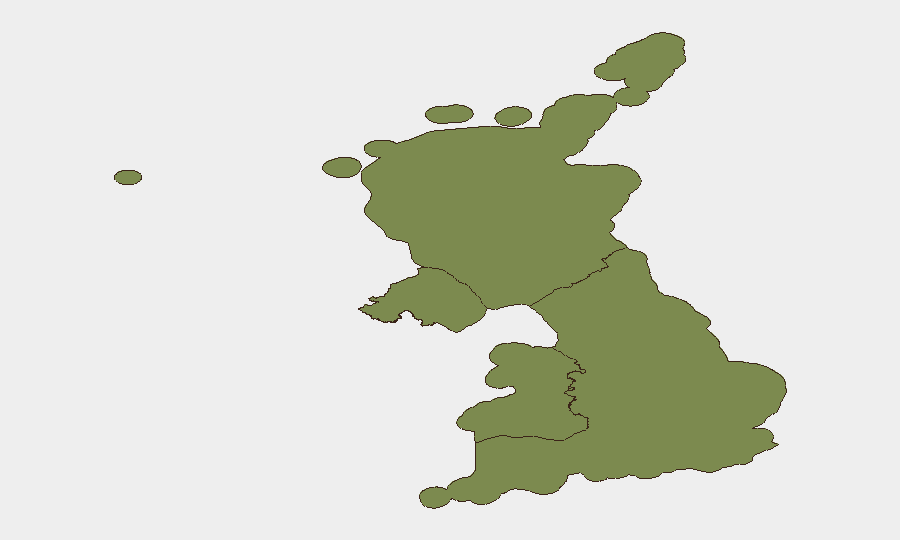
England drives 86% of the UK's composite threat score (32 of 37 aggregate regional risk), reflecting concentration of terrorist-plot detection, law-enforcement activity, and cyber-intrusion targeting in London and the South East. Scotland (5.4) and Northern Ireland (3.2) show significantly lower but non-zero risk profiles, likely reflecting lower event frequency and less intense targeting. Wales (2.1) presents minimal current threat signal. The England-dominated risk landscape reflects both genuine terrorist-network activity and heightened counter-terrorism visibility; corporate assets and personnel in London, the Midlands, and the East of England face elevated exposure to both direct threats and secondary security disruptions.
How GeoBit Would Assist
Security teams should deploy AOI Monitoring & Early Warning on high-risk locations (Shrubland Hall region, major transport hubs, religious and cultural venues) to detect emerging gatherings or reconnaissance activity. Network & Actor Analysis combined with OSINT fusion (X/Twitter, Telegram, YouTube) would track extreme right-wing narrative escalation and recruitment signals upstream of operational intent. Cyber-threat search and entity extraction capabilities enable real-time identification of compromised systems and hacking-group infrastructure targeting UK critical services and corporate networks.
7-Day Outlook
The immediate 7-day period is likely to see continued counter-terrorism search and detention activity following the Shrubland Hall disruption, with potential for secondary arrests or related plot disclosures. Public-order incidents in coastal and university areas may recur seasonally; cyber intrusions into institutional and transport sectors should be monitored as opportunistic. No indicators suggest imminent escalation to mass-casualty or infrastructure-wide disruption, but sustained vigilance on extreme right-wing network communications and activity is warranted.
Highest-Risk Areas — Ranked
| # | State / Region | Risk |
|---|---|---|
| 1 | England | 32 |
| 2 | Scotland | 5.4 |
| 3 | Northern Ireland | 3.2 |
| 4 | Wales | 2.1 |
Sources
Previous Daily Briefs
A new United Kingdom brief is written every day — each with its own risk map and downloadable CSV. Here's the last week; use the calendar to go further back.
📅 Browse every day by calendar →
Highlighted days have a brief. Tap a day for that day's map & analysis, or “csv” for that day's dataset ($5).
Atlas — our AI intelligence desk — emails them this snapshot personally. Nothing else, no list.