Situation Summary
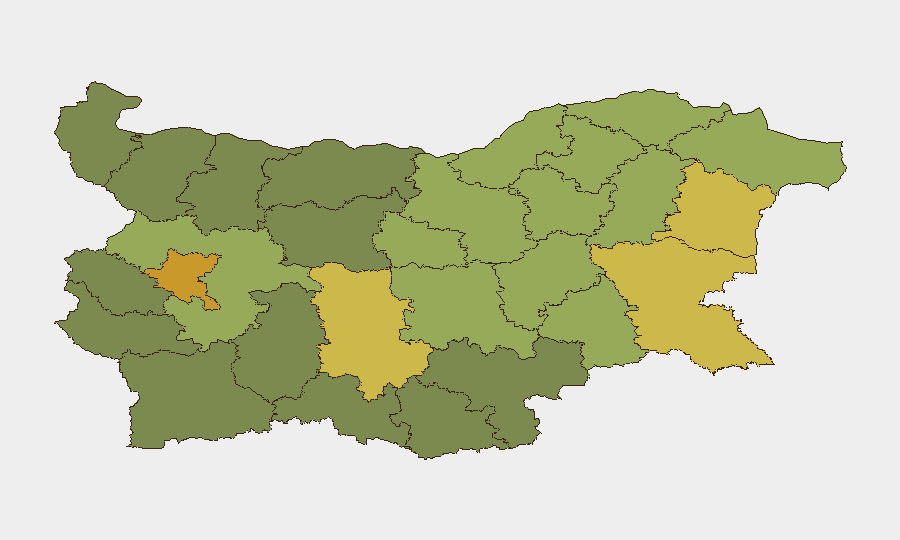
Bulgaria remains a low-threat environment globally (rank #162, composite score 6), with no sustained security escalation reported in the past week. However, concentrated crime and infrastructure vulnerabilities in Sofia-City, Plovdiv, and coastal urban centers (risk scores 72, 68, 65 respectively) reflect persistent organized-crime activity, street violence, and petty crime typical of Southeast European hubs. The week saw isolated serious incidents—a homicide in Sofia and a fatal traffic collision near Yambol—but no systemic destabilization or mass-casualty events. Border and transport disruptions remain primarily logistical rather than security-driven.
Key Developments
- Sofia (Buxton district), 31 August–2 September: A 24/25-year-old Ukrainian national was charged with premeditated murder of an 18-year-old Japanese woman following a domestic dispute involving multiple stab wounds. Sofia City Prosecutor ordered strict detention on 2 September. Extremist symbols (Nazi imagery, Ukrainian swastika flags) were recovered at the scene, though investigators treat the incident as domestic rather than ideologically motivated. High-profile violent crime with foreign victims attracts media and diplomatic attention.
- Road II-53 near Yambol, evening 5 September: Fatal two-vehicle collision with fire outbreak killed two occupants on-scene. Full road closure enforced until 20:49; temporary detour via Yambol–Kabile–Drazhevo established by Road Infrastructure Agency. Underscores elevated inter-urban traffic-accident risk in rural corridors.
- Black Sea (Bulgarian EEZ), 3 September: Greenpeace organized peaceful maritime protest against Khan Tervel gas-exploration block, with ~15 international activists (Bulgaria, Spain, Ukraine, Poland, Chile, US, Italy) aboard Arctic Sunrise and kayaks. Deployed banner "GAS IS A SCAM." Low direct security risk but signals growing environmental-activist mobilization around coastal energy infrastructure.
- Kapitan Andreevo (Bulgaria–Türkiye border), 2–6 September: Heavy truck and outbound passenger-car traffic sustained across multiple days; peak congestion on 3 September (heavy inbound cars, outbound trucks) and 6 September (Unification Day, continued truck queues). No security incidents; primarily logistical delays.
- Kalotina (Bulgaria–Serbia border), 4 September: Heavy outbound passenger-car traffic reported; coincided with Kapitan Andreevo congestion. Other crossings (Greece, North Macedonia, Romania) normal.
- Danube ferry crossings (Oryahovo–Bechet, Svishtov–Zimnicea, Silistra–Călărași), 2–6 September: Oryahovo–Bechet and Svishtov–Zimnicea suspended due to critically low Danube water levels; Silistra–Călărași out of service for technical malfunction. Ongoing disruption to cross-Danube commercial and passenger transit through the review period.
Highest-Risk Areas
Sofia-City (72), Plovdiv (68), and Varna (65) drive the national risk profile, reflecting dense populations, organized-crime presence, and commercial trafficking nodes. Sofia's Buxton district, where the week's homicide occurred, exemplifies micro-scale concentrated violence in mixed residential-commercial zones. Coastal cities (Varna, Burgas) reflect port-related smuggling and organized-crime activity. Rural inter-urban corridors (Yambol region) show acute traffic-safety deficits with lethal outcomes. Risk is localized rather than diffuse; business and residential concentration in capital and regional hubs creates pockets of elevated exposure.
How GeoBit Would Assist
Security teams would deploy Intel Sweep and multi-language OSINT to monitor Sofia, Plovdiv, and Varna for organized-crime developments, protest activity, and trafficking indicators. AOI Monitoring & Early Warning on high-risk districts and border crossings (Kapitan Andreevo, Kalotina, Danube ferries) provides persistent alerting on congestion, closure, or incident onset. Routing & Network Analysis re-maps employee commutes and supply chains to avoid Yambol–Sliven corridor during peak accident hours and flags Danube ferry status for logistics planning.
7-Day Outlook
No major security escalation is anticipated; the homicide and traffic fatality are episodic rather than trend-setting. Border congestion may persist if Türkiye-bound travel or freight remains elevated post-holiday period. Danube ferry outages will likely continue unless water levels rise or technical repair is expedited; alternative land routes (via Serbia, Romania road crossings) should remain available.
Highest-Risk Areas — Ranked
| # | State / Region | Risk |
|---|---|---|
| 1 | Sofia-City | 72 |
| 2 | Plovdiv | 68 |
| 3 | Varna | 65 |
| 4 | Burgas | 62 |
| 5 | Sofia | 58 |
| 6 | Ruse | 55 |
| 7 | Stara Zagora | 52 |
| 8 | Sliven | 50 |
| 9 | Shumen | 48 |
| 10 | Razgrad | 47 |
| 11 | Yambol | 45 |
| 12 | Dobrich | 44 |
Sources
Previous Weekly Briefs
A new Bulgaria brief is written every Monday, covering the week — each with its own risk map and downloadable CSV. Use the calendar to go further back.
- August 31, 2026
- August 29, 2026
- August 26, 2026
- August 24, 2026
- August 22, 2026
- August 20, 2026
- August 18, 2026
📅 Browse past briefs by calendar →
Highlighted days have a brief. Tap a day for that day's map & analysis, or “csv” for that day's dataset ($5).
Atlas — our AI intelligence desk — emails them this snapshot personally. Nothing else, no list.