Situation Summary
Eritrea remains a lower-threat environment globally (rank #77, composite score 24) with no discrete conflict events recorded in the current tracking window, yet regional security dynamics and isolated civil unrest are elevating operational risk. High-level diplomatic engagement with Sudan's military leadership on 4 September, coupled with reports of cross-border armed incursion from Eritrean territory into Ethiopia, underscore Eritrea's active role in Horn of Africa proxy tensions rather than internal instability. Localized demonstrations in Asmara and Assab in early September suggest minor civil friction, but the absence of widespread reporting indicates control remains intact.
Key Developments
- Asmara – Sudan–Eritrea security talks (4 September): Gen. Abdel Fattah al-Burhan arrived for closed-door discussions with President Isaias Afwerki focused on deepening bilateral military cooperation amid escalating proxy tensions in the Horn of Africa, signaling intensified Eritrean involvement in regional conflict coordination rather than domestic crisis.
- Asmara–Afar border – cross-border armed incursion (4 September): Afar fighters reportedly crossed from Eritrea into the Ethiopian lowlands near Bada Kebele, carrying out attacks with casualties and kidnappings before returning to Eritrean territory. The incident is characterized as the first attack launched from Eritrea into Ethiopia, raising sovereignty and border-security concerns in the Afar–Eritrea frontier zone.
- Asmara – demonstration event (2–3 September): A demonstration was logged in Asmara by global unrest monitoring systems (severity 3, GDELT source), indicating minor public gathering activity in the capital.
- Assab – demonstration event (2–3 September): A second demonstration was recorded in Assab (Southern Red Sea Region) during the same period, flagged by unrest monitors as severity 3, suggesting organized civil activity in the southern coastal area.
- Regional security posture (5 September context): Analytical reporting highlights Eritrea's deepening contacts with elements of the Tigray People's Liberation Front (TPLF) and its broader role as an active regional security player influencing conflict dynamics in northern Ethiopia and the Horn of Africa, elevating indirect instability risk.
- No widespread internal conflict recorded (2–7 September): Daily risk metrics show zero large-scale clashes, riots, or armed confrontations within Eritrean territory during the latter part of the week, suggesting security controls remain effective despite isolated demonstrations.
Highest-Risk Areas
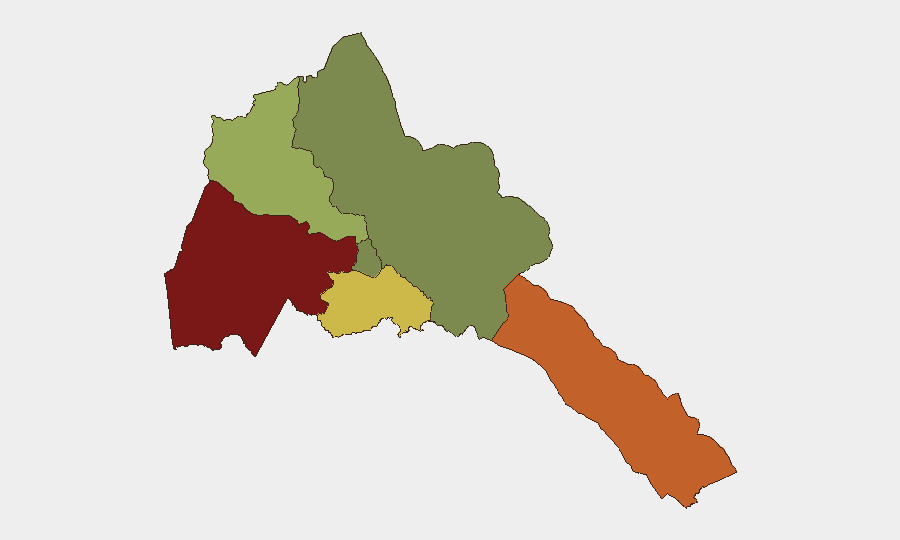
Gash-Barka (risk 92) and Southern Red Sea Region (risk 75) are the primary drivers of sub-national risk, with Gash-Barka's score reflecting proximity to armed cross-border dynamics and the Sudan conflict spillover zone, while Southern Red Sea Region (including Assab) combines coastal trafficking exposure, demonstrated civil unrest activity, and strategic port vulnerability. Debub Region (risk 68) presents secondary risk tied to border instability and historical tension zones. Maekel Region, home to the capital Asmara, remains relatively stable (risk 18) despite the early-September demonstration, and Northern Red Sea Region shows minimal tracked concern (risk 0).
How GeoBit Would Assist
Security teams should deploy AOI Monitoring & Early Warning on Gash-Barka and Southern Red Sea Region to flag cross-border armed activity and civil unrest patterns in real time, paired with OSINT fusion (X/Twitter, YouTube, multi-language feeds) to corroborate local reports ahead of media confirmation. Border & disputed-territory search and conflict mapping capabilities enable tracking of Afar–Eritrea incursion patterns and Eritrean military positioning, while entity extraction and network analysis illuminate command structures and coordination between Eritrean security forces and regional proxy actors. Routing & network analysis assists duty-of-care teams in identifying secure transit corridors around high-risk zones for personnel movement.
7-Day Outlook
Regional diplomatic activity and cross-border armed engagement are likely to persist as Sudan's conflict and Ethiopian–Eritrean proxy tensions remain unresolved. Isolated civil demonstrations may recur in urban centers, but absent triggering events (regime change, major refugee influx, or direct military escalation), large-scale unrest is unlikely. Monitor Gash-Barka and border areas for escalated cross-border activity and Asmara for any shift in demonstration frequency or scale.
Highest-Risk Areas — Ranked
| # | State / Region | Risk |
|---|---|---|
| 1 | Gash-Barka | 92 |
| 2 | Southern Red Sea Region | 75 |
| 3 | Debub Region | 68 |
| 4 | Anseba | 55 |
| 5 | Maekel Region | 18 |
| 6 | Northen Red Sea Region | 0 |
Sources
Previous Weekly Briefs
A new Eritrea brief is written every Monday, covering the week — each with its own risk map and downloadable CSV. Use the calendar to go further back.
- September 2, 2026
- August 31, 2026
- August 29, 2026
- August 27, 2026
- August 25, 2026
- August 23, 2026
- August 21, 2026
📅 Browse past briefs by calendar →
Highlighted days have a brief. Tap a day for that day's map & analysis, or “csv” for that day's dataset ($5).
Atlas — our AI intelligence desk — emails them this snapshot personally. Nothing else, no list.