Situation Summary
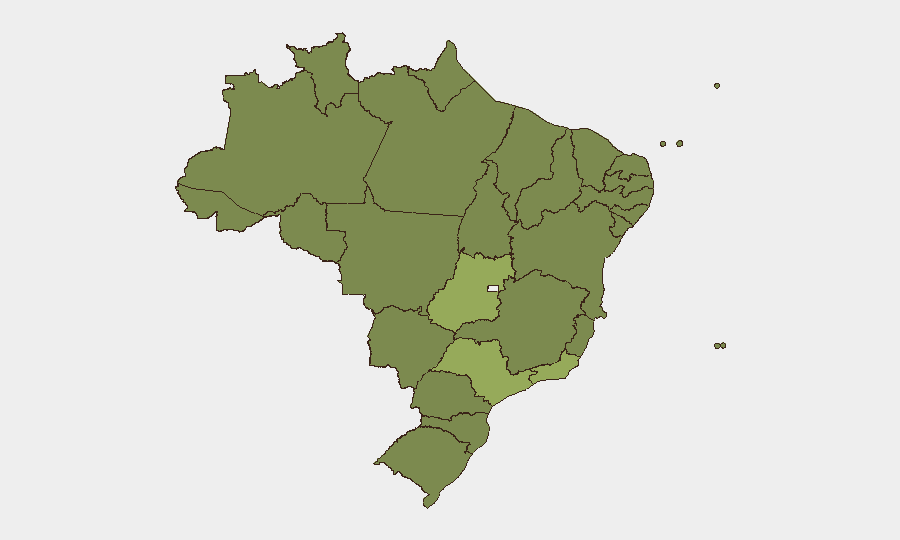
Brazil remains at mid-range composite threat (rank #38 globally, score 39), but is experiencing acute political, judicial, and security turbulence concentrated in São Paulo, Rio de Janeiro, and Goiás. Recent 72-hour activity shows a convergence of high-profile arrests, major narcotics and weapons seizures, constitutional tensions involving the Supreme Court, and border-zone human-rights incidents. The threat trajectory is upward in the short term, driven by institutional friction and organized-crime activity rather than systemic instability.
Key Developments
- Brasília (Federal District), 26 Jul – Federal police executed a search-and-seizure warrant at the residence of former President Jair Bolsonaro in an ongoing weapons investigation, generating significant political mobilization and social-media engagement. Simultaneously, Justice Alexandre de Moraes imposed a 90-day visitation ban on Senator Flávio Bolsonaro, intensifying judicial–executive conflict.
- São Paulo (city), 26 Jul – Civil police and federal authorities intercepted a helicopter carrying 288 kg of cocaine base from the Paraguayan border, confirming ongoing cross-border narcotics trafficking into Brazil's highest-risk state.
- Paraná (BR-277 highway, Santa Terezinha de Itaipu), 26 Jul – The Federal Highway Police (PRF) executed what it reports as the largest rifle seizure in its history during a routine checkpoint, confiscating assault rifles destined for organized crime.
- Mato Grosso do Sul (Amambai area, near Paraguay border), 26 Jul – Video and testimony documented ranch guards torturing an Indigenous man with electric prods and kicks in a land-conflict incident, raising human-rights and rural-security concerns in a border region already marked by inter-community tension.
- Brazil (national), 26 Jul – The government temporarily suspended a single-dose dengue vaccine following two suspected fatal adverse events, triggering public-health alerts and logistical disruption in disease-control operations.
- Brazil–Mercosur borders (national), 26 Jul – Brazil enacted a Mercosur police-cooperation agreement enabling cross-border law-enforcement pursuit and joint organized-crime operations, affecting policing protocols in frontier areas.
- Brazil (national), 26 Jul – The National Energy Policy Council temporarily increased the mandatory ethanol blend in gasoline from 30% to 32% for 180 days, raising transport and operational costs for fuel-dependent sectors.
Highest-Risk Areas
São Paulo (57.1) remains the dominant risk driver, reflecting its role as Brazil's largest commercial and transport hub and primary narcotics-trafficking corridor. Rio de Janeiro (41.5) and Goiás (41.5) follow, with Goiás increasingly significant due to its position on trafficking routes from the Paraguayan and Bolivian borders and volatile rural-conflict dynamics. The Paraná and Mato Grosso do Sul border zones are emerging as secondary hotspots; recent weapons and cocaine seizures, alongside documented human-rights abuses, indicate that cross-border organized crime and land disputes are intensifying security risks in these regions.
How GeoBit Would Assist
Security teams would deploy Intel Sweep and OSINT fusion to corroborate emerging political and organized-crime narratives across Portuguese-language media, X, and Telegram; network and actor analysis to map narcotics and weapons-trafficking cells operating across the São Paulo–Paraná–Goiás–Paraguay corridor; and AOI monitoring with early-warning alerting on Brasília (political flashpoints), São Paulo (trafficking), and the Amambai–Paraguay border zone (human-rights and land conflicts). Routing and network analysis would identify alternative supply and trafficking routes as enforcement tightens.
7-Day Outlook
Institutional tensions between the Supreme Court and Bolsonaro-aligned figures will likely persist, with further arrests or legal action possible. Narcotics and weapons seizures suggest intensified law-enforcement pressure on trafficking organizations, which may trigger violent retaliation or operational shifts. Border-zone human-rights incidents are expected to draw international scrutiny and donor-agency attention.
Highest-Risk Areas — Ranked
| # | State / Region | Risk |
|---|---|---|
| 1 | São Paulo | 57.1 |
| 2 | Rio de Janeiro | 41.5 |
| 3 | Goiás | 41.5 |
| 4 | Minas Gerais | 33.2 |
| 5 | Paraná | 32 |
| 6 | Bahia | 31.1 |
| 7 | Amapá | 30.8 |
| 8 | Pernambuco | 29.5 |
| 9 | Piauí | 28.6 |
| 10 | Amazonas | 28.3 |
| 11 | Rio Grande do Sul | 28 |
| 12 | Mato Grosso | 27.7 |
Previous Daily Briefs
A new Brazil brief is written every day — each with its own risk map and downloadable CSV. Here's the last week; use the calendar to go further back.
📅 Browse every day by calendar →
Highlighted days have a brief. Tap a day for that day's map & analysis, or “csv” for that day's dataset ($5).
Atlas — our AI intelligence desk — emails them this snapshot personally. Nothing else, no list.