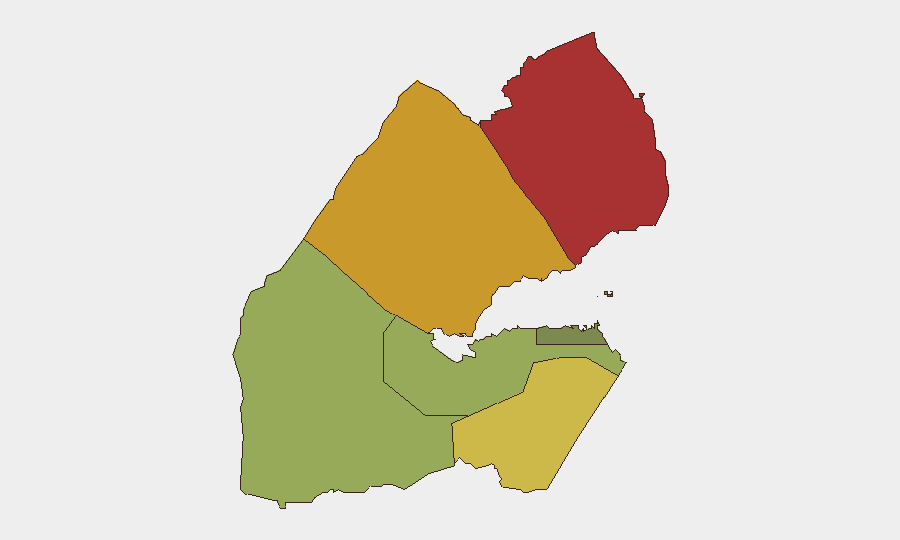
Situation Summary
Djibouti remains stable with no confirmed security incidents reported in the last 24–48 hours. The country's composite threat score of 18 places it in the lower-risk band globally, though sub-national disparities are material: the northern regions of Obock and Tadjourah carry significantly elevated risk (78 and 72 respectively) driven by porous borders, smuggling activity, and residual al-Shabaab presence. Corporate and diplomatic presence in Djibouti city faces manageable but persistent baseline terrorism and maritime-security risks rather than acute near-term operational threats.
Key Developments
- No confirmable security incidents — Djibouti city and national level, 2026-08-03 to 2026-08-04 — Open-source monitoring identified no civil unrest, armed activity, infrastructure disruption, or new travel restrictions during this window.
- Maritime governance signal — Bab el-Mandeb Strait / Djibouti government, 2026-07-30 — Djibouti reaffirmed opposition to unilateral transit tolls, reflecting ongoing concern over maritime security and free passage; this is outside the 24–48 hour window but signals sustained policy attention to strait governance.
- No protest or crime spike — National level, 2026-08-03 to 2026-08-04 — No corroborated reporting of organized protest, major criminal incidents, or armed attack during the assessment window.
Highest-Risk Areas
Northern border regions drive Djibouti's internal risk profile. Obock (risk 78) and Tadjourah (risk 72) face chronic vulnerabilities: porous frontiers with Somalia and Ethiopia enable smuggling networks, militant transit, and limited state capacity for law enforcement. Ali Sabieh (risk 65) presents secondary concern via its proximity to the Somali border and role in informal trade corridors. By contrast, Djibouti city and surrounding Arta region (risk 35–48) remain under tighter security control and international presence, reducing localized threat density. Organizations with personnel or logistics assets in the north should maintain heightened vigilance and contingency planning; southern operations benefit from greater stability but retain baseline terrorism risk.
How GeoBit Would Assist
Security teams should deploy AOI Monitoring & Early Warning on Obock and Tadjourah to flag cross-border movement, militant activity clustering, and protest formation in real time. OSINT fusion (X/Twitter, Telegram, local reporting, radio SIGINT) provides early signal of criminal or extremist activity before mainstream confirmation, critical for duty-of-care alerts. Maritime & Aviation tracking combined with Network & Actor Analysis enables monitoring of smuggling and militant supply routes, and alternative route/journey planning supports rapid re-routing if northern corridors deteriorate.
7-Day Outlook
No acute deterioration is forecast for the next seven days. The baseline terrorism risk and maritime-governance tensions remain stable; however, seasonal patterns (August traditionally sees elevated Red Sea regional activity) warrant sustained monitoring of Bab el-Mandeb and port-side infrastructure. Any sudden onset of civil unrest, protest mobilization, or cross-border militant incursion would likely first surface in Obock and Tadjourah; persistent monitoring of these zones provides GeoBit's earliest warning capability for organizations operating in-country.
Highest-Risk Areas — Ranked
| # | State / Region | Risk |
|---|---|---|
| 1 | Obock | 78 |
| 2 | Tadjourah | 72 |
| 3 | Ali Sabieh | 65 |
| 4 | Arta | 48 |
| 5 | Dikhil | 42 |
| 6 | Djibouti | 35 |
Sources
Previous Daily Briefs
A new Djibouti brief is written every day — each with its own risk map and downloadable CSV. Here's the last week; use the calendar to go further back.
📅 Browse every day by calendar →
Highlighted days have a brief. Tap a day for that day's map & analysis, or “csv” for that day's dataset ($5).
Atlas — our AI intelligence desk — emails them this snapshot personally. Nothing else, no list.