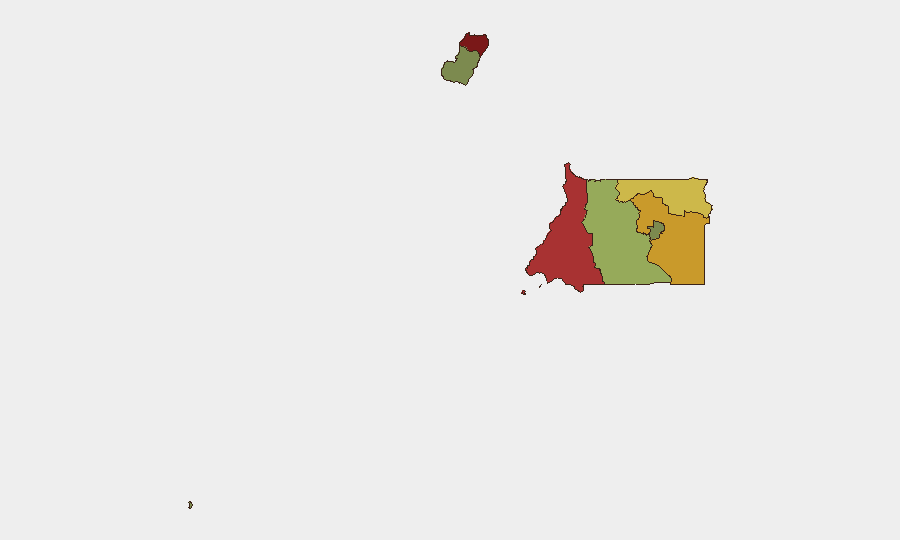
Situation Summary
Equatorial Guinea remains a low-incident environment with no clearly dated security events reported in the past 24–48 hours; the country holds a composite threat score of 5 globally. The underlying security picture is characterized by standing structural risks—including closed land borders (since December 2025), deteriorating urban crime in Malabo and Bata, and active Ebola-related travel restrictions (implemented 18 July)—rather than acute, newly emerging incidents. Bioko Norte and Litoral Province drive the country-level risk profile, though these reflect chronic conditions rather than recent flashpoints. The trajectory remains stable at baseline; no evidence suggests imminent escalation or new destabilization.
Key Developments
No incident-level developments meeting intelligence-grade standards have been confirmed in Equatorial Guinea within the last 24–48 hours. Open-source monitoring—including regional security feeds, government advisories, and social media—has yielded zero time-stamped, cross-verifiable security, crime, civil-unrest, or infrastructure events in this window. The most recent dated advisory of relevance is the Spanish MFA's 18 July quarantine notice for travelers from Uganda and DRC; no amendments or new travel restrictions have been reported since.
Standing conditions that security teams should monitor as ongoing baseline risks include:
- Border closure (Continental zone, since 15 Dec 2025): Land borders remain closed indefinitely; implications for supply chains and personnel movement persist.
- Urban crime trend (Malabo, Bata, months-long): Rising robberies and assaults documented; no specific new incidents in the last 48 hours, but pattern warrants continued vigilance.
- Ebola quarantine regime (18 July, active): 21-day quarantine for Uganda/DRC travelers remains in force; check port-of-entry protocols if personnel are transiting from affected regions.
Highest-Risk Areas
Bioko Norte (risk 85) and Litoral Province (risk 78) account for the majority of the country's composite risk score, driven primarily by chronic urban crime, limited law enforcement capacity, and border instability rather than current armed conflict or organized insurgency. Wele-Nzas Province (72) and Kié-Ntem Province (68) reflect land-border proximity and trafficking-corridor exposure. In contrast, Bioko Sur, Djibloho, and Annobón Province carry substantially lower risk; the capital region's elevated score reflects concentration of personnel, assets, and criminal opportunity rather than discrete recent incidents.
How GeoBit Would Assist
Security teams should employ AOI Monitoring & Early Warning on Malabo, Bata, and border zones to detect any escalation in crime or civil unrest before it affects operations. Intel Sweep and multi-language open-source fusion (news, government bulletins, social media OSINT) provide continuous baseline tracking and alert on new-dated incidents the moment they are reported. Risk & Threat Assessment synthesizes standing border closures, quarantine rules, and crime trends into duty-of-care decision matrices for personnel movement and asset deployment.
7-Day Outlook
No acute trigger for near-term deterioration is evident. The Ebola quarantine, border closure, and endemic urban crime are likely to persist at current levels without external shock (regional conflict spread, major health emergency, or internal political rupture). Security teams should maintain standard monitoring cadence and update contingency protocols quarterly rather than in response to imminent threat.
Highest-Risk Areas — Ranked
| # | State / Region | Risk |
|---|---|---|
| 1 | Bioko Norte | 85 |
| 2 | Litoral Province | 78 |
| 3 | Wele-Nzas Province | 72 |
| 4 | Kié-Ntem Province | 68 |
| 5 | Centro Sur Province | 45 |
| 6 | Bioko Sur | 38 |
| 7 | Djibloho | 15 |
| 8 | Annobón Province | 8 |
Sources
Previous Daily Briefs
A new Equatorial Guinea brief is written every day — each with its own risk map and downloadable CSV. Here's the last week; use the calendar to go further back.
📅 Browse every day by calendar →
Highlighted days have a brief. Tap a day for that day's map & analysis, or “csv” for that day's dataset ($5).
Atlas — our AI intelligence desk — emails them this snapshot personally. Nothing else, no list.