Situation Summary
Fiji remains a low-threat environment globally (rank #64, composite score 28) with no tracked security incidents or civil unrest in the past 24–48 hours. Recent event signals reflect isolated criminal investigation and maritime/transport disasters rather than systematic instability or organized violence. The Western Division registers elevated composite risk (85), warranting focused monitoring of that region, though the national security posture remains stable.
Key Developments
- No major security incidents, civil unrest, or travel disruptions reported in the past 24–48 hours. Fiji's operational environment remains calm with routine law-enforcement and administrative activity.
- Maritime safety concern (Lau/Fulaga, 8 Aug): Search-and-rescue operations ongoing for overdue vessel and missing islanders; reflects seasonal maritime hazard rather than security threat, but affects travel planning for inter-island routes.
- Child homicide investigation ongoing (nationwide, 5 Aug): Police arrested a 29-year-old male in connection with death of 12-year-old boy; classified as violence against civilians but localized and under active investigation. No broader pattern of gang or organized violence indicated.
- Transport safety incidents (7 Aug): Four-vehicle collision at Vakabalea resulted in two fatalities; reflects road-safety hazard rather than security threat, but relevant to duty-of-care risk assessment for ground transportation.
Highest-Risk Areas
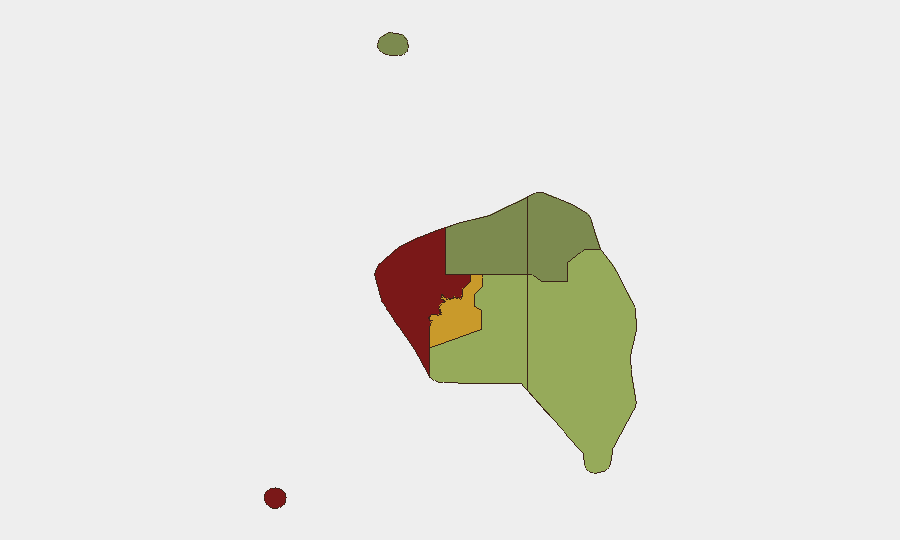
Western Division dominates the sub-national risk profile (score 85), followed by Central (72), creating a geographic concentration in the larger island of Viti Levu. Eastern, Northern, and Rotuma regions show markedly lower composite scores (45, 38, and 12 respectively). The Western Division's elevated risk appears driven by population density, infrastructure complexity, and historical incident frequency rather than active crisis; Central Division's secondary risk warrants concurrent monitoring. Rotuma's minimal risk profile reflects its small, isolated population and limited operational footprint.
How GeoBit Would Assist
Intel Sweep & AOI Monitoring: Persistent area-of-interest watch on Western and Central divisions with real-time alerting would flag emerging crime clusters, civil unrest, or disaster events before broad-market awareness, enabling proactive duty-of-care adjustments for corporate assets and personnel. Routing & Network Analysis combined with Maritime & Aviation Tracking would help security teams plan alternative ground and inter-island routes around current maritime hazards and road-safety blackspots (e.g., Vakabalea). OSINT Fusion (X, Telegram, local news, radio SIGINT) would corroborate police statements and incident reporting to distinguish isolated criminal acts from organized threats.
7-Day Outlook
No escalation in security risk is anticipated over the next 7 days; Fiji's stability trajectory remains flat absent major external shocks (cyclone season, maritime disaster clusters, or political rupture). Routine maritime-safety hazards and road accidents will likely persist, particularly in inter-island routes and Western Division transport corridors. Continued low-level law-enforcement activity (homicide investigation, minor crime) is normal baseline and does not signal systemic instability.
Highest-Risk Areas — Ranked
| # | State / Region | Risk |
|---|---|---|
| 1 | Western | 85 |
| 2 | Central | 72 |
| 3 | Eastern | 45 |
| 4 | Northern | 38 |
| 5 | Rotuma | 12 |
Sources
Previous Daily Briefs
A new Fiji brief is written every day — each with its own risk map and downloadable CSV. Here's the last week; use the calendar to go further back.
📅 Browse every day by calendar →
Highlighted days have a brief. Tap a day for that day's map & analysis, or “csv” for that day's dataset ($5).
Atlas — our AI intelligence desk — emails them this snapshot personally. Nothing else, no list.