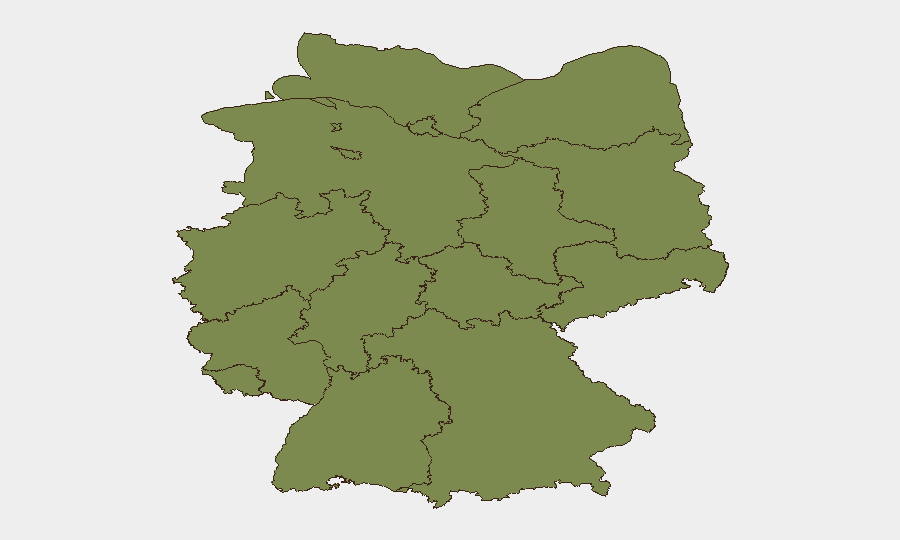
Situation Summary
Germany faces a complex near-term security environment marked by active criminal incidents, suspected critical-infrastructure sabotage, state-sponsored cyber operations, and emerging counterterrorism threats. While the national composite threat score remains moderate (rank #136 globally), recent 48-hour events signal a shift toward higher-impact incidents affecting transport, public safety, and government networks. Risk is heavily concentrated in eastern and central states, particularly Thuringia, with isolated but severe incidents in western metropolitan areas and Berlin.
Key Developments
- Berlin hostage incident resolved (17–18 July): Armed male held woman at knifepoint in Rewe supermarket, Marienfelde district, southern Berlin; 11-hour police standoff ended with suspect arrest and hostage release early Saturday morning.
- Railway sabotage, Düsseldorf–Cologne corridor (17 July): Fire damaged signaling cables on major western Germany rail line; authorities assessed incident as deliberate sabotage, halting operations and causing cascading delays into 18 July.
- Additional rail infrastructure fire (17 July): Separate fire on major western German railway line damaged signaling infrastructure; assessed as likely sabotage and consistent with corridor incident pattern.
- Cross-border synthetic-drug operations dismantled (15 July, reported 16–17 July): Coordinated raids across 10 North Rhine–Westphalia sites and 3 Dutch locations resulted in arrests of nine suspects linked to amphetamine production and precursor sourcing; organized-crime activity confirmed active across German–Dutch border.
- Russian cyber operations escalation (13–14 July, active in live coverage): Germany summoned Russian ambassador over alleged FSB-directed cyber attacks on government networks and critical infrastructure; warnings of further potential action issued; attacks assessed to target multiple EU states.
- Iran-linked surveillance and attack-planning investigations (14 July, ongoing): German Federal Interior Ministry confirmed active security investigations into reconnaissance and potential attack preparations linked to Iran; investigations triggered by publication of Iranian retaliation list naming Chancellor Friedrich Merz; protective measures under continuous review.
Highest-Risk Areas
Thuringia dominates risk rankings by a significant margin (score 32.6, more than double Berlin's 15.3), driven by persistent organized-crime, extremist, and far-right mobilization activity tracked over months. Berlin's elevated score (15.3) reflects Friday's armed hostage incident, ongoing protest activity around government operations, and documented counterterrorism leads. Lower Saxony (11.3) and Hamburg (7.9) show secondary elevation, likely linked to rail infrastructure vulnerability and port-zone organized-crime activity. Western states including North Rhine–Westphalia show lower formal rankings but are now experiencing active sabotage incidents and drug-trafficking operations, indicating emerging tactical shifts in criminal networks.
How GeoBit Would Assist
Security teams protecting personnel or assets in Germany would employ AOI Monitoring & Early Warning on high-risk transport corridors and critical infrastructure (particularly rail lines in NRW and eastern states) to detect emerging sabotage patterns; Intel Sweep and multi-language OSINT (X, Telegram, open-source feeds) to track Iranian and Russian state-actor activity, protest mobilization, and organized-crime supply-chain signals; and Network & Actor Analysis to map cross-border drug-trafficking and extremist cells active in Thuringia and Berlin. Routing & Network Analysis capabilities enable alternative journey planning for personnel mobility during infrastructure disruptions.
7-Day Outlook
Rail-infrastructure vulnerability appears elevated and may persist; further sabotage incidents should be anticipated in western corridors pending investigation closure. Diplomatic escalation over Russian cyber operations and Iranian surveillance threats is likely to harden government security posture, increasing security operational tempo and possible access restrictions in Berlin. Criminal-network activity (drugs, organized crime) and protest activity are expected to remain steady absent major geopolitical triggers.
Highest-Risk Areas — Ranked
| # | State / Region | Risk |
|---|---|---|
| 1 | Thuringia | 32.6 |
| 2 | Berlin | 15.3 |
| 3 | Lower Saxony | 11.3 |
| 4 | Hamburg | 7.9 |
| 5 | Saxony | 5.2 |
| 6 | Bavaria | 3.8 |
| 7 | Baden-Württemberg | 3.1 |
| 8 | North Rhine-Westphalia | 2.9 |
| 9 | Schleswig-Holstein | 2.7 |
| 10 | Brandenburg | 2.7 |
| 11 | Hesse | 2.7 |
| 12 | Rhineland-Palatinate | 2.6 |
Sources
Previous Daily Briefs
A new Germany brief is written every day — each with its own risk map and downloadable CSV. Here's the last week; use the calendar to go further back.
📅 Browse every day by calendar →
Highlighted days have a brief. Tap a day for that day's map & analysis, or “csv” for that day's dataset ($5).
Atlas — our AI intelligence desk — emails them this snapshot personally. Nothing else, no list.