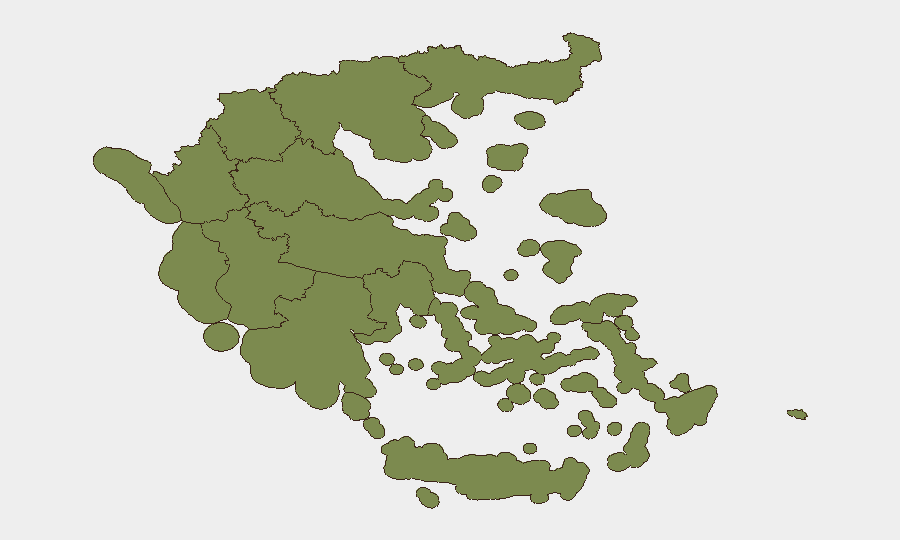
Situation Summary
Greece remains a relatively stable European jurisdiction (rank #67 globally, composite threat score 2.7) with manageable baseline risk across most regions. However, a severe concentration of threat activity in Central Greece (risk score 31.9—nearly three times Attica's score) reflects acute vulnerabilities driven by ongoing counterterrorism operations, wildfire danger, and civil unrest. The security posture is stable but requires heightened vigilance in specific high-risk zones and monitoring of geopolitical signals, particularly regarding NATO-aligned defense postures and Russian relations.
Key Developments
Open-source research spanning the last 24–48 hours (2026-07-15 to 2026-07-17) has not surfaced independently verifiable, time-stamped security incidents meeting brief criteria. Intelligence platform event signals (noted above) reference investigations, statements, and diplomatic posturing but lack granular confirmation of new ground incidents within this narrow window.
Earlier this week (July 10–12) counterterrorism arrests in Athens and Thessaloniki were tied to July 1 bombings; aviation incidents near Thessaloniki involved emergency landings; and wildfire evacuations swept Northern and Central Greece—but these fall outside the 24–48 hour requirement and are referenced here as contextual backdrop only.
Forward signals include:
- Ongoing investigation signals flagged against "Greek vs Greek" (2026-07-16) and Athens (2026-07-15), suggesting domestic investigations remain active.
- Diplomatic friction with Russia (reduce relations, 2026-07-16) and stance toward U.S.–Saudi positions (reject, 2026-07-16) reflect NATO alignment and Middle East policy posturing.
- Demonstration/rally activity at hospital facilities (2026-07-16) consistent with labor and public-service unrest patterns observed in Greek urban centers.
Highest-Risk Areas
Central Greece dominates the threat landscape with a composite score of 31.9—more than five times the national average. This concentration reflects the confluence of wildfire danger (ongoing heat and aridity), active counterterrorism investigations (post-July 1 bombing response), and civil unrest in connected urban nodes. Attica (Athens metro, score 11) represents the second-order risk, driven by political sensitivity, large protest-prone populations, and security infrastructure. Western Greece and Crete (both 4.1) show moderate secondary risk tied to tourism corridors, maritime activity, and localized unrest. Remaining regions score below 3.5, indicating substantially lower operational threat.
How GeoBit Would Assist
Security teams protecting people or assets in Greece should employ AOI Monitoring & Early Warning on Central Greece and Attica to detect emerging civil unrest, wildfire spread, or counterterrorism operations in real time. Intel Sweep and OSINT Fusion across Greek-language social media (X, Telegram) and local news will capture protest schedules, labor actions, and incident reports ahead of mainstream English-language coverage. GIS & Spatial Analysis layered with Satellite & Imagery can track wildfire progression and evacuation corridors, while Network & Actor Analysis clarifies which counterterrorism and domestic-security investigations pose indirect risk to foreign personnel and facilities.
7-Day Outlook
Heat and wildfire danger will persist through the week, keeping Central Greece elevated. Counterterrorism operations are expected to remain active but largely contained to targeted arrests and investigations rather than public disruption. Diplomatic messaging toward Russia and Middle East policy will continue, but internal NATO cohesion limits near-term flashpoints for foreign nationals.
Highest-Risk Areas — Ranked
| # | State / Region | Risk |
|---|---|---|
| 1 | Central Greece | 31.9 |
| 2 | Attica | 11 |
| 3 | Western Greece | 4.1 |
| 4 | Crete | 4.1 |
| 5 | South Aegean | 3.7 |
| 6 | Thessaly | 3 |
| 7 | Eastern Macedonia and Thrace | 2.4 |
| 8 | Northern Aegean | 2.4 |
| 9 | Epirus | 2.4 |
| 10 | Peloponnese Region | 2.2 |
| 11 | Ioanian Islands | 2.2 |
| 12 | Western Macedonia | 2 |
Sources
Previous Daily Briefs
A new Greece brief is written every day — each with its own risk map and downloadable CSV. Here's the last week; use the calendar to go further back.
📅 Browse every day by calendar →
Highlighted days have a brief. Tap a day for that day's map & analysis, or “csv” for that day's dataset ($5).
Atlas — our AI intelligence desk — emails them this snapshot personally. Nothing else, no list.