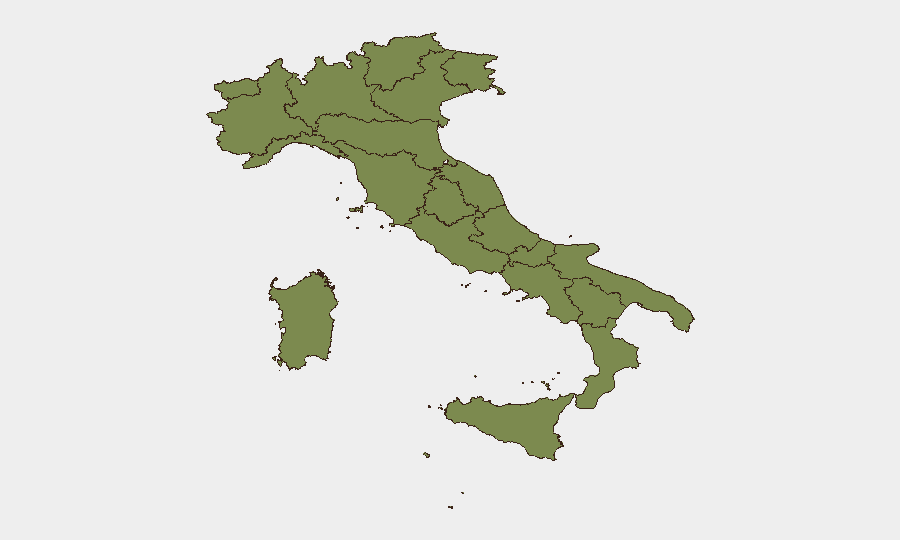
Situation Summary
Italy remains at composite global threat rank #140 with a score of 4, reflecting ongoing but contained security pressures. Recent 24–48 hour activity shows elevated police and law-enforcement operations, organized-crime enforcement, a serious incident in healthcare infrastructure, and localized environmental hazards. The security picture is operationally active but not escalating dramatically; risk remains concentrated in three regions—Lazio, Lombardy, and Sicily—which account for the majority of tracked threat events.
Key Developments
- Nationwide juvenile-crime sweep (late July 2026). State Police concluded a 44-province coordinated operation resulting in 539 arrests (47 minors), 954 people reported, 703 kg of drugs seized, 49 firearms confiscated, and 1,182 properties inspected. Primary targets: violent, drug, weapons, and hate-related offenses involving youth gangs across Milan, Bologna, Rome, Naples, Turin, and other major cities.
- Rome & Turin high-impact policing (23 July 2026). "Alto Impatto" operations in Rome (San Basilio, Prenestino districts) and Turin (Piazza Bengasi, Giardini Battistini, Parco Colonnetti) resulted in 26 arrests, 11 people reported, 2 illegally occupied buildings cleared, and ~900 individuals identified.
- Naples Zagaria clan enforcement (late July 2026). Anti-mafia directorate (DDA) ordered 8 arrests linked to attacks and threats by the Zagaria organized-crime clan, signaling renewed enforcement against camorra activity and associated public-order risk in the Naples metropolitan area.
- Hospital fentanyl theft & national response (last 24–48 hours). Government convened urgent meeting following theft of fentanyl from an unspecified hospital facility, reflecting heightened concern over controlled-substance diversion and associated crime/public-health risks.
- Healthcare-facility murder–suicide (late July 2026). An 86-year-old man fatally wounded his former wife at Ospedale Versilia (Lido di Camaiore, Lucca, Tuscany), then died from injuries sustained in a third-floor fall. Incident raises security and visitor-access control concerns in healthcare infrastructure.
- Milan Malpensa Airport disruption (late July 2026). Flight from Milan to Alicante delayed ~3 hours; aircraft cabin infested with large mosquito population requiring passenger evacuation and aircraft swap. Minor health and travel-disruption impact.
- Piedmont wildfires (late July 2026). Multiple active fires reported in Verbano Cusio Ossola province, Piedmont, with regional authorities monitoring. Potential impact on local infrastructure and travel corridors.
Highest-Risk Areas
Lazio (risk 32) and Lombardy (risk 28.6) are the primary drivers of Italy's national threat profile, reflecting high concentrations of arrests, gang activity, and organized-crime enforcement in Rome and Milan metropolitan areas respectively. Sicily (risk 26.8) remains a persistent organized-crime and public-order concern. The sharp drop-off after these three regions to Apulia (8.5) and Sardinia (8.1) indicates that the majority of tracked security events are concentrated in the capital, Lombardy's industrial heartland, and the southern island—all areas with established criminal-organization activity and elevated police operations.
How GeoBit Would Assist
Corporate security teams operating in Italy would use Intel Sweep and global event feeds to monitor ongoing law-enforcement operations and organized-crime activity; Network & Actor Analysis to map relationships among arrested individuals and criminal organizations; and AOI Monitoring & Early Warning with persistent watch on Rome, Milan, Naples, and Turin to receive real-time alerts on arrests, police operations, and significant public-order incidents affecting office locations, supply chains, or employee movements.
7-Day Outlook
Heightened police and enforcement operations are expected to continue as part of ongoing organized-crime and juvenile-crime suppression campaigns across major cities. No significant escalation in threat level is forecast, but localized disruptions from fires, airport incidents, and healthcare security measures may persist. Risk remains regionally concentrated and operationally manageable with standard corporate duty-of-care protocols.
Highest-Risk Areas — Ranked
| # | State / Region | Risk |
|---|---|---|
| 1 | Lazio | 32 |
| 2 | Lombardy | 28.6 |
| 3 | Sicily | 26.8 |
| 4 | Apulia | 8.5 |
| 5 | Sardinia | 8.1 |
| 6 | Molise | 4.7 |
| 7 | Marche | 3.1 |
| 8 | Trentino – Alto Adige/Südtirol | 2.5 |
| 9 | Basilicata | 2.5 |
| 10 | Liguria | 2.4 |
| 11 | Emilia-Romagna | 2.3 |
| 12 | Friuli – Venezia Giulia | 2.3 |
Sources
Previous Daily Briefs
A new Italy brief is written every day — each with its own risk map and downloadable CSV. Here's the last week; use the calendar to go further back.
📅 Browse every day by calendar →
Highlighted days have a brief. Tap a day for that day's map & analysis, or “csv” for that day's dataset ($5).
Atlas — our AI intelligence desk — emails them this snapshot personally. Nothing else, no list.