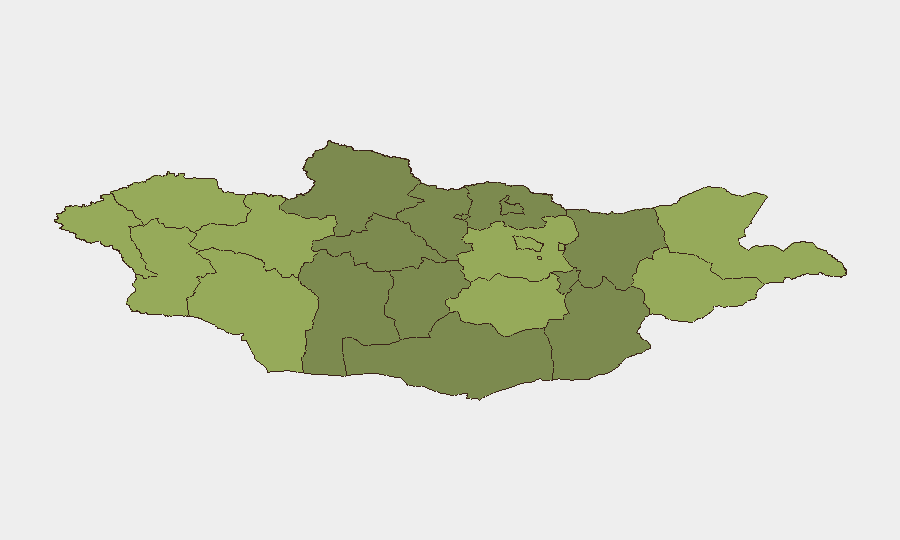
Situation Summary
Mongolia faces a moderate composite threat environment (global rank #121, score 10) driven primarily by civil-unrest risk rather than active conflict or terrorism. The country is currently experiencing a nationwide fuel shortage that has triggered government rationing measures, aviation disruptions, and supply-chain strain across essential sectors. While no major security incidents have been reported in the last 48 hours, underlying economic and resource constraints are creating friction in urban and border regions; northeastern and western provinces (Dornod, Sükhbaatar, Uvs, Khovd) show elevated risk profiles.
Key Developments
- Government austerity directive — Mongolia (nationwide) — 2026-08-06: The government ordered non-health public institutions to cut operating costs by 20% through end-2026, citing social and economic conditions and supply disruptions affecting essential goods.
- Nationwide fuel rationing in effect — Mongolia (nationwide) — 2026-08-03 to 2026-08-07: The U.S. Embassy confirmed government-mandated gasoline filling limited to alternating days by license plate number, capped at 50,000 MNT per transaction, with external-tank fills banned. Long queues reported nationwide.
- Aviation and ground-transport disruption — Ulaanbaatar — 2026-08-05 to 2026-08-07: Aviation-fuel shortages at Chinggis Khaan International Airport caused flight cancellations and potential road-transport delays; Spring Airlines canceled Shanghai–Ulaanbaatar service on 2026-08-06.
- Urban traffic closure — Ulaanbaatar, Songinokhairkhan District — 2026-08-06 to 2026-08-07: Road behind First Khoroolol fully closed 23:00–06:00, likely for infrastructure or security response.
- Grassland fire (lightning-caused) — Erdenebadrakh Bag, Matad soum, Dornod Province — reported 2026-08-04: Lightning strike ignited grassland fire burning ~30,000 hectares; fire season risk remains elevated in eastern provinces.
- Water-related fatalities and search operations — Ulaanbaatar — reported 2026-08-04: Capital Emergency Management Agency reported six deaths from water incidents over three days prior, with rescue operations ongoing for two missing persons.
Highest-Risk Areas
Dornod (risk 58) and Sükhbaatar (risk 55) in the far northeast, plus western border regions (Uvs, Khovd, Bayan-Ölgii), carry the highest composite risk. These areas are vulnerable to resource scarcity, limited state capacity, and proximity to cross-border flows; Dornod's recent grassland fire and water-related incidents illustrate exposure to environmental hazards and rescue-operation strain. Ulaanbaatar (risk 45) remains moderately elevated due to urban concentration, fuel-rationing friction, and transport chokepoints. Risk drivers in the ranking reflect civil-unrest and supply-disruption potential rather than active armed conflict.
How GeoBit Would Assist
Security teams should deploy AOI Monitoring & Early Warning on Dornod, Ulaanbaatar, and key transport corridors to track fuel-shortage escalation, protest activity, and supply-chain breakdowns in near-real time. Intel Sweep and OSINT fusion (X/Twitter, Telegram, local news) will detect sentiment shifts and grassroots unrest signals before they manifest as physical incidents. Routing & Network Analysis can identify alternative supply and personnel-movement pathways if primary road/air routes remain disrupted, and Economic & Trade analysis will flag secondary effects (wage delays, essential-goods hoarding) on workforce stability.
7-Day Outlook
The fuel shortage is expected to persist into mid-August absent rapid supply restoration or imports. Rationing fatigue and austerity cuts may increase civil-unrest risk, particularly in Ulaanbaatar and resource-dependent provinces. Environmental hazards (grassland fires, flood aftereffects) will continue; organizations should ensure contingency staffing and supply protocols are aligned with ground reality.
Highest-Risk Areas — Ranked
| # | State / Region | Risk |
|---|---|---|
| 1 | Dornod | 58 |
| 2 | Sükhbaatar | 55 |
| 3 | Uvs | 52 |
| 4 | Khovd | 50 |
| 5 | Bayan-Ölgii | 48 |
| 6 | Govi-Altai | 46 |
| 7 | Ulaanbaatar | 45 |
| 8 | Zavkhan | 44 |
| 9 | Töv | 42 |
| 10 | Dundgovi | 40 |
| 11 | Darkhan-Uul | 38 |
| 12 | Ömnögovi | 37 |
Sources
Previous Daily Briefs
A new Mongolia brief is written every day — each with its own risk map and downloadable CSV. Here's the last week; use the calendar to go further back.
📅 Browse every day by calendar →
Highlighted days have a brief. Tap a day for that day's map & analysis, or “csv” for that day's dataset ($5).
Atlas — our AI intelligence desk — emails them this snapshot personally. Nothing else, no list.