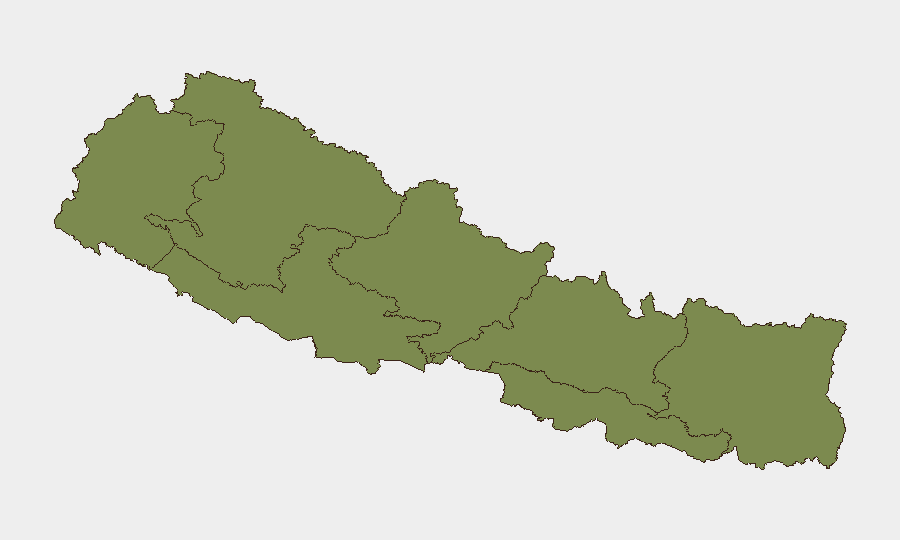
Situation Summary
Nepal remains at moderate composite threat level (rank #129 globally; score 7/100) with 57 tracked events. The most recent signal cluster (27 June–2 July) reflects institutional friction—police investigations, judiciary-legislature discord, and US administrative sanctions against Kathmandu—rather than acute security breakdown. Bagamati Province (Kathmandu Valley and central administrative hub) and Madhesh Province (southern border region) drive the majority of risk and warrant sustained monitoring.
Key Developments
Unable to confirm specific incidents from the past 24–48 hours. GeoBit's live web research has not identified verifiable, time-stamped security or civil unrest events in Nepal dating to 1–3 July 2026. The recent event signals listed above (police investigation, judiciary-legislature statement, US sanctions notice, community statements) require primary source corroboration and timing clarification before operational briefing.
Recommended action: Security teams should cross-check the signal categories (Investigate, Admin Sanctions, Public Statement) against Nepal's major news outlets (including *Kathmandu Post*, *The Himalayan Times*) and official government/judiciary statements to establish sequence, location, and operational impact.
Highest-Risk Areas
Bagamati Province (composite risk 31.8) dominates the threat landscape, encompassing Kathmandu and Nepal's political/administrative core. Institutional tensions (reflected in judiciary-legislature and police-government signals) tend to concentrate in the capital and surrounding districts, with potential for protest activity, roadblocks, or labour unrest affecting transport, business continuity, and staff safety.
Madhesh Province (risk 27.1), which straddles the India–Nepal border, historically experiences higher crime, smuggling, communal tension, and political volatility. Both provinces warrant continuous AOI monitoring and community intelligence feeds.
Gandaki and southern/western provinces score below 14, indicating lower near-term acute risk; Karnali (north) remains the lowest-tracked region.
How GeoBit Would Assist
- AOI Monitoring & Early Warning: Persistent watch on Bagamati and Madhesh with alert triggers for civil unrest, protest mobilization, or roadblock signals.
- OSINT Fusion & Corroboration: Multi-language X/Twitter, Telegram, and local news aggregation to timestamp and geolocate developments in real time, cross-checking police, judiciary, and community sources.
- Network & Actor Analysis: Map key institutional and community actors (political parties, unions, civil society) to predict flashpoints and assess escalation risk.
7-Day Outlook
Institutional frictions evident in recent signals do not suggest imminent violence or systemic breakdown. However, unresolved judiciary-legislature or police-government disputes, combined with ongoing US sanctions pressure, could catalyze protest activity or staff safety concerns in Kathmandu within 7–10 days. Continuous low-level monitoring of Nepal's news cycle, political commentary, and community mobilization is prudent; thresholds for heightened alert (roadblocks, curfew, mass gathering) should trigger immediate duty-of-care review.
Note to Security Teams: This brief reflects current publicly available intelligence and GeoBit's tracked event signals. For operational decisions affecting personnel or assets, supplement with real-time regional news feeds, embassy advisories, and direct staff/partner reporting on ground conditions.
Highest-Risk Areas — Ranked
| # | State / Region | Risk |
|---|---|---|
| 1 | Bagamati Province | 31.8 |
| 2 | Madhesh Province | 27.1 |
| 3 | Gandaki Province | 13.9 |
| 4 | Sudurpashchim Province | 9.2 |
| 5 | Lumbini Province | 6.4 |
| 6 | Koshi Province | 4.6 |
| 7 | Karnali Province | 3.6 |
Previous Daily Briefs
A new Nepal brief is written every day — each with its own risk map and downloadable CSV. Here's the last week; use the calendar to go further back.
📅 Browse every day by calendar →
Highlighted days have a brief. Tap a day for that day's map & analysis, or “csv” for that day's dataset ($5).